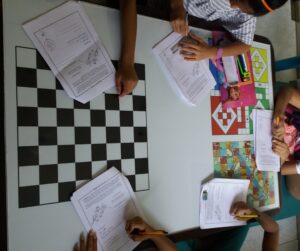
Many children write poetry. Rhyme is fun, having your poem published in the school magazine is even more fun. Teachers and parents encourage children to write poetry, which is good. Of course there's a 'but'. People have been writing poetry forever. Forget the ancient languages, in English alone, even those who don't opt to study Old English begin by studying Chaucer et al, who wrote almost 700 years ago. When children write about rainy days and their favourite pets, what are they doing to make their work stand out? Why will their work be special? That's what we work with when I conduct poetry writing workshops. Yesterday's workshop As we played with poetry, people kept popping in to ask what was happening. A Sunday afternoon at a library meant we had lots and lots of visitors. Exasperated with the interruptions, the children finally asked me, "Why do so many people want to … [Read more...]
Reading and Data
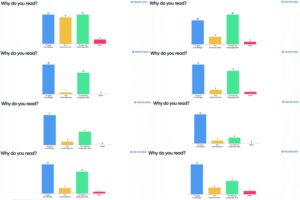
Adults love data. They love graphs and statistics and numbers. During workshops with adults, the moment I put up a graph, I have everyone's attention as if I'm finally saying something 'real'. And that's why I started working with real-time polls through Mentimeter. I show my audience a question and all those with smart phones (usually nearly everyone in the room) vote. And they see numbers, which makes everyone happy. Question One: What do you read most often? For this question, I allow participants to choose more than one option. This helps them feel comfortable, not pinned down to choosing one and being 'wrong'.I give them four options: Blue - Newspapers, magazines, etc.Yellow - Facebook/WhatsApp postsGreen - StorybooksRed - Other As you can see, there's nothing really, solidly conclusive about this. Yet, on the whole, have a look at this graph, which combines the … [Read more...]
Making Creative Writing Engaging
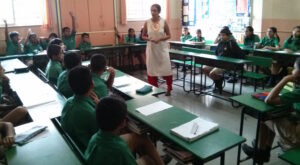
Sometimes, I wonder whether secretly, I conduct creative writing workshops more to inspire myself than to inspire the children I work with. Whatever it is, I do know that I enjoy myself tremendously whenever I teach creative writing. I feed off the enthusiasm of the children and I come home ready to write, which is invigorating. Children and Writing Many children love to write. I was one of them, and I wrote all kinds of things, mainly inspired by what I read. I wrote about magic and school, and things that I thought would be moving - like earnest poetry about war and poverty. Writing is fun; it may even be good. But when publishing is so easy, I find that many parents and teachers think everything that children write is perfect. I don't always agree. Here are my pet peeves: Forced rhyme I … [Read more...]
Reading Workshops: Why? What? How?
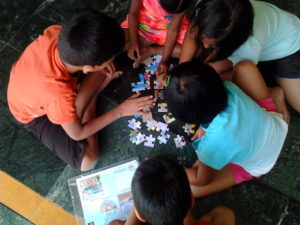
Many, many parents ask me what a reading workshop is. What happens during a reading workshop? Who should attend a reading workshop and why? What will the outcome of a reading workshop be? This post tries to explain all that. What children read and why Often, at reading workshops I conduct, we talk about books we love. I'm not very fond of the question 'What is your favourite book?' because I think it is impossible to have a favourite book. I do realise, however, that it's a promising start to a conversation, plus a way for me to get an idea of the interest and reading level of the group I'm working with. "What do you read?" I ask, attempting to be neutral in my question. I don't ask them how many enjoy reading because that feels like a trick question. They are already conditioned enough to know they are "supposed" to like reading. The question has to feel less threatening; … [Read more...]
World Read Aloud Day at the Writers’ Club

The Writers' Club at St. Mary's School meets only twice a week, so World Read Aloud Day sometimes becomes Writers' Club Read Aloud Day, but so what? I celebrated it for the first time last year and it was so much fun that I did it again this year. This time, children came forward and read work of their own, which was heart-warming. Others read out poetry, including a hilarious poem by Ruskin Bond. Still others read scenes that moved them - excerpts from Train to Pakistan, from Good Wives, and from Wonder. Yet, as the girls came forward to read, I realised that many had no idea what to pick. One child in class IV chose an excerpt from an abridged version of King Lear. She struggled with Goneril, Regan, Cordelia and Albany. Aged nine, who wouldn't? Another child chose to read a section from an encyclopedia. She read fact after fact, stumbling over all the figures … [Read more...]
Working with Librarians

During the first two weeks of the year, I made lists of books I loved, and more than once, I found myself writing about how reading levels differ so much that it is difficult to associate a level with an age. Thinking about all of this, I decided write about a reading programme I've been working with for a couple of years now. Two years ago, I was approached by Experiential Learning Solutions and asked whether I would design a reading programme that can be administered effectively by a group of librarians in municipal schools. As a CSR initiative, D-Mart had invested in eleven libraries for schools and eleven librarians, but they wanted to go beyond that. They wanted to ensure the success of their library programme in the form of children taking a step towards reading. What could we do to get children to read? How could we surmount huge obstacles, including the indifference of … [Read more...]
Fortunately-Unfortunately
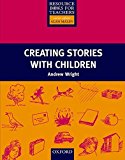
Option 1 "I am going to meet a monster today." "Fortunately, it doesn't bite." "Unfortunately, that means it will just gobble you up." Option 2 "I jumped into the swimming-pool today." "Fortunately, the pool was heated." "Unfortunately, I cannot swim." "Fortunately, it was not deep." Which beginning do you find more entertaining? I was very surprised to find that many, many girls at the Writers' Club find the second story more promising. I would choose the first, any day. How does this activity work? It's a hugely entertaining one, which I learned from the book Creating Stories with Children by Andrew Wright. Someone begins the story, and then each of the other participants must contribute one sentence, alternating between beginning with 'Fortunately' and 'Unfortunately'. It helps to introduce the idea of plotting and the wonder of surprising the reader. … [Read more...]