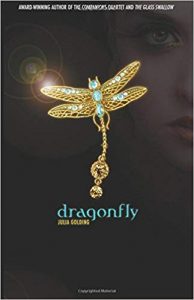
Some pacy books are formulaic, and this one is one of them.Prince must marry Princess - it's a political alliance. Prince and Princess hate each other; they have all kinds of adventures; then they love each other; then they get married.This fits in exactly.Yet, Dragonfly warmed me. There are some books that, like Disney movies, touch you even if you can tell, scene by scene, what's going to happen.Tashi, the young princess, grows to be a person, not a white painted princess. The idea of romance across cultures is amusing, inviting and heart-warming.Yet, one idea in the book that truly startled me was the realisation of how easy it is for a young girl (princess or otherwise) to feel guilty when she does not return a suitor's love. That, I think, is what made my eyes widen. Not the love story, not the elaborate courtship, none of it. Yet, when Tashi wants to reject Merl, but … [Read more...]
The Moneylender’s Daughter
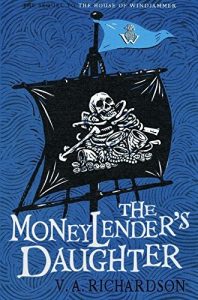
I often shy away from thick books. I'm not quite sure why because I have read (more than once) and enjoyed (tremendously) books like Gone with the Wind, Jane Eyre and Pride and Prejudice. Maybe, somehow, classics escape my prejudices. But books like The Moneylender's Daughter ought to as well.As I began the book and got caught in the action, I found myself thinking, "It's the kind of book my mother should read!" For very predictable reasons - it's about the mercantile world of 17th century Holland. The associations were automatic.I was halfway through the book when I realised that it was the kind of book I should read, simply because it combines so many aspects of fiction that amaze me. Characters, action, plot and description - The Moneylender's Daughter has them all! The switches in setting were perfectly timed, alternately building the atmosphere and providing … [Read more...]
The Harry Potter Phenomenon
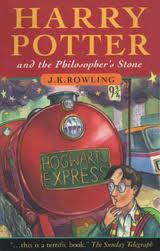
"You must read Harry Potter," a friend of mine told me when I was in the eighth standard. I glanced at the book lying on her desk and nodded. The book she was so impressed by was not yet available easily in India. A relative had given it to her and she was passing it on.I postponed reading - for an incomprehensible reason that I wonder if anyone would understand. I thought Harry Potter was the name of the writer and I had a deep-rooted prejudice against writers who put their own names in font that is far larger than the name of the book. Who was this Harry Potter who used one-fourth of the book cover for his own name? A lot of writers did that, I knew. I did not like the idea of it at all. I did not want to read this new author, this Harry Potter.So another friend read it before I did and said to me, "You must read Harry Potter!"I was curious now, so we spoke a … [Read more...]
Oranges in No Man’s Land
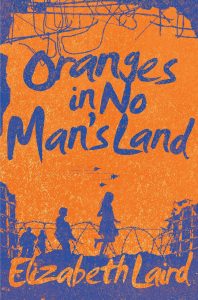
I find that so may writers seem to have a compulsion to write long, complex, layered work. So many new books are thick paperbacks, full of things happening on every page.Oranges in No Man's Land is not like that. Not at all.Elizabeth Laird manages to write a beautiful, heart-warming story in the course of just about a hundred pages of large print. The setting and characters are just so powerful that the story becomes not a book, but a moment in time. It's an eternal, timeless moment, captured by language.I know nothing about the history of Lebanon. I know nothing about the 'Green Line' or what that meant, but I agree with the critic who says that Laird's Oranges in No Man's Land is 'A tribute to the human spirit'.Ten-year-old Ayesha lives in Beirut, ravaged by civil war. Between the two parts of the city is no man's land, and only military men dare go there. But Ayesha's … [Read more...]
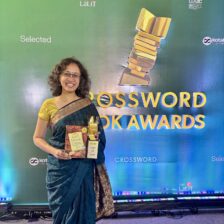
Book-Reading at Crossword, Mulund!
The Dictionary at School
The portion for the exams has been completed; students are fed up with revision. So, a colleague of mine decided to do something different - she read out a story from The Story-Catcher. I was thrilled!This reading went one step further than 'I loved your story' and 'nice story' and 'I like the story of Sana'. After listening to The Dictionary, the students were expected to write a poem. It had to be inspired by the story, but they could write what they liked.And so they did. I was waiting to have a look at their work, and that happened in a lovely way too!On Thursday, a Student Held Conference took place at the school library. The library was jazzed up a little to make it slightly more attractive.One large notice-board was dedicated to The Story-Catcher. Poems covered the board. One child even made a beautiful copy of the cover illustration. I looked at all the poems in … [Read more...]
Book-Reading – A Different One
An acquaintance who is part of the Teach for India programme asked whether I would be willing to come to a small government school in Chandannagar and talk about my book, about writing and about dance. I was tremendously excited by the prospect, and agreed immediately.When I got there, though, I realised how different it was from anything I had expected. The energy of the class was different. They were restless, not willing to sit and listen. They jumped up and down, walked (or rather crawled - because they sit on the floor, not at desks) around the class. They wanted to talk about everything. Sometimes, shamefacedly, I had to ask for explanations of what they were saying. Yes, they speak English, but sometimes, they just give me the key words and expect me to figure out what the sentences are.I told them the story of the Prologue to The Story-Catcher. They did not know the word … [Read more...]
Apricots at Midnight
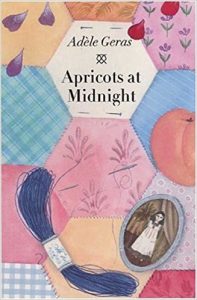
Many would say that Apricots at Midnight is an outdated book: old-fashioned and preachy. Yet, the simple childlike stories made it altogether loveable.Imagine a patchwork quilt, in which each little bit of cloth has a story to tell. I wish I had one! Apricots at Midnight has the sense of a collection of stories, united by this idea. A young girl listens to her aunt Pinny talking about her childhood and the making of the grand quilt. Affection takes away the sordidness of poverty, and imagination makes every tiny bit of cloth a wonderful new world.There's nothing at all romantic and exciting about poverty, Aunt Pinny is quick to point out. Poverty coupled with the attempt to appear respectable makes everything even more difficult. Clothes need to be made out of old drapes and cushion covers. Even the tiniest sliver of soap is a treasure. Yet, the biggest … [Read more...]
Reflex
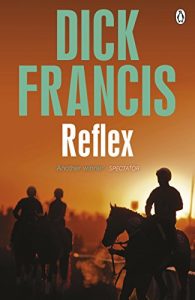
If I don't read, I can't write. It's as simple as that.My mother introduced me to Dick Francis years ago, and I never imagined I would like more than one odd book about jockeys. I'm not horse-mad, and I don't like the idea of horse races. It's a lifestyle about which I know nothing. In Reflex, Francis too answers the question as to how racing contributes anything at all to society and to humanity. Yet, I find myself turning to Dick Francis every now and then for different reasons - the stoicism of his characters, the simplicity of the narrative, and the pace of the story.Reflex, like so many other works by Francis, explores a world about which I know little, or rather, two worlds about which I know little. It is, as usual, set within the racing circle, but the narrator is also a passionate photographer, solving puzzles left to him by another photographer, George Millace. The … [Read more...]
The Ant Colony
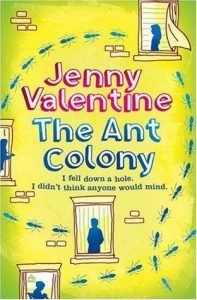
Books that I've loved and re-read time and time again have nearly always emphasised character over plot. Take, for example, Anne, Emily, Little Lord Fauntleroy and the little princess. There's something about character that just warms me, perhaps because it's like discovering a friend, rather than having an experience. Stories with exciting plots are certainly a joy to read and do give me a thrill, but sometimes, I need more than that. I need to know all those people who are having those experiences.The Ant Colony was one of those books where I got to know the people in the book, and wanted to get to know them better. I just kept reading it until I had finished! It's one of those books that makes you smile and cry and wonder. So many books that I've read recently have concentrated on complexity of plot at the cost of fullness of character. This one had a simple plot … [Read more...]