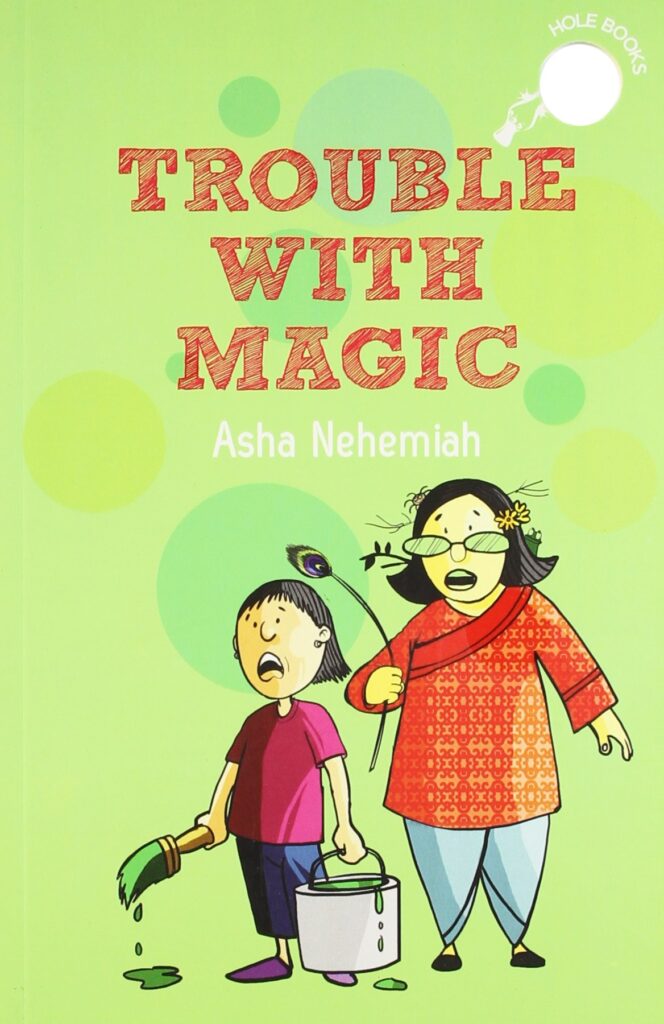
Trouble with Magic
March 1, 2026
The name itself makes my eyes sparkle. Trouble with magic? That sounds promising! And it is. I giggled my way through the book, chuckling at the hapless Aunt Malu and charmed by the enterprising Veena. Aunt Malu should have known better, but … therein lies the tale!
Trouble with Magic was the very first book we read at the very first edition of my book club over five years ago! We’re rereading it next month!
Inventions
What would you invent if you could invent anything in the world? Do you think that invention of yours is scientific or magical?
Children at my workshops have invented all kinds of things from time machines to superfast shoes and robots that do their homework for them. Aunt Malu is a delightful mix of magician and scientist – neither real nor fantastic – and so, she provides the perfect balance for children who want both realistic fiction and magic. Children are free to imagine anything at all in this realm and I’m waiting to see everything they create!
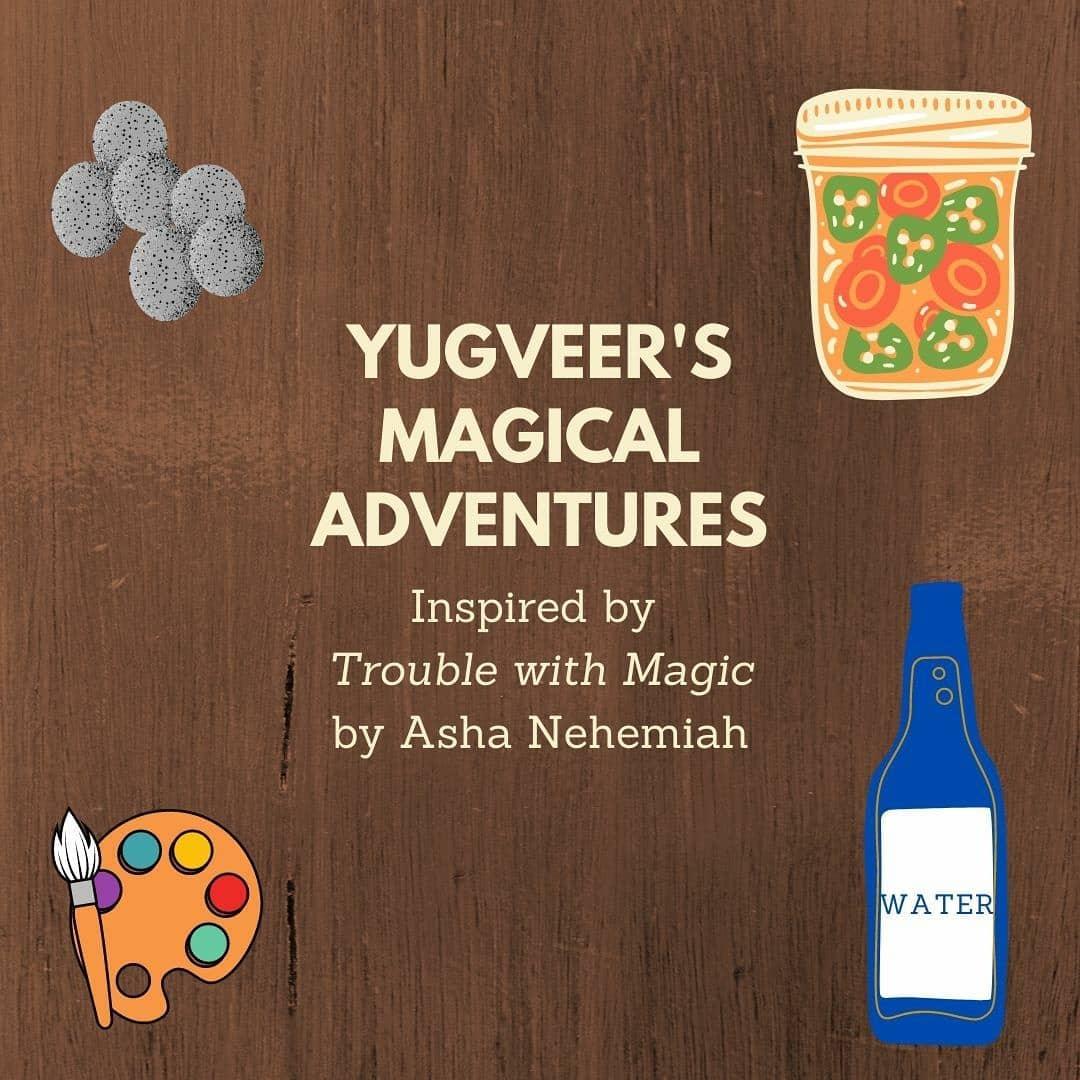
Here’s one of the creations from 2020!


Sense Perception
Paying attention to the world around us is the first step towards making sense of it. What happens to snow in the heat? What happens to leaves in the wind? How do we link these sounds to our emotions? With its effusion of colour and sound, Trouble with Magic allows for much sensitivity to the world around us.
Join a programme!
The April 2026 edition is sold out! New batches begin every alternate month. Join my mailing list if you would like to receive email notifications about my programmes. Alternatively, follow me on social media – Facebook and Instagram – for regular updates.

My Year in Workshops – 2025
January 13, 2026
Teacher training programmes often take me all over the country, but this time, author interactions did that for me! My teacher training was restricted to Pune, Goa and Nagpur, which gave me the time to do a lot of other things (including write!).
Online workshops continue to have my heart. I love the fact that I can conduct them from anywhere, whether I’m travelling or at home. This academic year, I discontinued my writers’ club at St. Mary’s School for precisely this reason—in-person sessions don’t allow for the flexibility my other work demands. I did create the next issue of THE WRITE PLACE for my young students, but subsequent issues are on hold, at least for the time being.
At my book clubs, we read 42 books in 2025. I had enough registrations to go ahead with each batch I planned! I invited six wonderful guests to conduct sessions for my writing programmes, all of which were engaging. Many students who joined me in 2020 are slowly outgrowing my writing programmes, bittersweet moments for all of us.
In 2025, I also launched online teacher training workshops for the first time, and they’ve been so rewarding! Here’s a little about each.
Book Clubs
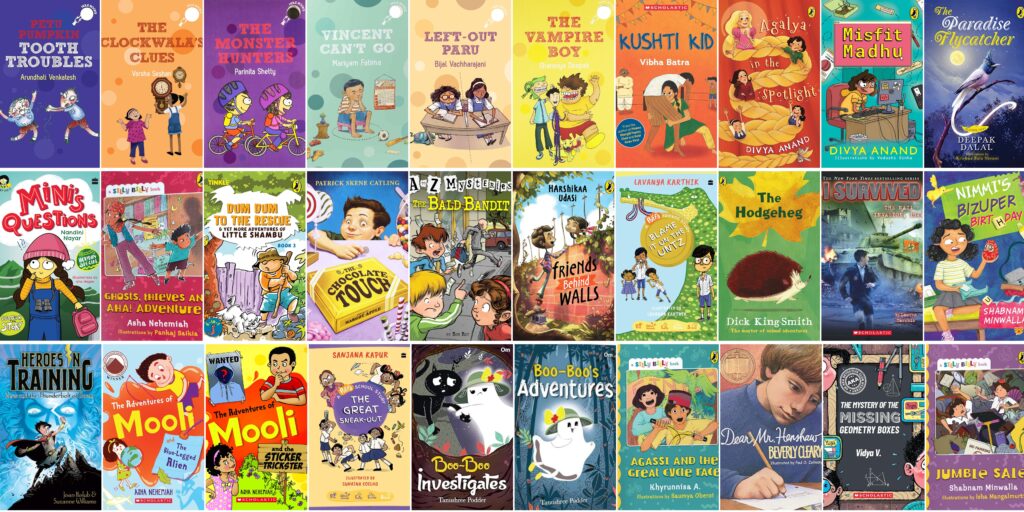
Reading with children is a joy. I love listening to their points of view, paying attention to what catches their attention and what leaves them bored. As always, though, what works brilliantly with one batch may fail miserably with another!
Even with all the stress of whether the books will reach my students in time, I continue to source my books from independent bookstores, as far as possible. Additionally, I continue to focus on Indian books, in the hope that eventually, names of Indian authors will become as familiar to parents and children as all the big foreign ones they continue to read.
Creative Writing
Teaching creative writing online is something I never thought I would enjoy so much. Summer 2025 was quite hectic because I had so many students that instead of running two batches as usual, I had four! Reading their work, giving them feedback, working with edits and rewrites … it was exhausting, but fun, nonetheless. I taught new forms of poetry, and worked with drama, nonfiction and fiction in new ways. More than once, I stepped out of my comfort zone to teach genres I don’t normally teach.
Winter 2025 saw me teach two full batches, and for the guest sessions, I had to juggle three time zones because I had a student from Dubai, one from Taiwan, and one from Singapore!
In 2025, we created issue 6 and issue 7 of WORDS, our e-magazine. The next issue will be out very soon!
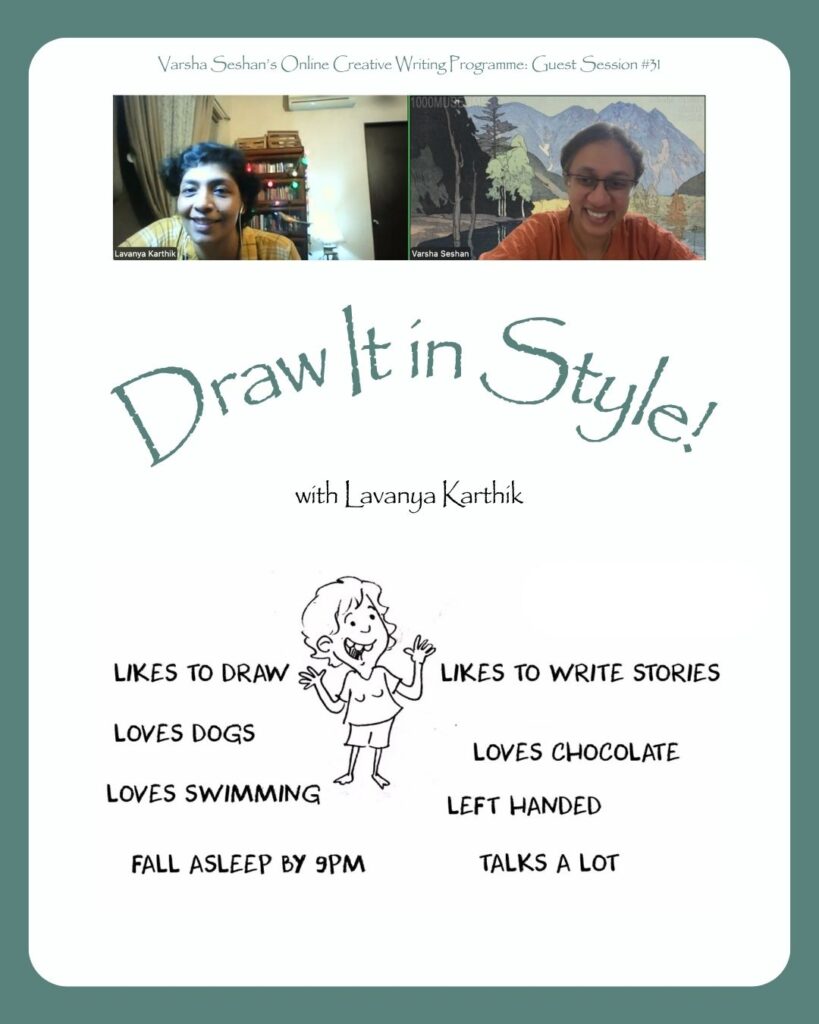
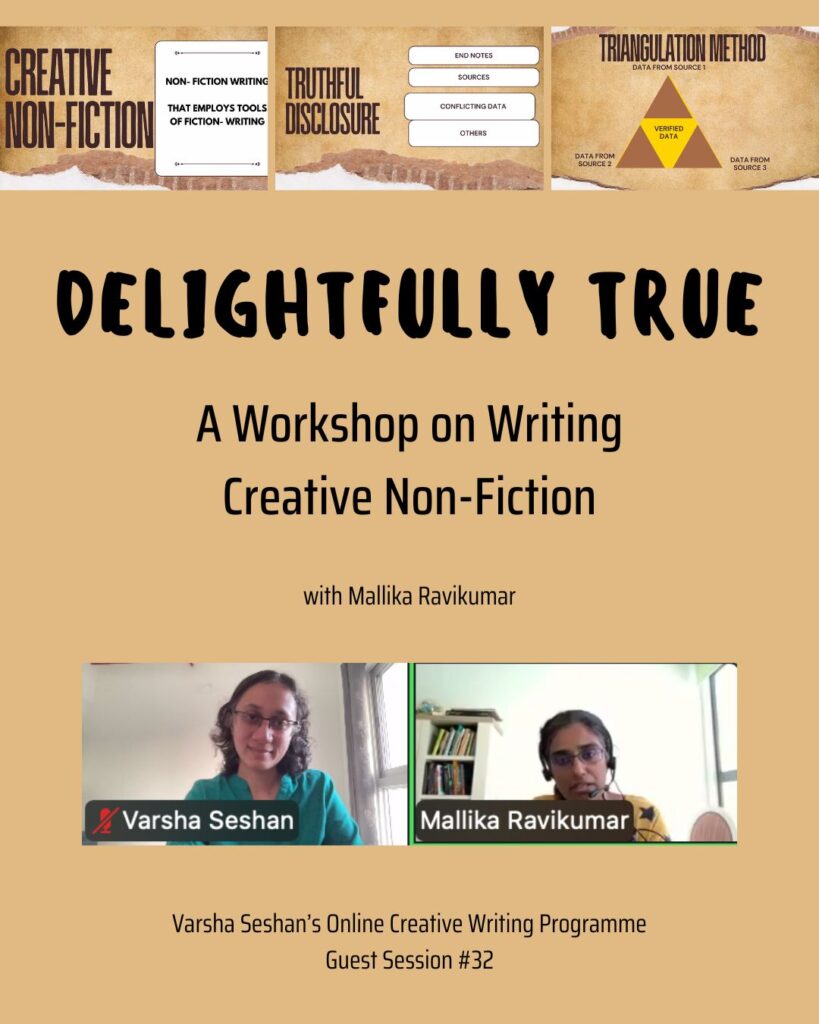
Our guest sessions are always special. Here are the experts who visited us last year!
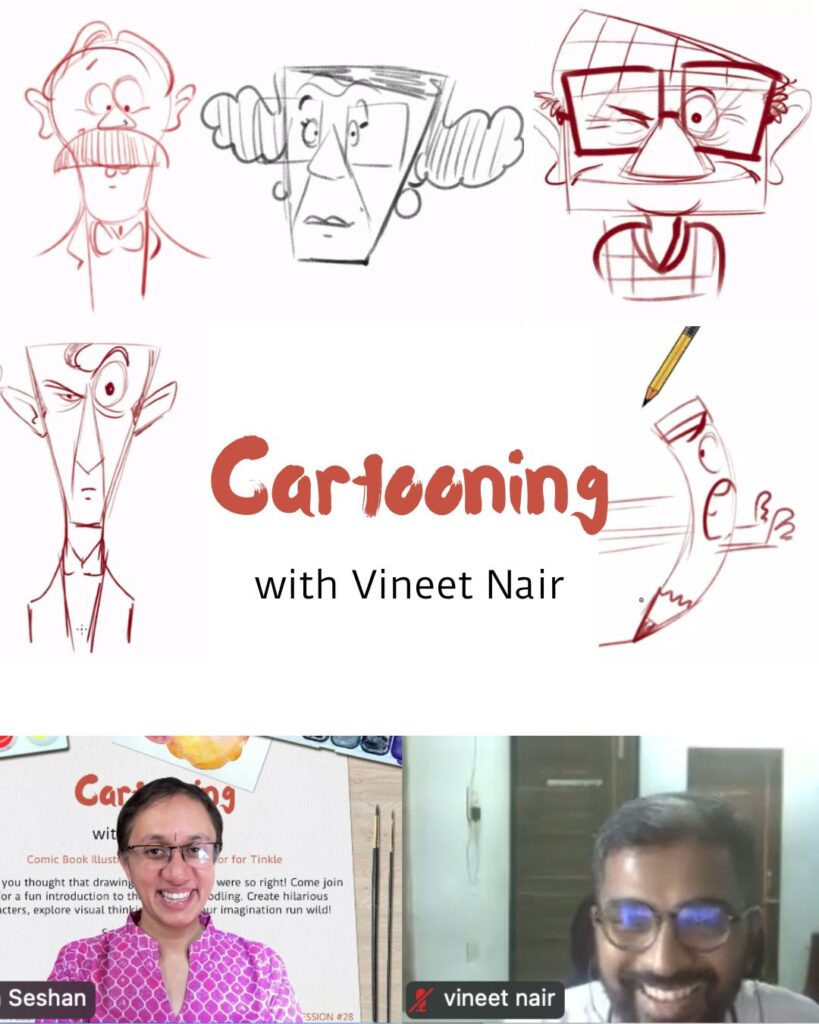
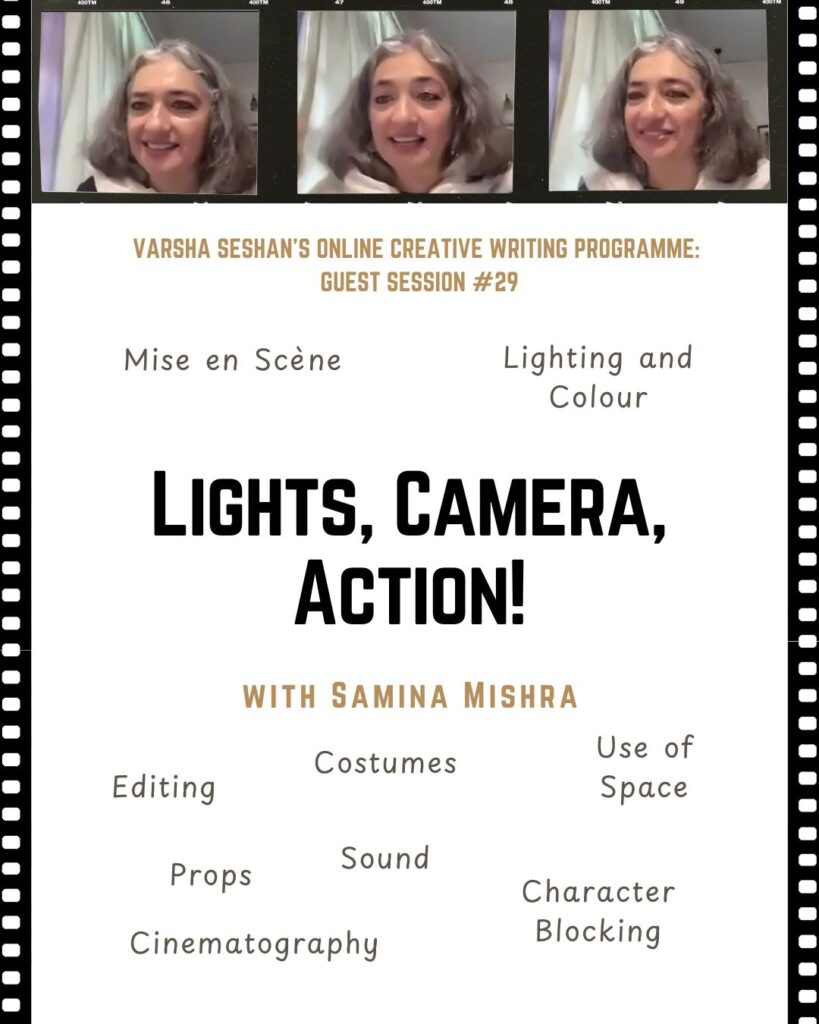
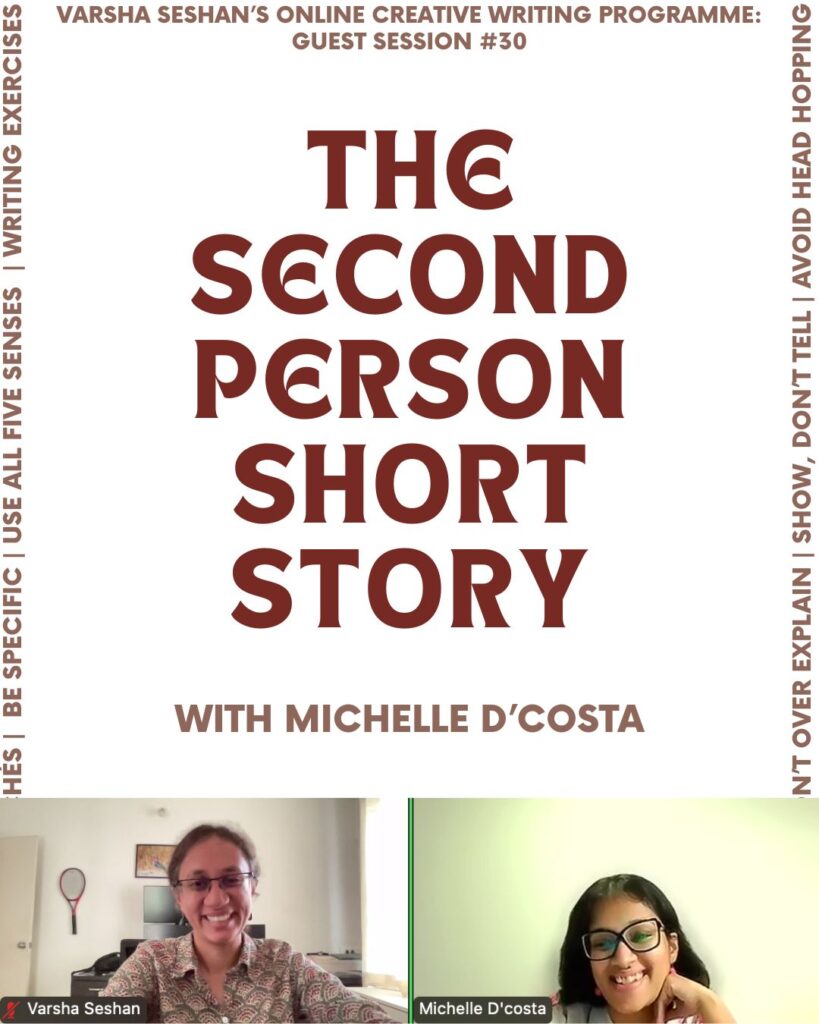

I also conducted workshops for Joykidz and SkilLit Readers, working on concrete poetry, cinquains and free verse with the former, and two of my books with the latter – The Clockwala’s Clues and Dhara’s Revolution. These were fun too!
Teacher Training
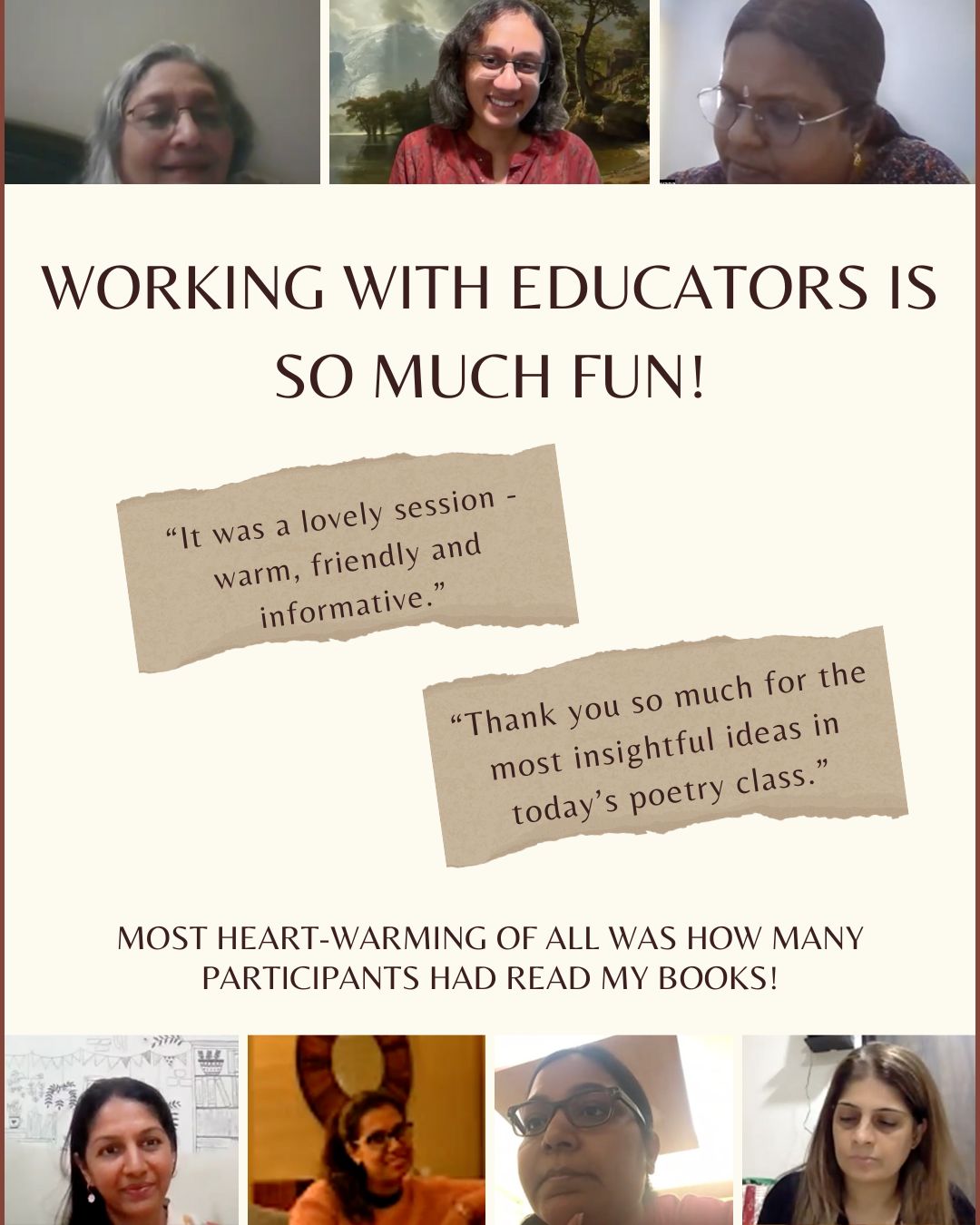
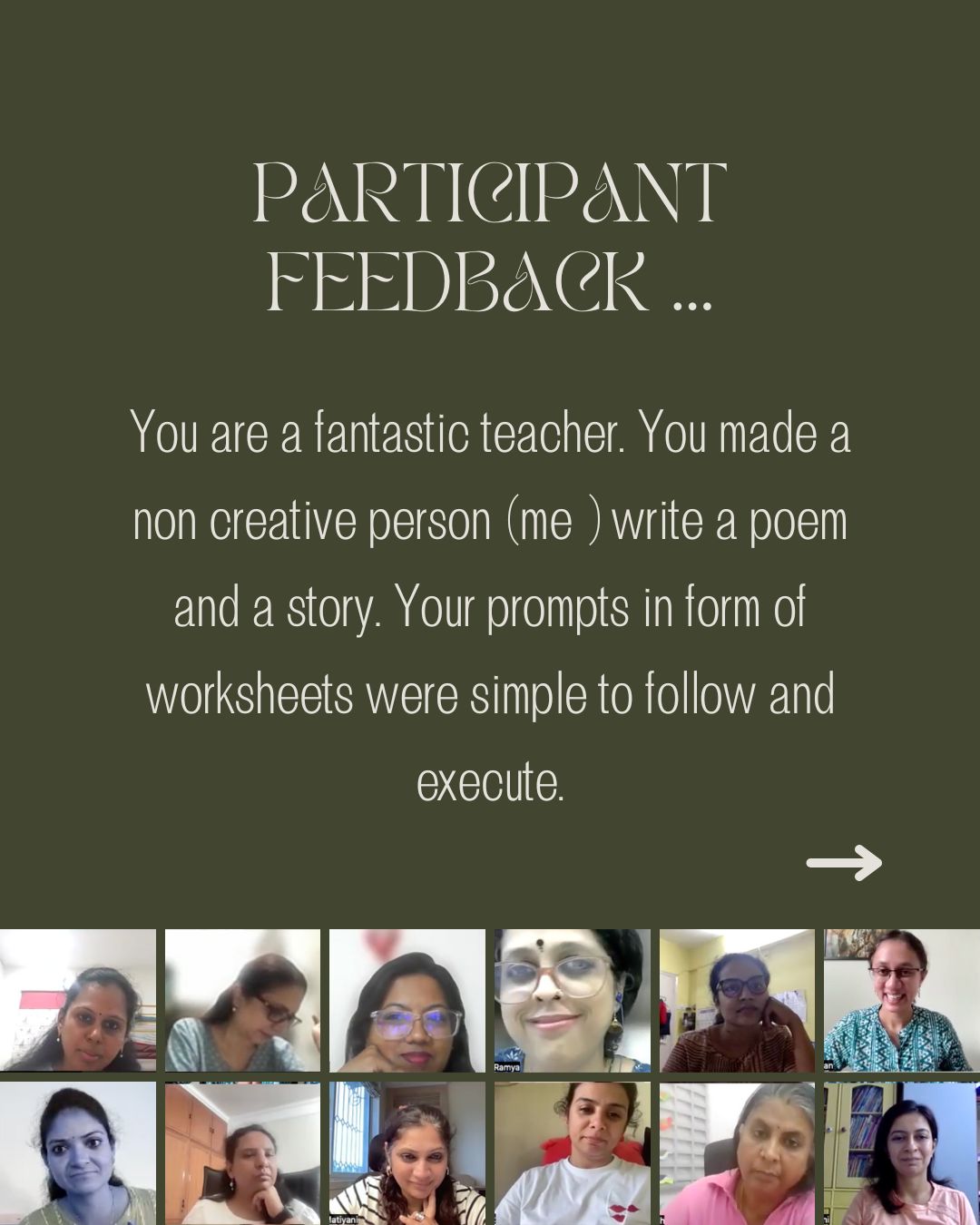
Since I enjoy teaching creative writing so much, I decided to see whether I could help other teachers work with it too. I’ve conducted four workshops so far, and the response I received for each one has been heart-warming. In 2026, I hope to continue to conduct these sessions, perhaps once in two months, or once every quarter!
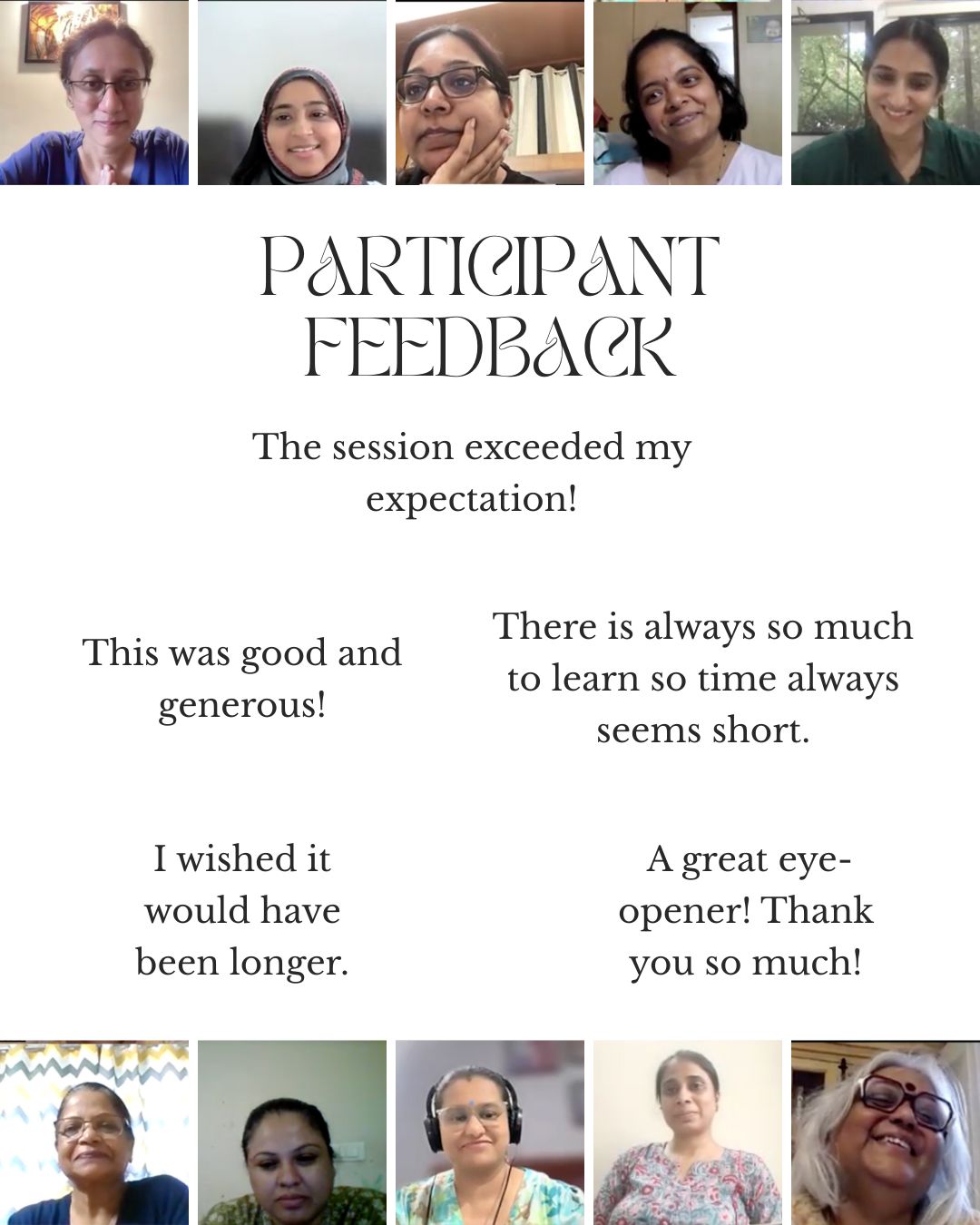
New online workshops begin every alternate month, and I’m always open to looking at offline workshops should schools require them. If you would like to receive email notifications about my programmes, please fill this form. Alternatively, follow me on social media – Facebook and Instagram – for regular updates.
Meanwhile, a new year of workshops has already begun!
Gobi Goes Viral
January 7, 2026
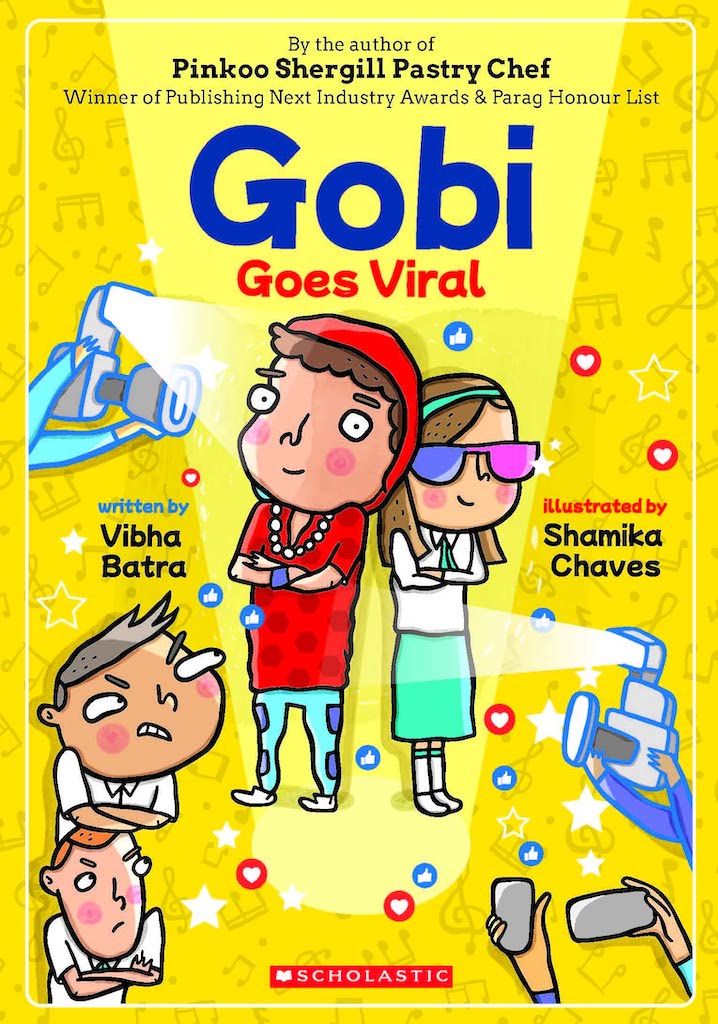
Gobi Goes Viral by Vibha Batra is funny, heart-warming, and altogether believable. We’ve read and loved Kolam Kanna and Pinkoo Shergill at my book club, and I’m happy to introduce yet another book by the same writer to the children I meet. Here’s what we’ll do as we read this story!
Talent Show
How can we read a book about a talent show without having a talent show of our own? Over time, I’ve had children recite poetry, play musical instruments, draw and solve a Rubik’s Cube during our book club. It’s always lovely to see a side of children that I wouldn’t otherwise get to see if we stuck to just reading in class!
Similes
Gopi (aka Gobi) uses very interesting similes! Starting with an example from the text, we will explore funny similes, coming up with imaginative comparisons for a range of humorous things.
Vegetables
Whenever Gopi meets someone, he is reminded of a vegetable. This led to a fun conversation about what vegetables we’re like and why!
Join my book club!
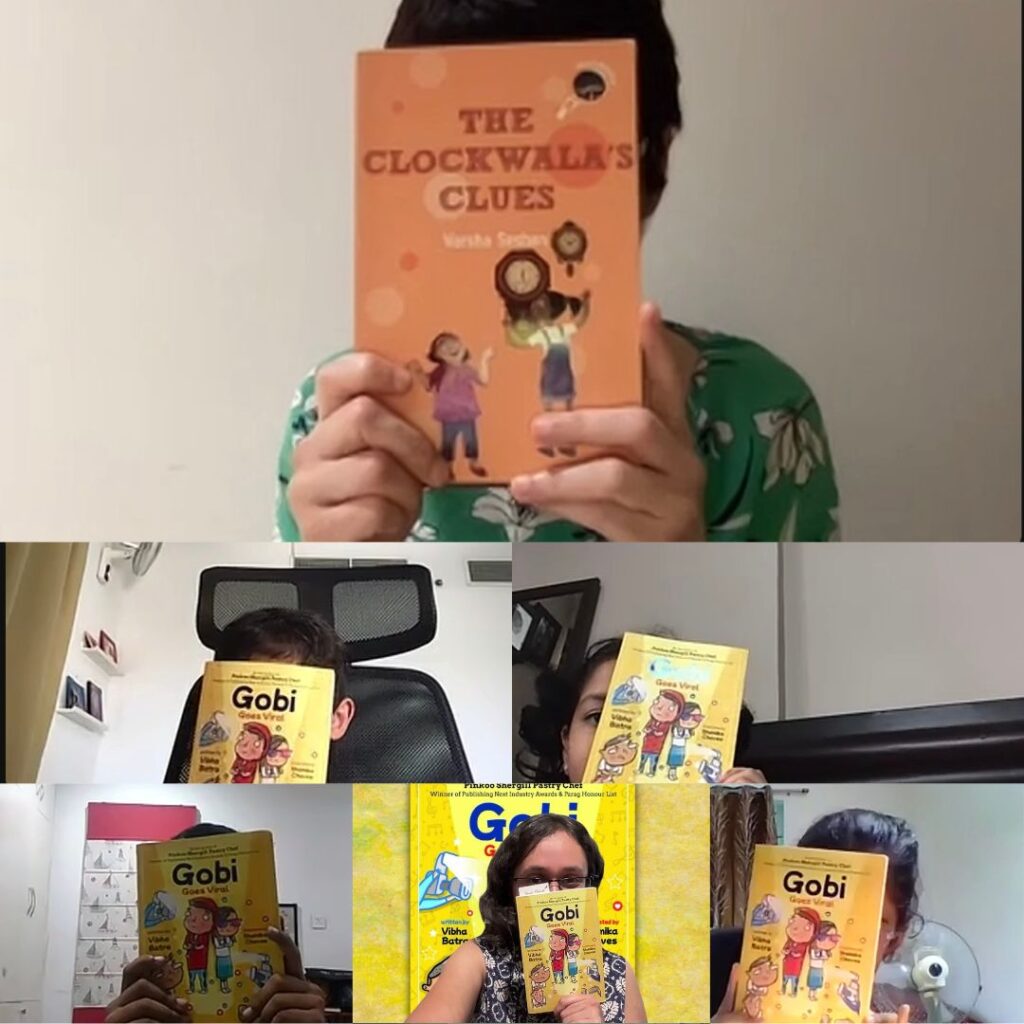
We’re rereading this book by Vibha Batra at my book club because it was so much fun when we read it for the first time! We rapped, spoke about differences we see between people, and even invited author Vibha Batra to talk to us!
This edition of my book club is sold out!
New batches begin every alternate month. Join my mailing list if you would like to receive email notifications about my programmes. Alternatively, follow me on social media – Facebook and Instagram – for regular updates.
The Mystery of the Disappearing Drone
January 6, 2026
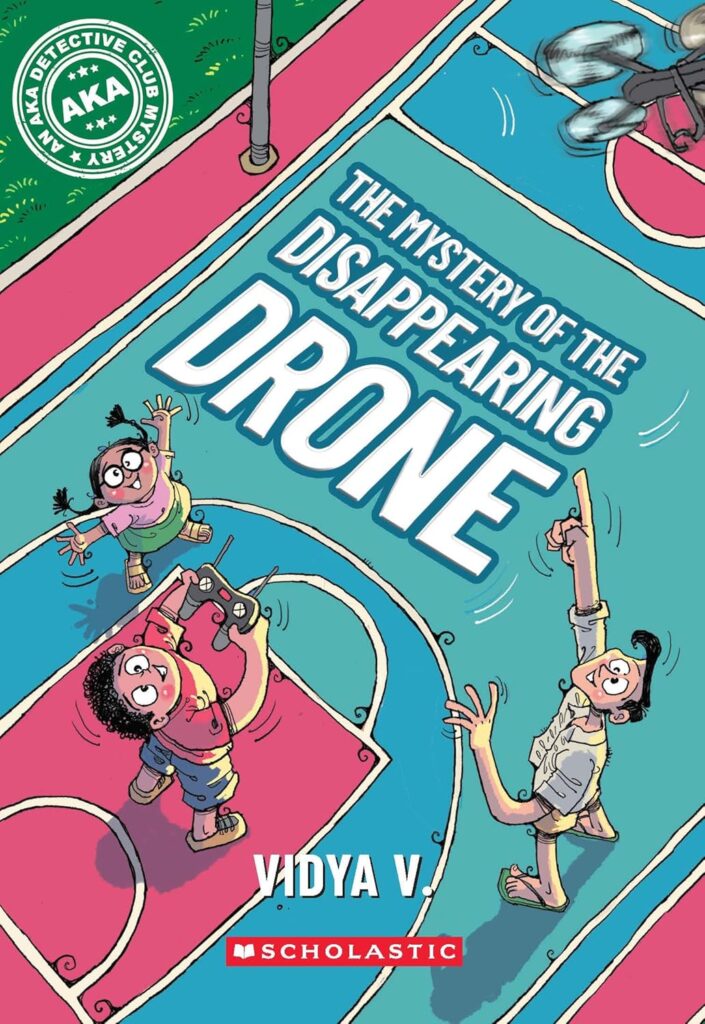
A few months ago, when I read The Mystery of the Disappearing Drone, I knew I would eventually introduce this AKA Mystery to my book clubbers. Some of them have read The Mystery of the Missing Geometry Boxes with me; I look forward to introducing this one to them!
Detective Notebook
As we read The Mystery of the Disappearing Drone, we’ll write detective notes. Whom do we suspect and why? What evidence do we have so far? How can we evaluate the evidence and reach a conclusion?
Mystery Game
I’ve played this game in the past, and it’s good fun! I will give my book clubbers a set of clues, based on which we will try to figure out who the murderer is!
Satisfying Conclusions
Does a cliffhanger make for a satisfying conclusion? Why, or why not? The writing exercise we do for The Mystery of the Disappearing Drone will focus on how to end a story.
Join a programme!
Registrations are now closed for this edition of Read, Write, Explore. New batches begin every alternate month. Join my mailing list if you would like to receive email notifications about my programmes. Alternatively, follow me on social media – Facebook and Instagram – for regular updates.
Amelia Bedelia Goes Wild
January 5, 2026
We read our first Amelia Bedelia (Amelia Bedelia Means Business) at the second edition of my reading programme, and what fun we had with it! Even though there were children who didn’t understand much of the word play, the humour came through, and we enjoyed the book thoroughly.
Amelia Bedelia Goes Wild promises to be just as much fun. Amelia is “sick as a dog”, and she can’t go to the zoo with the rest of her class. But it isn’t like Amelia to give up and give in. Oh, no. If she can’t go to the zoo, she must make one of her own!
Powered by her optimism and bursting with ideas, Amelia can do anything, as she shows us in this humorous chapter book that I’m waiting to share with my book club.

Wordplay
How can we read an Amelia Bedelia and not engage in wordplay? From idioms to homophones, this series explores the madness of the English language, delighting in the confusion its oddities create. We’ll go wild with a quiz on animal idioms, exploring how language can make you go bananas.
Animals
There exists a very special relationship between animals and children, and a book like Amelia Bedelia is perfect to explore this relationship. What strange animal facts do you know? What is your favourite animal and why? And most importantly, do you think it’s right to keep an animal in a zoo?
Figures of Speech
Amelia is sick as a dog. Are dogs always sick? And yet, the phrase sick as a dog exists. What other similes can we explore? Amelia Bedelia Goes Wild is perfect to (re)introduce similes, metaphors and hyperbole.
Join my book club!
Often, when I read a well-known book like Amelia Bedelia, a few children have already read it. It doesn’t matter in the least – they enjoy rereading it and laughing aloud once more. And the fun of a book club is that it’s not just about reading; it’s also about all the activities we do side by side.
This edition of my book club is sold out!
New batches begin every alternate month. Join my mailing list if you would like to receive email notifications about my programmes. Alternatively, follow me on social media – Facebook and Instagram – for regular updates.
A Boy Called Bat
January 4, 2026
What does it mean to be autistic? What exactly does the word inclusive mean?
I think these are conversations we must keep having, and the earlier we have them with children, the more likely it is that they will be sensitive to neurodiversity, and the fact that we can look at things from other points of view.
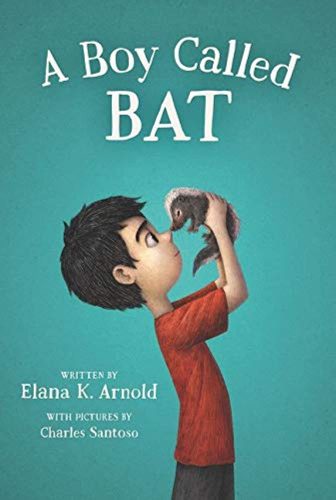
For me, the best way to have these conversations is through books – books like A Boy Called Bat.
Bat, aka Bixby Alexander Tam, is an unforgettable character, and his story is both funny and lovely. Bat may be autistic, but the truth is that all of us – neurotypical or neurodiverse – know what it is like to want something with all our heart.
And what does Bat want?
To convince his mother that a skunk kit is the perfect pet.
A story about friendship, sibling rivalry, and being different, A Boy Called Bat is another book we’re rereading at my book club because it’s such a rewarding, lovely story..
Our Five Senses
I’ve read so much about needing to rethink how we teach the senses. When we’re hungry, for instance, isn’t that a sense? Sure, we stub our toes and hit our elbows once in a while, but what sense prevents us from doing this all the time?
Understanding autism is also about understanding our senses and how they work. We’ll talk about the five senses we study at school, explore sights and sounds we like, and then move on to discussing what senses we have but take for granted.
Animals
Thanks to A Boy Called Bat, I learned that the young one of a skunk is called a kit! It’s a good time to explore a few others – foxes, wolves, kangaroos, and maybe a few unusual ones too.
Points of View
Bat’s mom thinks his dresser drawers are a mess. Bat thinks they’re organised. Janie is upset about her unicorn pajama top, even though Bat has a very logical explanation as to why he gave it to the skunk.
This is the perfect time to write two diary entries – one from Janie’s point of view and one from Bat’s. What would make them different? Which of them is in the wrong?
Join a programme!
Registrations are now closed for this edition of Read, Write, Explore. New batches begin every alternate month. Join my mailing list if you would like to receive email notifications about my programmes. Alternatively, follow me on social media – Facebook and Instagram – for regular updates.
Help, My Aai Wants to Eat Me!
January 3, 2026
Yes, Help, My Aai Wants to Eat Me! is as mad and fun as it sounds. I know LOTS of people who express affection by saying they want to eat people up. People like Avi’s Aai who thinks Avi is so adorable that she wants to eat him.
The problem is that Avi thinks she’s for real. And when his Aai is ill, he’s sure that he is being fattened up for her, rather like the story of Hansel and Gretel, where the witch fattens children up to eat them …
It’s humorously horrifying, but also sweet and charming; we’re definitely going to enjoy reading Help, My Aai Wants to Eat Me! at my book club.

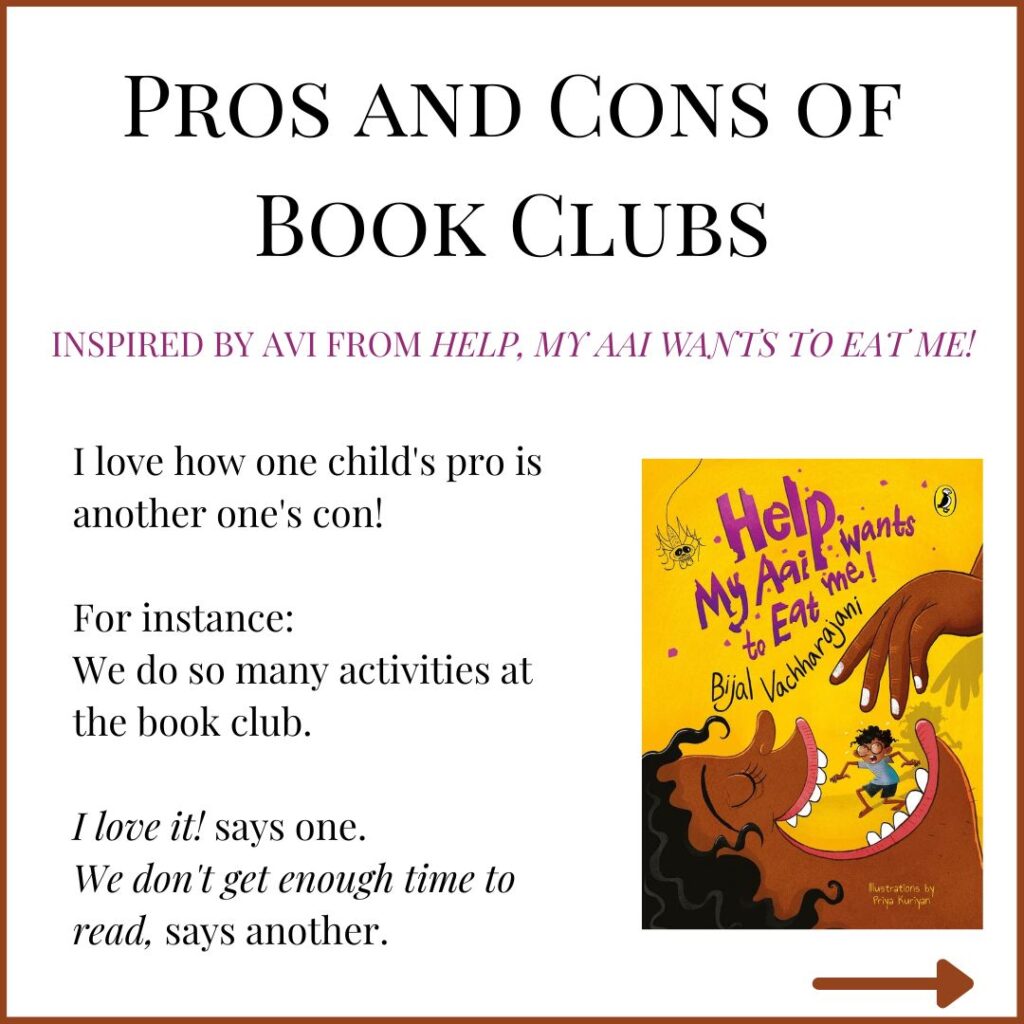
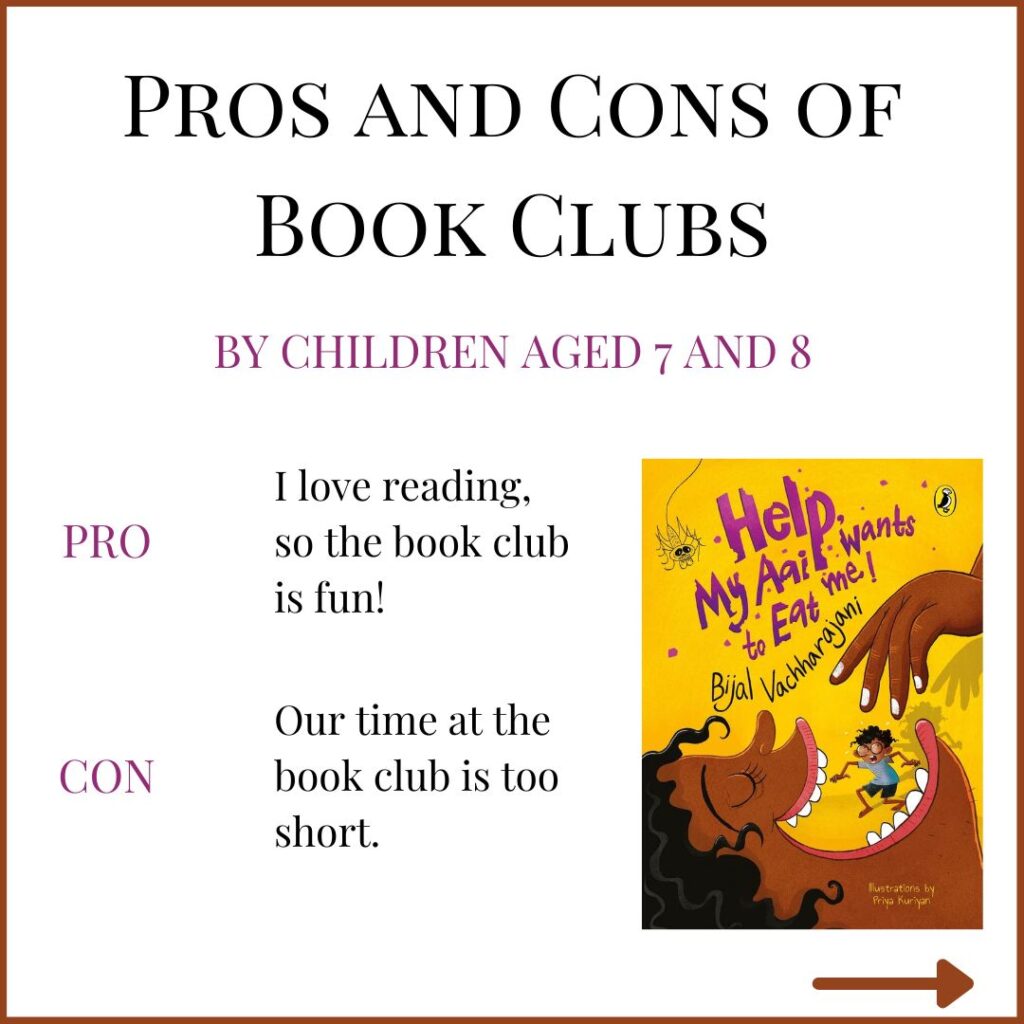
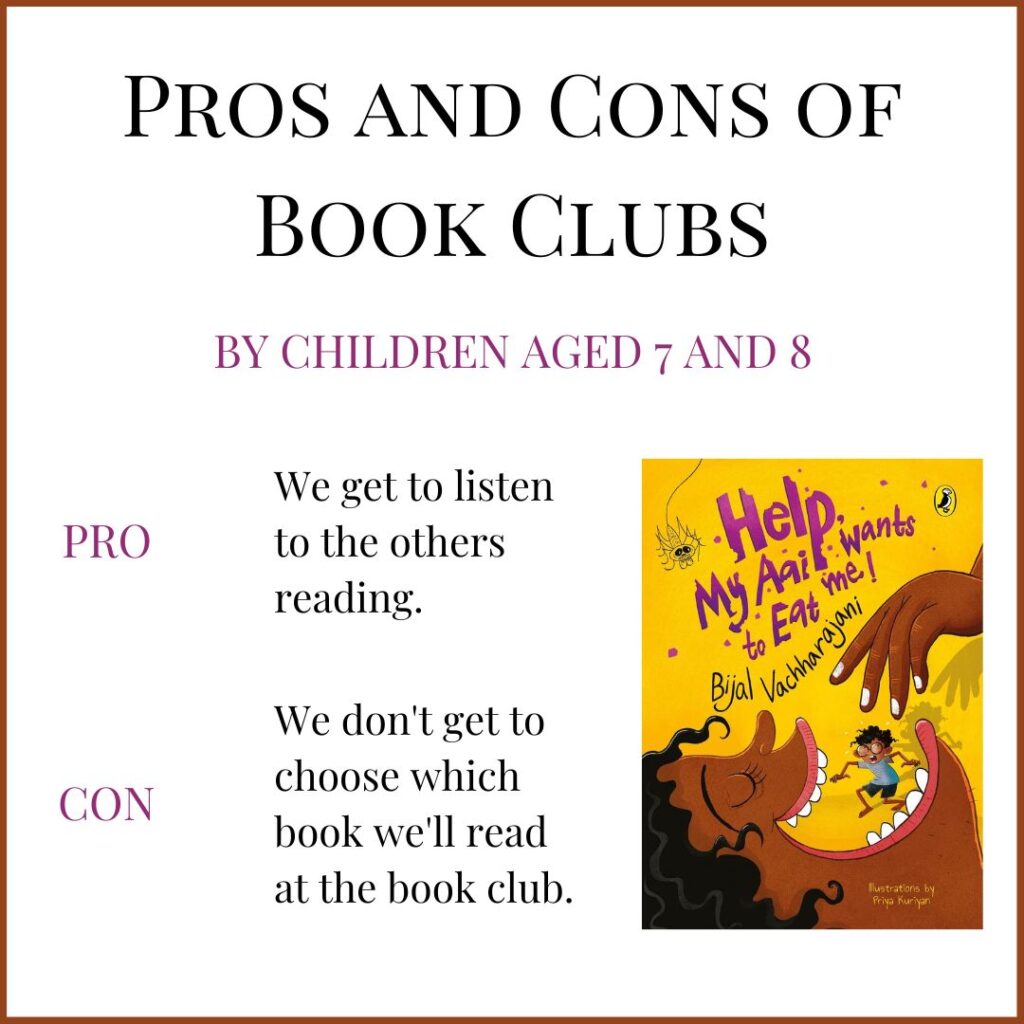
Pros and Cons
Avi looks at the pros and cons of everything, and we’re going to use this idea in class. What are the pros and cons of reading in a group? What about of online book clubs? Schools reopening?
Notes
Each day that his mother is sick, Avi writes a little note, just like his Aai would do. The notes are no more than a few sentences long, the perfect way to take our journalling journeys forward! We’ll take ten days to read Help, My Aai Wants to Eat Me! at my book club, and during these ten days, I’ll ask the children to write a little note to themselves every day. At our last class, we’ll share the most interesting ones with the others.
Food Idioms
A cup of tea. A piece of cake. You’re toast. A lemon (we came across this when we read Amelia Bedelia Means Business too!). What else? We’re going to be reading yet another book about food, so we’ll take our food explorations one step further by exploring the ways in which food finds its way into the English language.
I’ve chosen this book for my book club for the second time because we enjoyed it so much the first time we read it! Here’s some of what we did!
Join my book club!
This edition of my book club is sold out!
New batches begin every alternate month. Join my mailing list if you would like to receive email notifications about my programmes. Alternatively, follow me on social media – Facebook and Instagram – for regular updates.
Tiger Boy
January 2, 2026
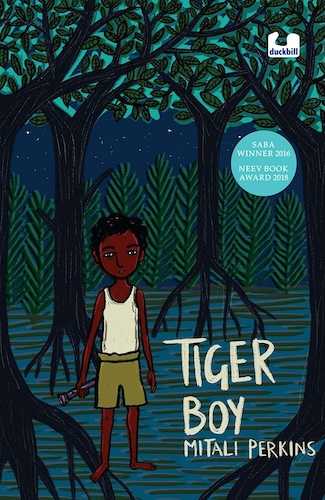
Sometimes, it takes a while to get to a book, even though you come across it everywhere. Tiger Boy by Mitali Perkins was like that for me. I knew it was set in the Sunderbans, and that it has sold over a lakh copies. I bought a copy, and yet, it sat unread on my shelf for months. I finally read it, and I’m looking forward to introducing it to my book clubbers! It’s a story about being true to yourself, making difficult decisions, and persevering even when it feels like the world is against you. Another book that reminded me of Red Eyes, I loved venturing with the protagonist Neel deep into the forest, as he struggles to balance what he wants with what he must do.
Imagery
As someone who loves visiting jungles, a book set in a forest opens up all kinds of possibilities. As we read Tiger Boy, we will work on bringing all five senses alive through a short description. What sights, sounds and smells would we encounter in a forest? How would our experience be different from that of another creature, perhaps one that lives in the forest?
Convincing Language
Neel must convince his parents that saving the tiger cub is the right thing to do. How do we convince people? Let’s play a game to find out!
A Difficult Decision
Often, children struggle with writing conflict, especially internal conflict. Once we finish reading Tiger Boy, we will work on a short story about a difficult decision. Step by step, I will lead the children through the process of writing a story so that we create a full-fledged, believable character in a story that shies away from teaching you a lesson.
Join a book club!
Registrations are now closed for this edition of Read, Write, Explore. New batches begin every alternate month. Join my mailing list if you would like to receive email notifications about my programmes. Alternatively, follow me on social media – Facebook and Instagram – for regular updates.
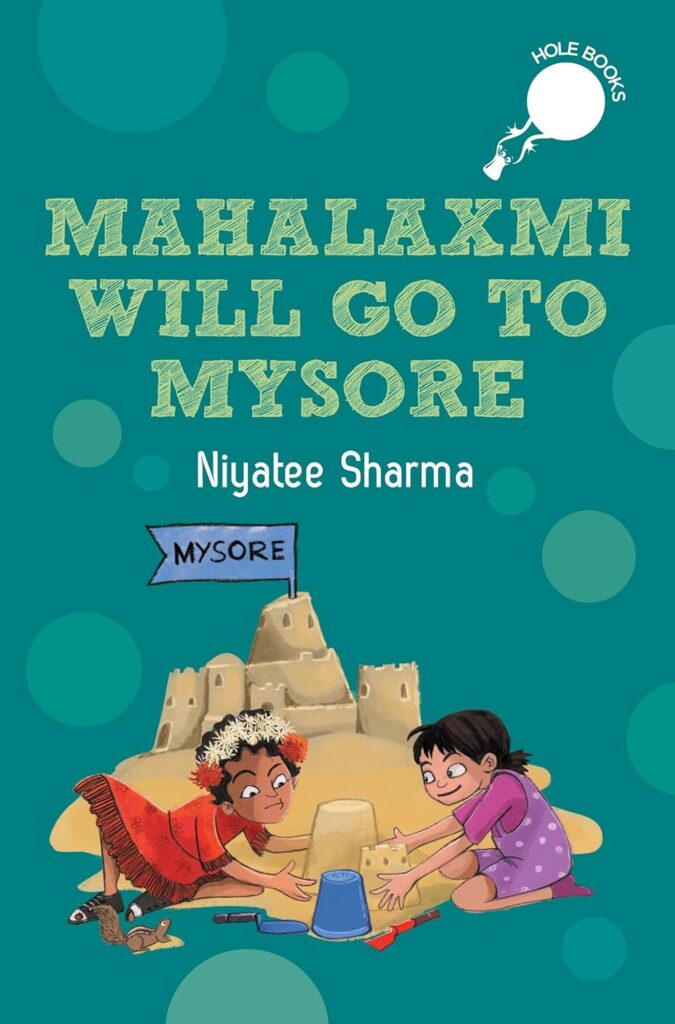
Mahalaxmi Will Go to Mysore
January 1, 2026
In some ways, Mahalaxmi Will Go to Mysore is a difficult read when it comes to my book club. A lot of children grow up in bubbles, unaware of what it means to be poor, oblivious to privilege and prejudice. I don’t know how effective our conversations will be, but I said it even when I reviewed the book–this book is a conversation starter. It needs to find its way into school libraries and from there into children’s hands. Hoping to make a tiny beginning with my book club, although I have no idea where our discussions will lead!
Friends
Most of our friends come from similar backgrounds because we meet them at school or at one of the many classes we go to. Do you have friends who are different from you? What would you do if your friend could not come on a class trip with you?
Holidays
Since Mahalaxmi Will Go to Mysore is all about a class trip to Mysore, I’ll ask my book clubbers to tell me about a place they recently visited. I would love it if they showed me a picture (or five!) and told me about what they enjoyed most and why. Let’s see if we can write a very brief journal entry or travelogue!
Crafts Fair
Mahalaxmi has a crafts fair at her school, so we’ll have one at our book club! If the children can show me something they have made, that would be wonderful. If not, we’ll make something together–either some origami or a collage!
Join us!
This edition of my book club is sold out!
New batches begin every alternate month. Join my mailing list if you would like to receive email notifications about my programmes. Alternatively, follow me on social media – Facebook and Instagram – for regular updates.
Thrills and Chills – A Horror Writing Workshop with Shabnam Minwalla
December 12, 2025
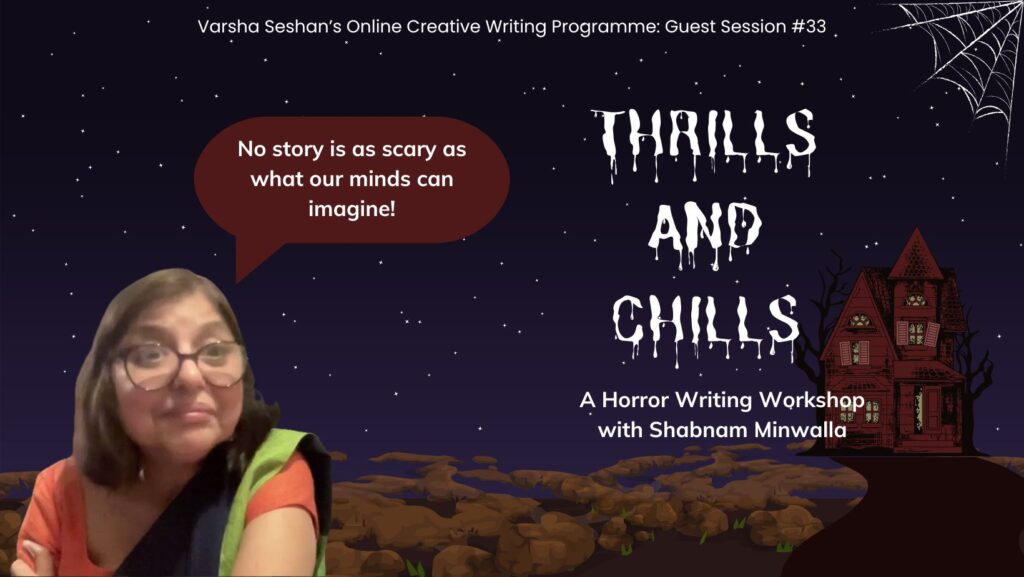
What a thrilling, chilling session we had with Shabnam Minwalla! It was interactive and fun, full of creepy examples and wonderful ideas.
Shabnam began by telling us what inspired her book Saira Zariwala Is Afraid–mysterious messages on her daughter’s phone. From there, we explored all kinds of things, from settings, to concepts for horror stories. I loved how many participants shared examples of regular places that become sinister! Playgrounds, people who are a little too sweet, mysterious lights … Even ordinary places like schools and malls have so much potential for horror!
One big takeaway for me was the idea that what we imagine is far more frightening than what is written. As a result, an unreliable narrator who makes us feel uncertain works perfectly for horror!
Beginning with a setting that has potential, moving to a “what-if” sentence, and then creating a sense of suspicion, where we wonder whom to trust–these are the makings of a great horror story!
I can’t believe that this was my thirty-third guest! We’ve explored so many genres and worked on so many different styles. I’m grateful to each guest who’s added a spark to my writing programmes. This one was the last of the season; look out for the next guest session in April 2026!
Delightfully True – A Workshop on Writing Creative Nonfiction
November 9, 2025
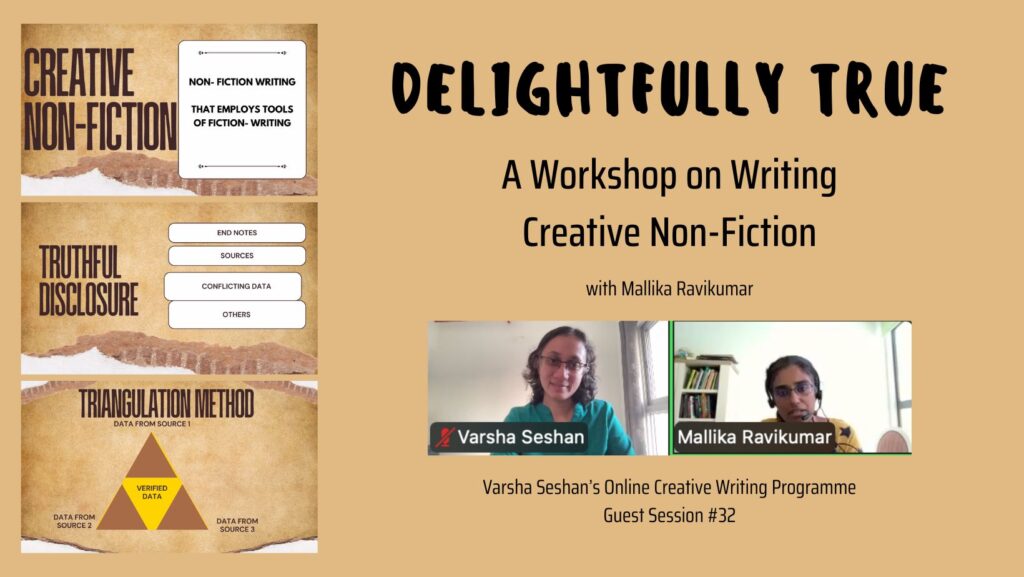
What is creative nonfiction? What makes it different from regular nonfiction?
Award-winning author Mallika Ravikumar led us through the second guest session of the season, teaching students what makes creative nonfiction engaging. From techniques of writing–like showing instead of telling–to research methodology, Mallika helped students understand how to go about writing credible creative nonfiction.
An important aspect of writing about true events is perspective. The same incidents can be viewed from multiple points of view. How do we choose a point of view? And what is our responsibility as writers once we’ve chosen a viewpoint?
At the end of the session, lots of participants who had read Mallika’s books had questions for her, which was heartwarming! She left them with an exercise that explores perspective and technique, which I hope will give them firsthand experience of how engaging creative nonfiction can be!
Manya Learns to Roar
November 7, 2025
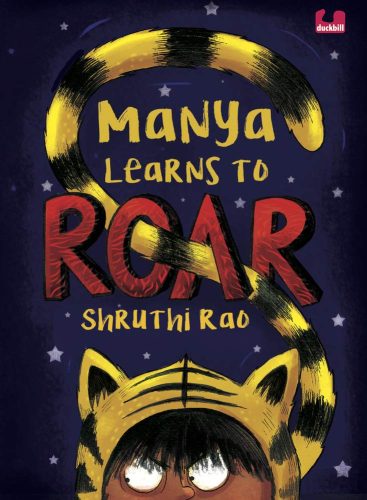
We’re rereading Manya Learns to Roar by Shruthi Rao at my book club! We read it at the very first edition of my reading programme, when I tentatively started out in 2020, wondering if I would be able to sustain an online book club for children. All those who read it with me then are now too old to be part of the book club, so it’s time to reintroduce a book I love!
Banyan High School, is going to present a play based on Rudyard Kipling’s The Jungle Book, and Manya wants the role of Shere Khan. She knows it is the first step towards winning an Oscar, and she’s already writing her acceptance speech for that.
I loved Manya Learns to Roar because of how true it is to childhood dreams and the way each child is such a charming mixture of supreme confidence and deep vulnerability.
Before I even read the book, I was drawn to the idea of a child with a stammer determined to take part in a school play. Once I read it, I knew I had to work with it because there’s just so much you can do with a book like this!
Codes
When I started reading Manya Learns to Roar, I didn’t notice that the chapter numbers were written in the special code that Manya and her best friend Ankita share. I think I was on chapter six when my eyes widened. Ooh! The chapter names are in code! And as Manya and Ankita know, the very fact that it is bound to be dismissed as random doodling makes it the perfect kind of code. Codes, puzzles and cryptograms are thrilling, and I know that the children at the reading programme will enjoy them as much as I do!
Speaking
Did you know that tongue twisters are said to be a great way to overcome a stutter? Manya Learns to Roar provides the perfect opportunity to work on speech and recitation. Reading aloud is one aspect of the programme, and tongue twisters will make a fun addition to all the speaking we do.
Drama
As a book that revolves around the production of a play, it’s ideal for my ‘come as a character‘ activity! While I hope that children will come as one of the characters from the books we read together, I don’t mind if they choose someone else altogether. The element of surprise makes everything fun!
Join my book club!
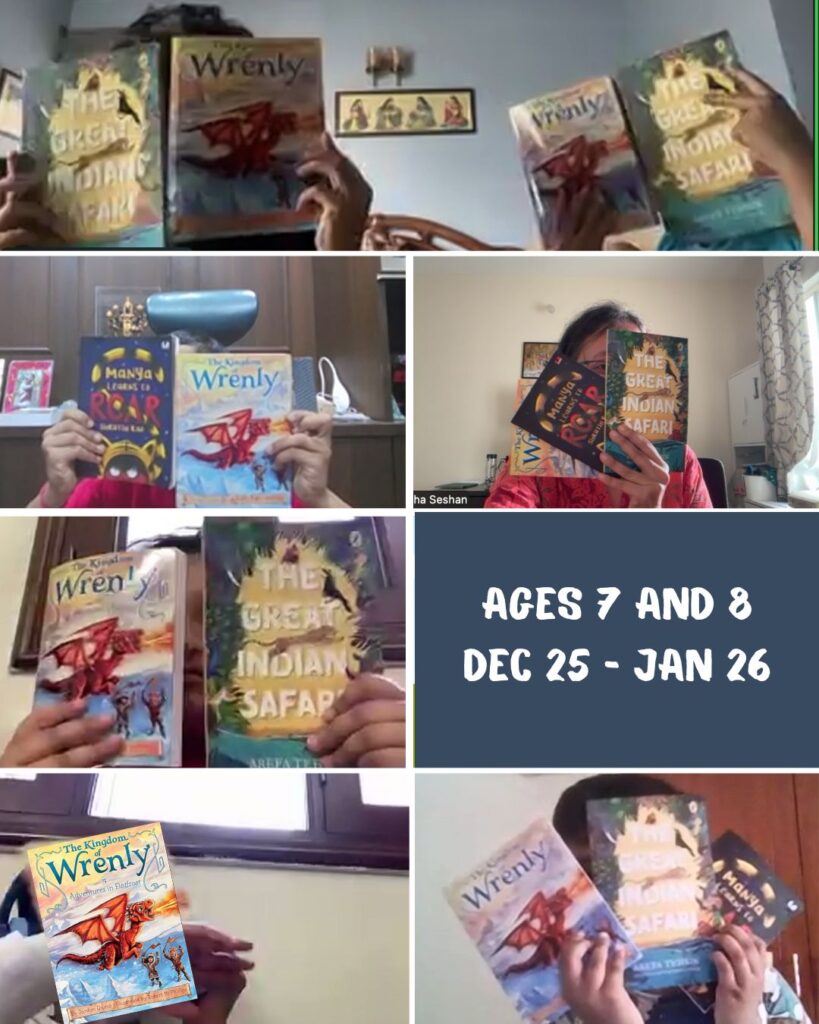
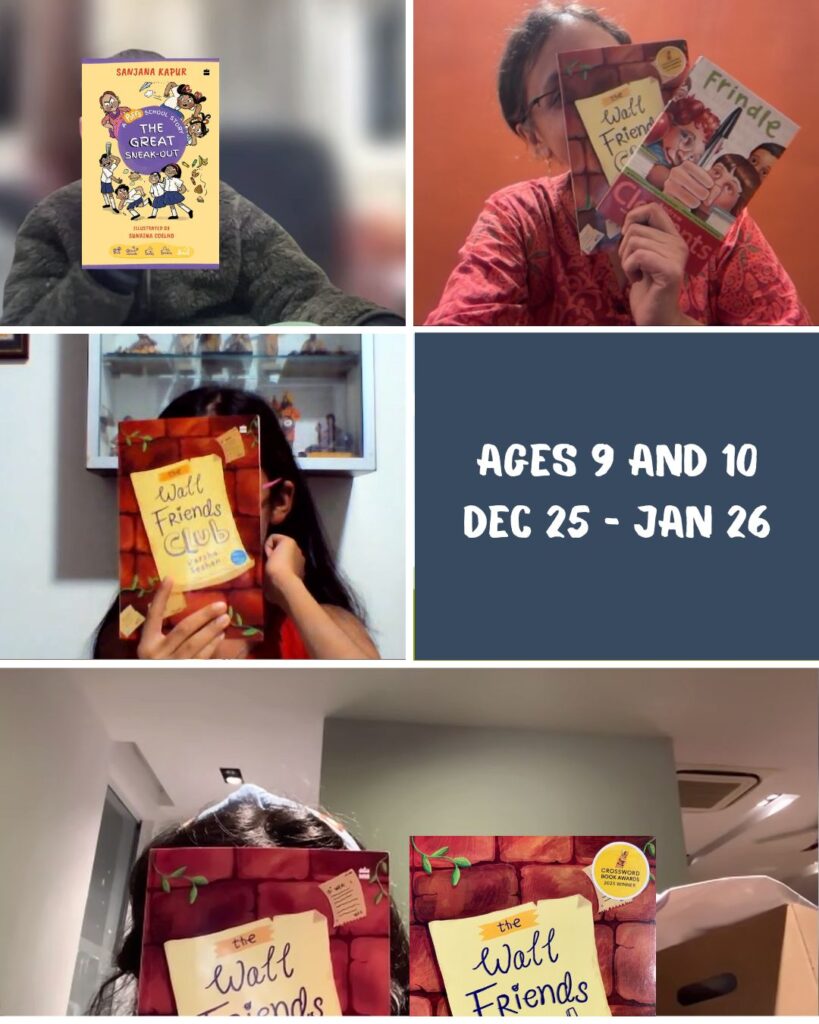
Registrations are now closed for the December 25 – January 26 edition of my book club. New batches begin every alternate month. Join my mailing list if you would like to receive email notifications about my programmes. Alternatively, follow me on social media – Facebook and Instagram – for regular updates.
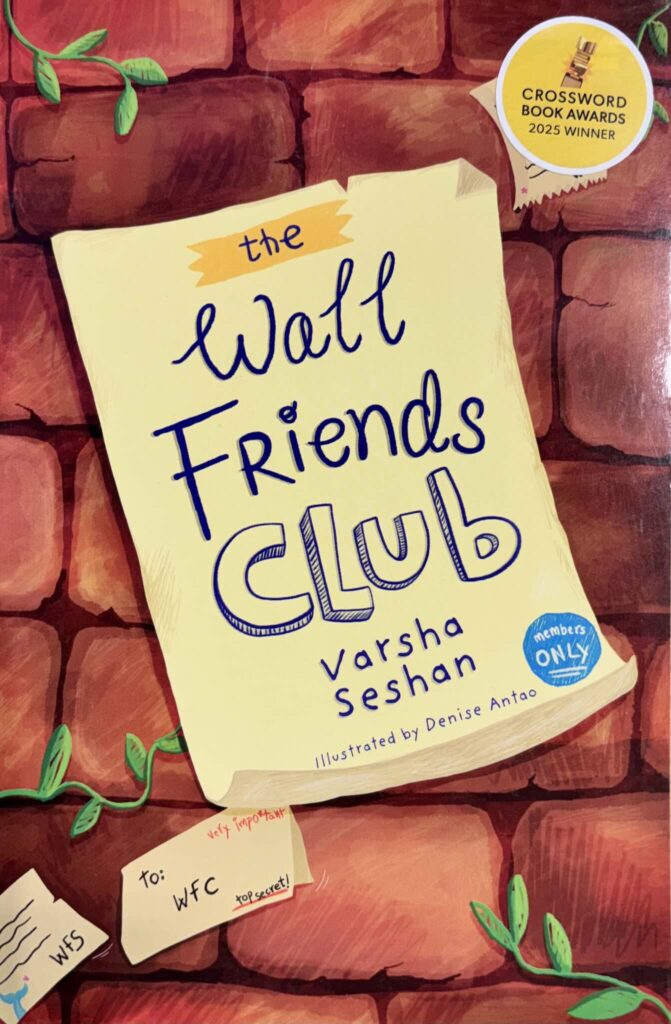
The Wall Friends Club
November 6, 2025
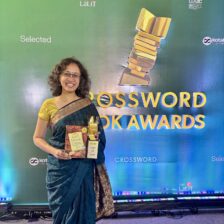
The Wall Friends Club won the Crossword Book Award 2025! I’m so excited to be introducing this book of mine to young readers!
In this book, Anandi, a soon-to-be 10-year-old leaves a letter in a gap in the wall for someone else to find. When Sriya finds the letter, they begin to write to each other regularly. Old-fashioned letter-writing will be fun to explore with my book clubbers!
Clubs
Have you read books about clubs? What do the clubs do? If you set up a club, what would you call it? Who would be part of it? What would you do together?
Writing Letters
Anandi and Sriya are becoming the best of friends, but they have never met! What would you write to a stranger? Let’s write a letter together!
Code-Making and Code-Breaking
Sriya is a master code-maker! What about you? Can you solve a cryptogram? Write and decipher messages in code as you explore the book!
Join my book club!
Over the years, I’ve introduced several of my books to my book clubbers!
- The Clockwala’s Clues
- Dragonflies, Jigsaws and Seashells
- Dhara’s Revolution
- The Best Idea of All
- The Prophecy of Rasphora
Looking forward to reading another one with them!
Registrations are now closed for the December 25 – January 26 edition of Read, Write, Explore. New batches begin every alternate month. Join my mailing list if you would like to receive email notifications about my programmes. Alternatively, follow me on social media – Facebook and Instagram – for regular updates.
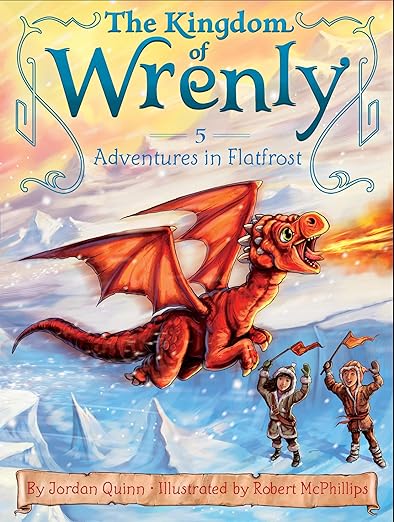
The Kingdom of Wrenly: Adventures in Flatfrost
November 5, 2025
Fantasy is almost always guaranteed to appeal to my book clubbers! And that’s why we’re reading two works of fantasy this time–The Vampire Boy and Adventures in Flatfrost. The latter is part of a well-loved series too, making it all the more exciting for my book clubbers. Just like when we read a couple of books from The Dragon Masters series, I’m sure that at least some of my book clubbers will end up reading several other books in the set!
A Pet Dragon
If you had a pet dragon, how do you think you would train it? We’ll work on creating a dragon character with a human friend. How does the dragon look? Where does it live? Let’s draw a picture!
I would also love to see if we can invert the idea. What if you were a dragon’s pet? How would you need to be trained?
World Building
Several years ago, when we read Paati Goes Viral, we worked on world building with a fun activity involving beans, pencils and a map! I’m looking forward to repeating this with a new set of book clubbers.
Magical Adventures
A story needs a problem and a solution, so we will work on an elementary understanding of this idea. What is the problem in the story and how do Lucas, Carla and Ruskin find a solution? Once we have worked on this idea, we’ll come up with other problems the characters in Wrenly could face, and how they would find imaginative solutions!
Join a book club!
I love to see my regulars slowly building their own libraries! As they outgrow books and pass them on to new readers, they discover new favourites. It’s heart-warming!
Registrations are now closed for the December 25 – January 26 edition of my book club. New batches begin every alternate month. Join my mailing list if you would like to receive email notifications about my programmes. Alternatively, follow me on social media – Facebook and Instagram – for regular updates.
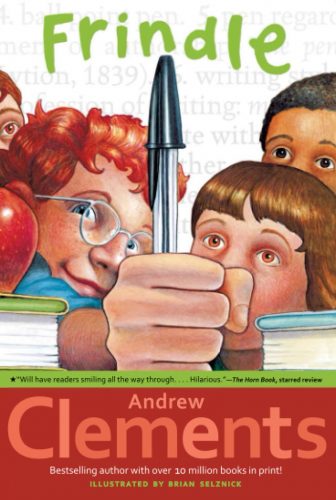
Frindle
November 4, 2025
We’re rereading Frindle at my book club! I read it quite a long time ago, and it’s EXACTLY my kind of book.
Nick Allen isn’t really a troublemaker. He just likes to have fun. And where’s the harm in making up a new word?
Pen. Quite a boring, mundane word. Why not call it a frindle instead?
And that’s the premise of this delightful, fun story that keeps you reading page after page. I love how the book is plotted as well as how the characters develop as the story proceeds. Finally, a book about words is perfect for a book club!
The Question
As so many children have just come back after their Christmas break, chapter three is perfect! Following Nick Allen’s school system, we’ll talk about our holidays, do a quick vocabulary quiz, and then come to the most fun thing of all – the time-wasting question. I know that this part will make the children giggle, and I can’t wait to see what mischievous, fun ideas they come up with when we discuss what they do to postpone a lesson just a little bit!
Making Up Words
When we read Paati Goes Viral, we spoke about how words are created, and how their meaning changes. We then made up words of our own, which we promised to use right through that edition of my reading programme. I remember at least three words the children created – sclem (which was to substitute ma’am), electric (to use instead of viral) and trook (for book). It was such fun!
With Frindle, I look forward to doing something similar. We’ll create new words and see how successful we are in making them common parlance.
A Letter from Ten Years Ago
No spoilers here, but Mrs. Granger writes a letter to Nick and sends it to him ten years later. He knows it’s the same letter because he wrote his name on the envelope. The letter itself turns out to be the most brilliant surprise ever.
We’re going to work with this idea in two phases. Phase 1 is where the children will make a little time capsule for themselves. Time capsules get lost, though. So, I’m also going to ask them to write notes to one another, which they will send to me privately in the chat box. Ten years later, if I can get in touch with them again, I will send them their letters. They’ll be adults by then!
From the last time I read this book, I have two letters I’ve promised to send in 2032!
Join my book club!
I love Andrew Clements’s books, and I’ve read so many of them!
Here are a few:
Registrations are now closed for the December 25 – January 26 edition of Read, Write, Explore. New batches begin every alternate month. Join my mailing list if you would like to receive email notifications about my programmes. Alternatively, follow me on social media – Facebook and Instagram – for regular updates.
The Great Indian Safari
November 3, 2025
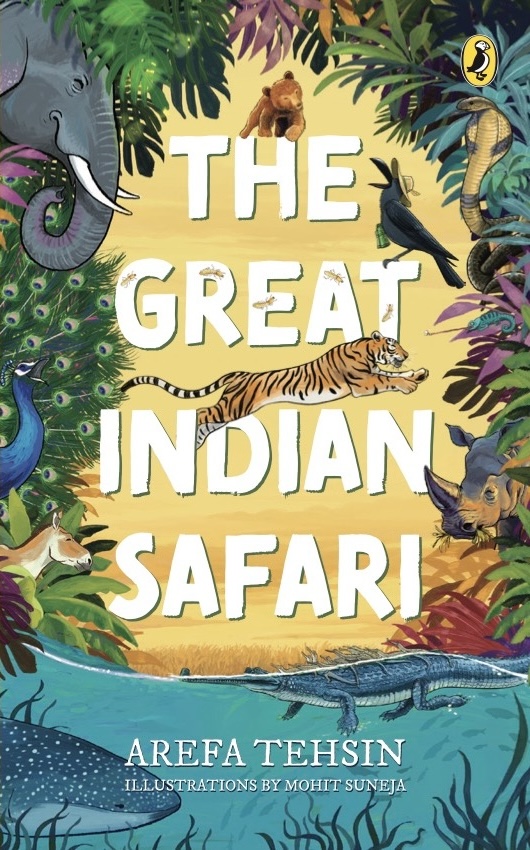
I’ve read barely any nonfiction with my book club. Historical fiction, yes, but nonfiction? I can remember having read only Sita’s Chitwan. The theme of The Great Indian Safari by Arefa Tehsin is similar–wildlife. It’s a theme close to my heart, and I find myself using every opportunity I can to introduce books about it to children.
Engaging in its format and full of possibility in terms of what I can do with it at a book club, The Great Indian Safari is a work of creative nonfiction told from the point of view of Charred the Bard, a jungle crow. I look forward to soaring through the forests of India with him!
Wildlife
How many of my book clubbers have been on a safari? What rules do we follow on safaris and why? During one of our sessions, each of my book clubbers will present something about any animal found in the jungles of India. As an additional challenge, I will ask them not to choose one of those mentioned in the book!
Poetry
Charred the Bard has poems for us right through the book! This is the perfect prompt for us to work on rhyming words. We’ll do a timed activity, jotting down as many rhyming words as we can for a set of words I give the children. Perhaps we could even write a poem!
Spotting Animals
In the forest, we search for animals with our eyes peeled. For me, being on high alert is thrilling, for anything could be lurking in the bushes. While I can’t take my book clubbers to the jungle, we will do a word search instead, looking for animals in a maze of other letters!
Join a book club!
Parents and teachers often ask me how to get children to read. While there’s no foolproof method, here are three suggestions I always give them:
- catch them young
- read a range of books (and that’s why I’m introducing nonfiction again)
- make reading fun
I know I’m biased, but a book club is a great way to bring these three together. But equally, a book club is for children who already enjoy reading. Reading can be isolating, but a book club brings the excitement back with all the activities we do and conversations we have.
Registrations are now closed for the December 25 – January 26 edition of my book club. New batches begin every alternate month. Join my mailing list if you would like to receive email notifications about my programmes. Alternatively, follow me on social media – Facebook and Instagram – for regular updates.
The Great Sneak-Out
November 2, 2025
The Great Sneak-Out is such a fun book that I knew I wanted to introduce it to my book club the moment I read it! Humour, silliness and sweetness come together to make this a perfect read for the early middle-grade reader.
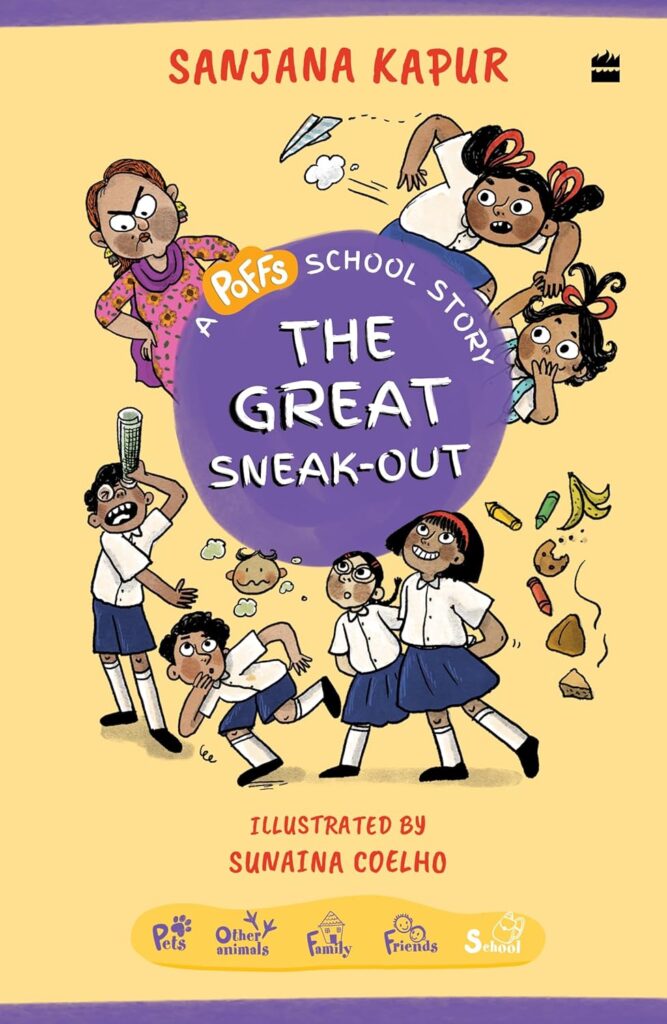
Siblings
As this is the first book we will be reading at Read, Write, Explore in December, we’ll talk about siblings, both real and fictional! Do you have a sibling? We’ll have a freewheeling conversation, but we’ll also work on similes, comparing siblings to different things in nature, an activity I’ve done before and enjoy. This will connect well to our next activity!
Figures of Speech
To say Ampoorna Ma’am was angry would have been like calling the Taj Mahal a hut.
What figure of speech is this? How can we bring humour into our writing by using comparisons? Let’s find out!
Chapter Titles
Creative writing is an essential part of Read, Write, Explore, and as we read The Great Sneak-Out, we’re going to use the chapter titles as our inspiration. ‘My Cranky Sister Can Bite’. ‘I Commit a School Crime’. What new ideas can these titles spark?
Join a book club!
Read, Write, Explore is an online reading and writing programme that combines the joy of a book club with an introduction to creative writing. I choose books that are lighthearted and easy to read, and based on these books, we do a variety of activities, including listening, critical thinking and craft. One class every two weeks is devoted to creative writing.
Registrations are now closed for the December 25 – January 26 edition of Read, Write, Explore. New batches begin every alternate month. Join my mailing list if you would like to receive email notifications about my programmes. Alternatively, follow me on social media – Facebook and Instagram – for regular updates.
The Vampire Boy
November 1, 2025
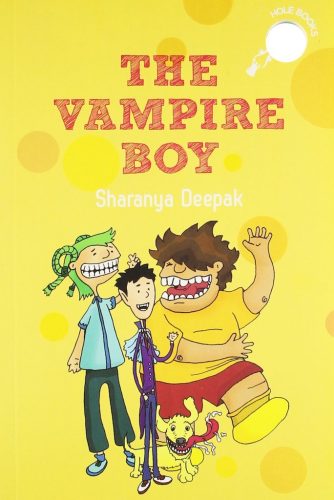
The Vampire Boy by Sharanya Deepak is another delightful hOle book – quirky and unique. We’ll be rereading it at my book club in December 2025!
The government has decided that all children – including young vampires – must go to school. What is Kristofer to do? He knows he will be shunned, but off he goes, only to meet with curiosity and bullying. In a way that is perfect for this age-group, humour underlines everything that happens to Kristofer. Soon, he makes friends with not just Bo, but also Bran, the class bully. Together, they go to school, they go on a camp, and they even catch a chicken thief!
I’m waiting to reread it with my book clubbers. Here’s what I plan to do with it.
Book Discussion
Kristofer is a vampire who hates blood!
As this is the first book we will be reading together, a good way to begin is with a discussion on what makes us similar to and different from our friends and family. For example, perhaps all your friends love Geronimo Stilton and you do too. On the other hand, perhaps all your friends love cricket and you hate it. Let’s get to know one another!
Number Games
Kristofer loves numbers. He counts the stars in the sky. He counts blades of grass. He counts the number of grey hairs in Mr Gazillion’s head.
One of the reasons I choose a hOle book for each edition of my book club is that the entire set is perfect in terms of length. We have the time to read, share opinions and play games that link reading to other ideas and subjects. With The Vampire Boy, I look forward to playing number games with the children. From multiplication Bingo to counting games, there’s so much we can do with numbers!
The Five Senses
Bran and Bo are so noisy that no creatures in the forest come close to them. Yet, the great banyan tree is like magic, its leaves lit with fireflies.
This leads us to a lovely imaginative activity. Listening to a little music, the children will imagine what they can see, smell, hear, taste and feel in the forest. I’m intrigued to know what their responses will be!
Join a book club!
Registrations are now closed for the December 25 – January 26 edition of my book club. New batches begin every alternate month. Join my mailing list if you would like to receive email notifications about my programmes. Alternatively, follow me on social media – Facebook and Instagram – for regular updates.
Draw It In Style with Lavanya Karthik
October 26, 2025
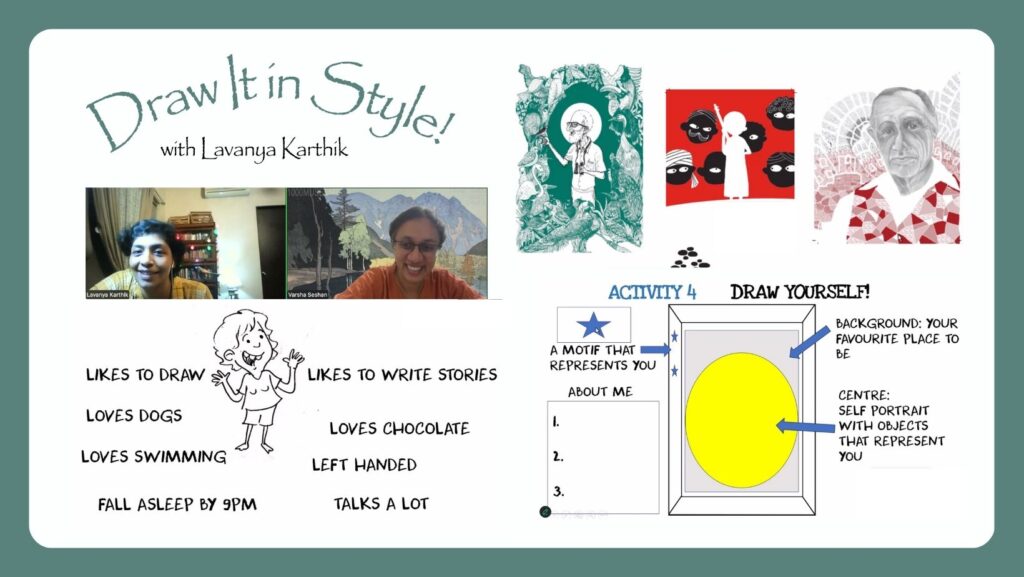
We had nearly twenty participants during the first guest session of the season, an illustration workshop with Lavanya Karthik!
Focusing particularly on her Dreamers series, Lavanya talked about her creative process, and how she chose various art styles for different books. The idea of the session was to get participants to work towards creating a self-portrait. To do this, she introduced three styles that she researched and used in her books–miniature Mughal art, which she brought into The Boy Who Loved Birds, Bhil art, which features in The Girl Who Loved to Sing, and mosaic art, which you can find in The Boy Who Built a Secret Garden.
Step by step, she led the participants towards the final activity, asking them to list personality traits, choose a symbol or motif that represents them, and work on an elaborate frame, drawing from miniature paintings. We didn’t have much time to draw, but I enjoyed the symbols the children chose–from rollerblades to a treble clef!
And the joy of online workshops? We had participants from five countries joining in! It’s such a treat to see children coming together like this!
Boo-Boo’s Adventures
September 7, 2025
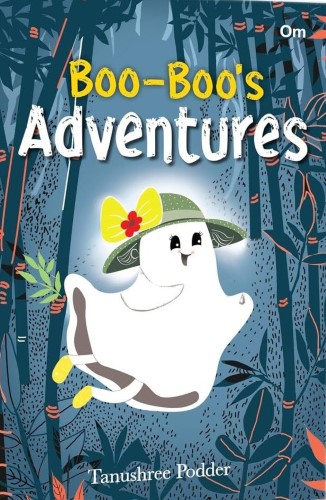
We’ve read Boo-Boo Investigates and Boo-Boo the Eco-Warrior; we’re now all set to read Boo-Boo’s Adventures! My book clubbers particularly enjoy the Boo-Boo series because the chapters are like little standalone stories, which are fun and engaging. A friendly ghost and a kind human child make a charming pair!
Good Deeds
GGPa announces an award for the one who does the most good deeds, and this sets the little ghost Boo-Boo off on a series of adventures. It’s a good time to talk about good deeds we can do! For one, I will ask the children what they feel they can do. Then, in the following class, I will ask each of them to tell me what good deeds they did!
Word Games
Word search puzzles, unscrambling words, and a spelling bee are a great way to revisit words we come across when we read. They’re also a fun way to acquire new vocabulary!
Create a Ghost
If you had a ghostly friend, where would they live? What would their name be, and what do you think you could do together? In what way do you think a ghostly friend would be different from a human friend?
Join a programme!
Registrations are now closed for the October-November 2025 edition of my book club. New batches begin every alternate month. Join my mailing list if you would like to receive email notifications about my programmes. Alternatively, follow me on social media – Facebook and Instagram – for regular updates.
Blame It on the Untz
September 6, 2025
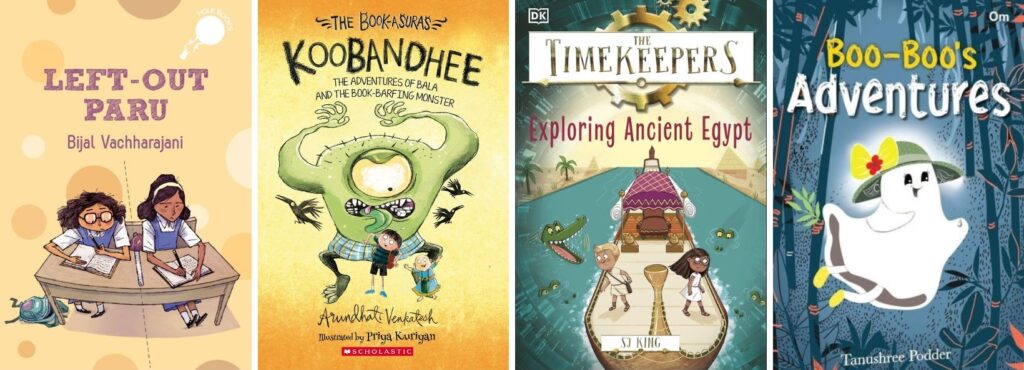
Blame It on the Untz by Lavanya Karthik is such a fun book! From the crocodile of group work to music making and competition, there’s so much we can do with this book at my book club! Once more, it’s part of a series–POFFS. I don’t yet know whether I will read the others in the series with my book clubbers, but I’m happy to introduce the series to them. They can decide whether they’d like to read the other books in the set!
Meanwhile, here’s what we will do as we read.
Beatboxing
I wonder: do the children at my book club know how to beat box? I’ve never asked! But Faizal in the story is a beatboxer, and perhaps we can give it a shot too. Just by chance I came across a fun beatboxing activity recently, and I can’t wait to try it out!
The Crocodile of Group Work
For Adi, the protagonist of Blame It on the Untz, group work is like a crocodile. In groups, my book clubbers will make different comparisons. What is group work like for them and why? I’m sure this will be a hilarious, imaginative activity!
Songwriting
We’ve never worked with songwriting before, and I look forward to the challenge! While we won’t look at setting it to music, we will explore how we can work on lyrics, creating both a chorus and a couple of verses.
Join a programme!
Read, Write, Explore is designed for children who want a taste of creative writing but are not necessarily ready to do all the work that an intensive writing programme demands.
Registrations are now closed for the October-November 2025 edition of my book club. New batches begin every alternate month. Join my mailing list if you would like to receive email notifications about my programmes. Alternatively, follow me on social media – Facebook and Instagram – for regular updates.
The Timekeepers: Exploring Ancient Egypt
September 5, 2025
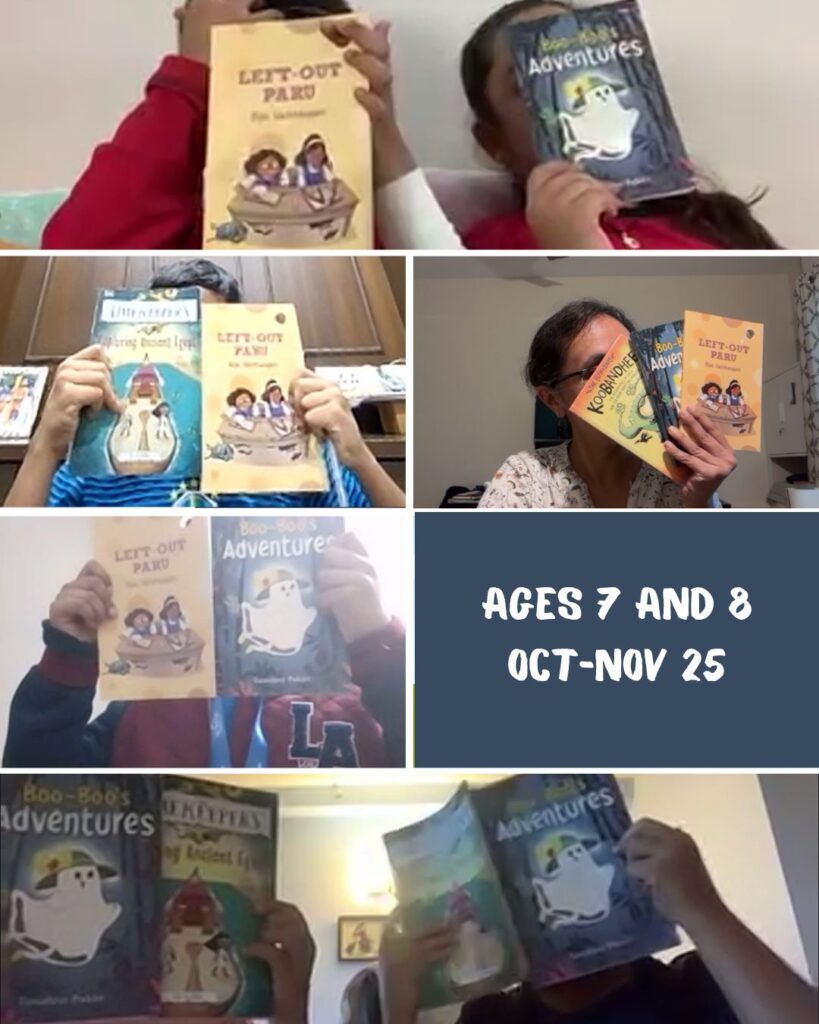
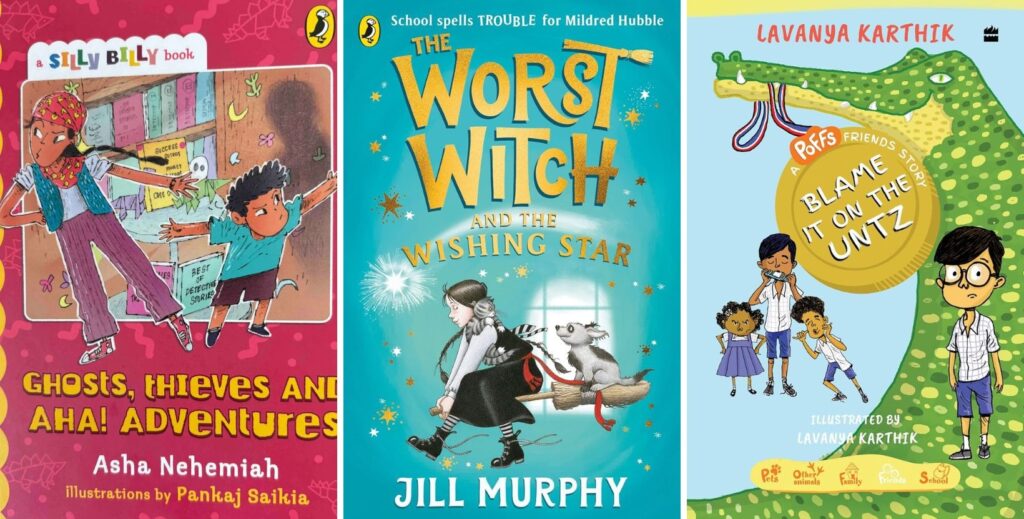
Time travel, adventures in history, and a gang of kids set to defeat a villain come together in The Timekeepers: Exploring Ancient Egypt. At the October-November 2025 edition of my book club for ages seven and eight, I’m excited to be introducing yet another fun series of books to children. Ancient Egypt, with its mummies, pyramids, tombs and mythology, continues to fascinate children and adults. What better way to explore this ancient civilisation than through an adventure story that brings fact and fiction together?

Time Travel
If you could travel through time, how do you think you would do it? Would you need a machine? Special watches like the Timekeepers? Or something else, altogether different? As we read, I will ask the children to imagine a time machine and draw a picture. We’ll also discuss where we would like to time travel to and why!
Ancient Egypt
So many aspects of ancient Egypt are already familiar to most children! We’ll do a small word search puzzle exploring words we might be familiar with and learning a few more.
Quizzes and Timelines
The Timekeepers: Exploring Ancient Egypt includes a nonfiction section with quizzes, a timeline and a glossary. Additionally, there are links drawn between the past and the present, encouraging us to discuss what we think would be different from the ancient past and what would be similar.
Join a programme
Registrations are now closed for the October-November 2025 edition of my book club. New batches begin every alternate month. Join my mailing list if you would like to receive email notifications about my programmes. Alternatively, follow me on social media – Facebook and Instagram – for regular updates.
The Worst Witch and the Wishing Star
September 4, 2025
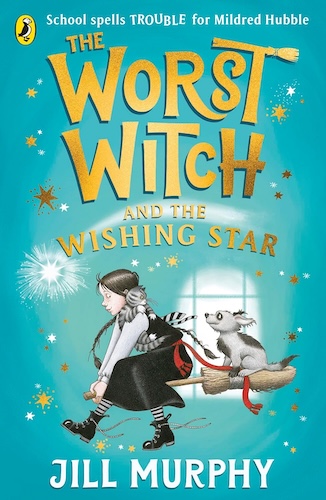
We read Jill Murphy’s The Worst Witch to the Rescue last year; I’m excited to read another book from the series. The Worst Witch and the Wishing Star brings together so many things children love that I’m sure we’ll enjoy it. For one, most of my book clubbers love reading about magic. Added to that, when we have wishes that come true, school rivalry, and all the hilarity that comes with a clumsy protagonist, we have the makings of a thoroughly enjoyable read!
Wishes
What would you wish on? A star? A birthday cake? An eyelash? I’d love to know. Taking this further, if you could wish for anything in the world, what would you wish for?
Similarly, if you could make anyone else’s wish come true, which wish would you choose and why?
Magical Games
Stories come alive to us and linger in our imaginations because of the characters the authors painstakingly bring to life. A game I love playing is one where children name magical creatures in turn. It’s a fun game, which delves into our magical knowledge and all the fantastical creatures we’ve encountered on our reading journeys.
Fan Fiction
I taught fan fiction for the first time a few months ago, and it was such fun! Once we’ve finished reading The Worst Witch and the Wishing Star, we’ll write a story about the same characters. What other problems could they face and how would they solve them?
Join a programme!
Read, Write, Explore is designed for children who want a taste of creative writing but are not necessarily ready to do all the work that an intensive writing programme demands.
Registrations are now closed for the October-November 2025 edition of my book club. New batches begin every alternate month. Join my mailing list if you would like to receive email notifications about my programmes. Alternatively, follow me on social media – Facebook and Instagram – for regular updates.
Koobandhee
September 3, 2025
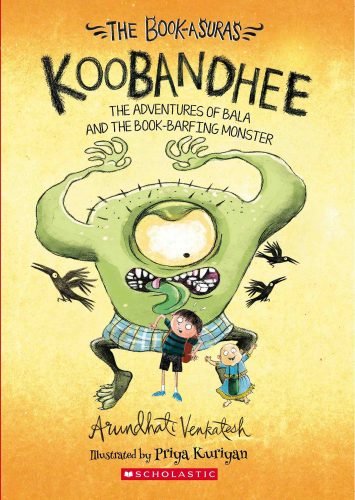
Koobandhee is such a fun book! We’ve read Bookasura twice; now we’re rereading Koobandhee too!
Bala is excited about meeting Bookasura again, but when he goes near the well at Navaneeth Uncle’s farm, he discovers another monster there, a monster that’s even scarier than Bookasura! Worst of all, Koobandhee seems like an asura who is out to destroy all Bala’s precious library books, and the librarian Mrs Shashee is not going to be happy …
A hilarious book about books, Koobandhee is perfect for my book club!
Insults
I’ve always loved imaginative insults. Of course, Shakespeare is the first to come to mind in this context, but Koobandhee has its share of wonderful ones too. Creepy cockroach! Poisonous predator! Foul flea!
We’ll do a blind activity on insults, where we make two separate lists – of adjectives and of insects. We’ll put them together at random to get hilarious results!
Monsters
Monsters are always fun. At my reading programme, we’ve been monster-hunting, discussed funny monsters, and more. This time, we’ll create a monster of our own. Quickly shifting from one group to another (children love breakout rooms!), we will invent a monster, complete with a name, physical description and personality.
Book Scavenger Hunt
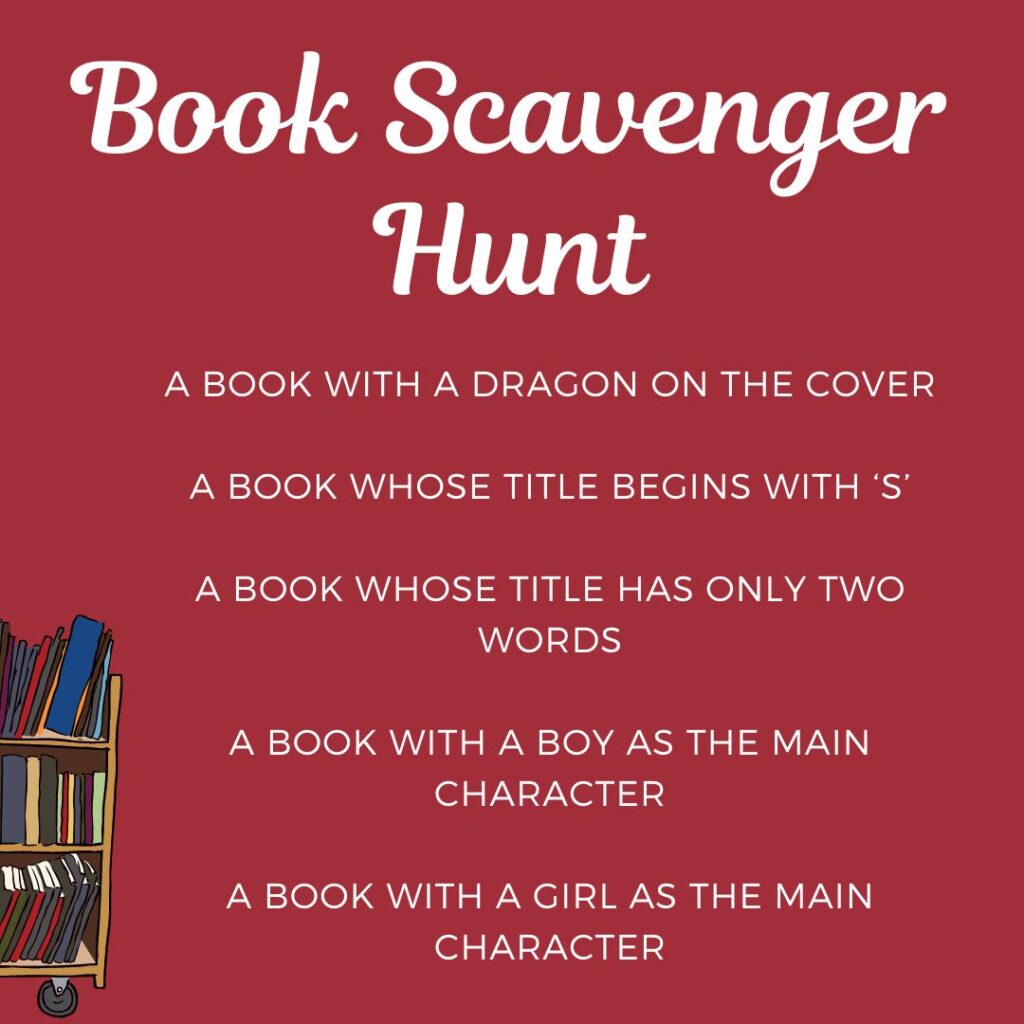
We had such fun with our book scavenger hunt when we read Bookasura that I’ve been waiting for a chance to repeat the activity! In a conversation with Koobandhee towards the end of the book, a terrified Bala answers all the asura’s questions with titles of books. We’ll go through the same list in class and I’ll ask the children to run and bring books of their own. I’m waiting to see what book titles the children come up with!
Join a programme
We’ve read so many of Arundhati Venkatesh’s books at my book clubs!
- Bookasura
- Petu Pumpkin: Tiffin Thief
- Petu Pumpkin: Cheater Peter
- Petu Pumpkin: Tooth Troubles
- Petu Pumpkin: Freedom Fighter
Registrations are now closed for the October-November 2025 edition of my book club. New batches begin every alternate month. Join my mailing list if you would like to receive email notifications about my programmes. Alternatively, follow me on social media – Facebook and Instagram – for regular updates.
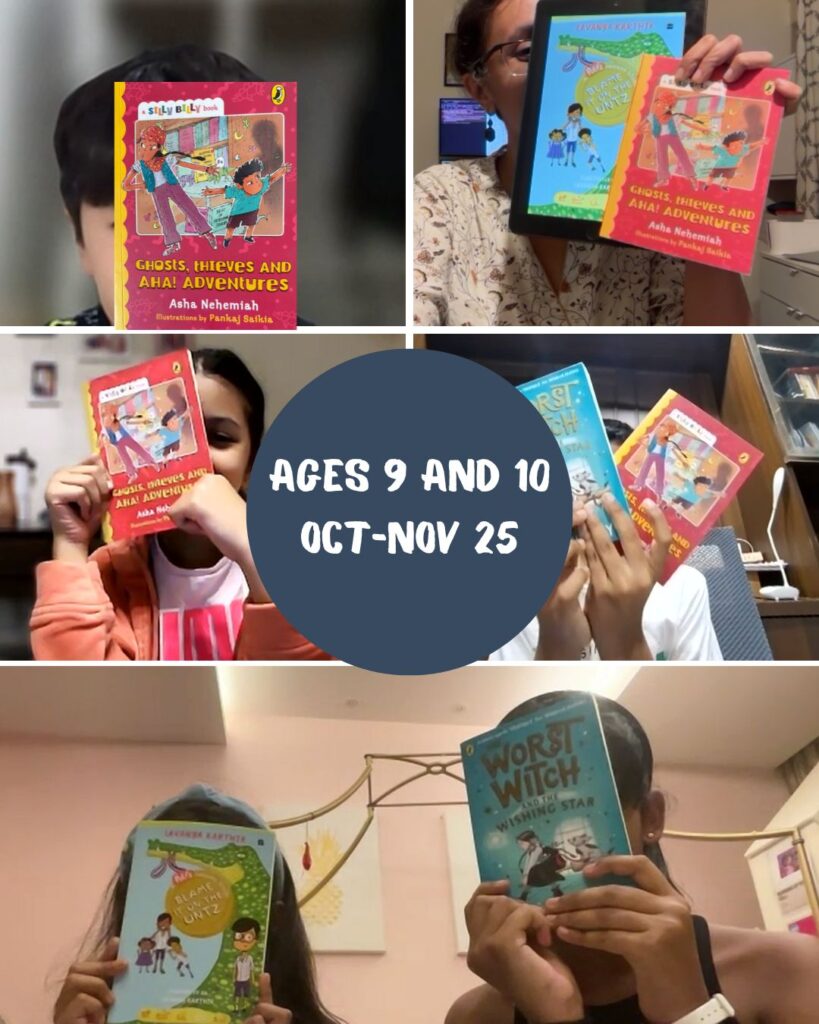
Ghosts, Thieves and Aha! Adventures
September 2, 2025
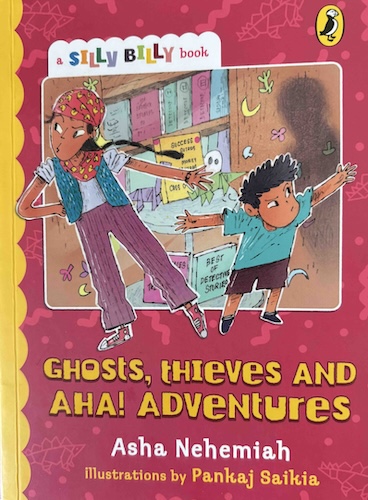
We’ll begin with another Silly Billy book next month! I hope there will be many more of these because it is a delightful series for young readers. With its full colour illustrations and its wacky, agenda-free stories, the series is a treat for early middle grade readers. We’ve read Jumble Sale and Agassi and the Great Cycle Race. Let’s read the third and (for now) last one in the series–Ghosts, Thieves and Aha! Adventures by Asha Nehemiah and Pankaj Saikia.
Book Scavenger Hunt
A book scavenger hunt is one of the most popular activities at my book club. How can I not do one for a book set in a bookstore? Take a look at a couple of examples of book scavenger hunts we’ve done in the past. I’m looking forward to doing another one!

Origami
Many children at my writing programmes can do origami of all kinds. Following Ashish, the protagonist of the story, we’ll try to learn from one another, making all kinds of little origami creatures!
Bookstore Story
Every book lover loves stories set in a bookstore, so we’ll write one of our own! What kind of story could play out in a bookstore? How can we make the setting come alive to our readers?
Read, Write, Explore devotes one class every two weeks to creative writing. As we read Ghosts, Thieves and Aha! Adventures, we’ll focus on setting and genre.
Join a programme!
Read, Write, Explore is designed for children who want a taste of creative writing but are not necessarily ready to do all the work that an intensive writing programme demands.
Registrations are now closed for the October-November 2025 edition of my book club. New batches begin every alternate month. Join my mailing list if you would like to receive email notifications about my programmes. Alternatively, follow me on social media – Facebook and Instagram – for regular updates.
Left-Out Paru
September 1, 2025
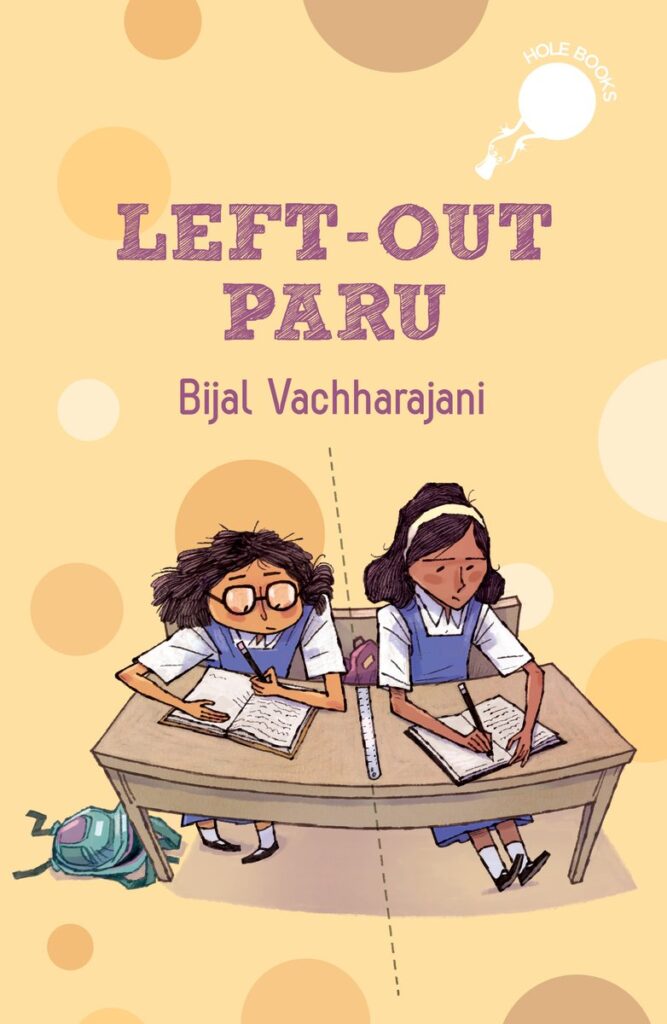
A brand-new hOle book for a brand-new edition of my book club! Left-Out Paru is a book that struck a chord with me because even though I’m not left-handed, I’ve thought about lots of things designed for right-handed people. Scissors. Cameras. Desks. Here’s what we’ll do as we read this book by Bijal Vachharajani and Rajiv Eipe (two left-handed creators) at my book club next month!
Being Left-Handed
What words and phrases do we know that favour right-handed people? We’ll do a vocabulary quiz to find out! Some words come from languages other than English; it’ll be fun to explore a range of languages, including our mother tongues!
Using Our Non-Dominant Hand
A lot of left-handers can do a surprising number of things with their right hands! Let’s see how quickly we can write, draw and cut with our non-dominant hand!
Lists
Just like Paru in the story, I love lists! As we read, we’ll use her list titles as prompts to write lists of our own–things we can’t bear, things we’re constantly told, famous lefties … I’m sure this will be entertaining!
Join a book club!
Left-Out Paru is the twenty-third hOle book we’re be reading at my book club! I love this series; it’s perfect for children moving from picture books to chapter books. The friendly font, the large illustrations, and of course, the hole in the corner make this series a treat!
Registrations are now closed for the October-November 2025 edition of my book club. New batches begin every alternate month. Join my mailing list if you would like to receive email notifications about my programmes. Alternatively, follow me on social media – Facebook and Instagram – for regular updates.
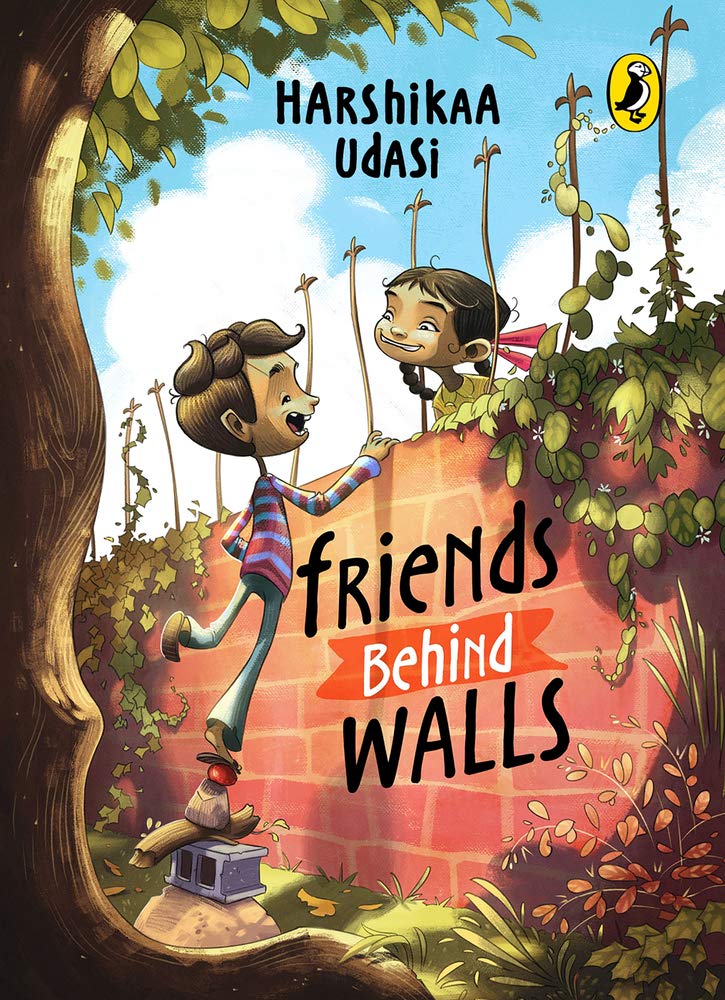
Friends Behind Walls
July 7, 2025
Inu and Putti are not allowed to play with each other. But what can they possibly do when everyone else in Shanti Park seems to have been born at the age of 30? They have no one to play with except each other!
Soon they discover that they actually like each other and want to be friends, so they need an answer to the Most Important Question: why are their families fighting?
They go to one person after another, searching for answers (or answers-shanswers, as Putti’s father would say). Mr Om Namaha, Dr Solanki and the Tekdichi Mhatari – who can answer their question?
Friends Behind Walls is such a gorgeous book that I simply had to include it in my reading programme! Here’s some of what we will do.
Word Games
Putti loves words and so do I. He breaks words up and comments on how nonsensical they are. Legend = lej+end, but it has nothing to do with the end of a ledge. Cacophony = cac+o+funny, but it doesn’t have anything to do with a joke.
Now imagine the possibilities of working on words with children. I’m also thinking about the multilingual games I could use and the ways in which we can play with songs!
Imagination
I LOVE the illustrations in Friends Behind Walls, and pictures make for great conversation starters. The cover itself is a good place to begin because it invites children to think about what the story could possible be about. Within the book, I love the rickshaw ride, the car ride and Tekdichi Mhatari doing a little jig. To be honest, I love them all, but these stayed with me. Working on character sketches and caricatures is going to be such fun!
Book Discussion
What do you do after a fight? What about adults? Do you think they do the same thing? What makes you angry and what do you say when you are angry?
We can talk about so many things when we read a book like Friends Behind Walls!
Join a book club!
We read Friends Behind Walls for the first time in March 2021, over four years ago! It was a favourite with my book clubbers then, and I’m waiting to read it with a fresh group of seven- and eight-year-olds!
However, registrations are now closed for the August-September 2025 edition of my book club. New batches begin every alternate month. Join my mailing list if you would like to receive email notifications about my programmes. Alternatively, follow me on social media – Facebook and Instagram – for regular updates.
Agalya in the Spotlight
July 6, 2025
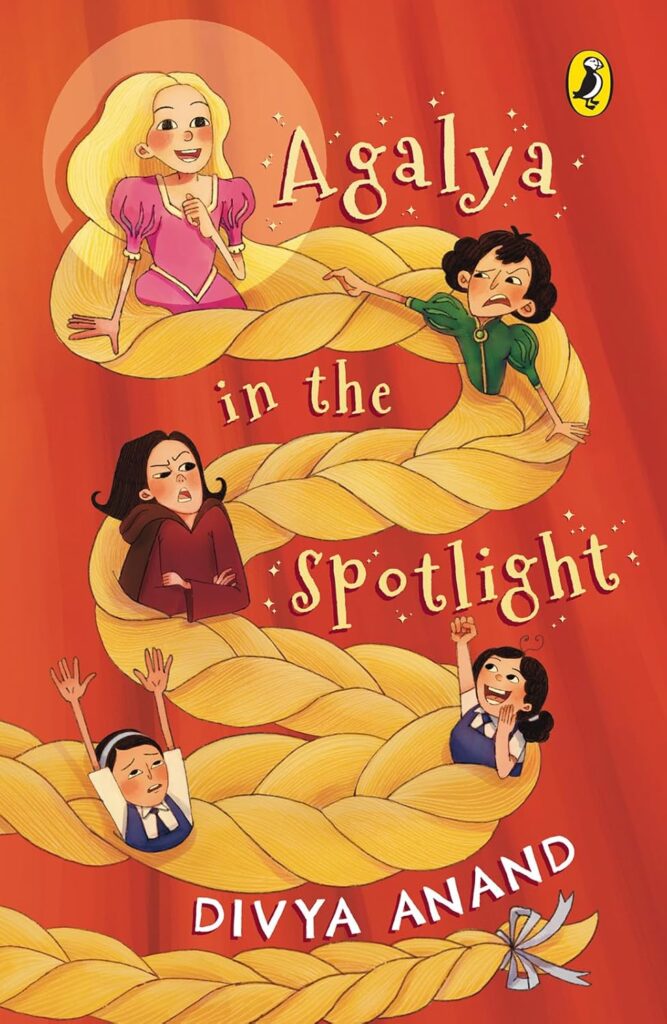
I read Agalya in the Spotlight a couple of months ago, and I knew I would introduce it to my book club very soon. It’s a light, easy read, one that I’m sure my book clubbers will enjoy. I’ve read Misfit Madhu with two batches of Read, Write, Explore, and reading a book by an author we’re familiar with is always fun!
Fairy Tales
Rapunzel is a well-known fairytale, one that children are familiar with also because of the movie Tangled. At my book club, we’ll try to do a group activity in which characters from one familiar world meet characters from another. Where would they meet and what would they talk about? Exploring this promises to be fun!
Performing
A book club is never about just reading. I like to link the stories we read to all kinds of activities. Since Agalya in the Spotlight is all about drama, I will ask the children at my book club to perform in class! They can perform anything at all–they could present a poem, play an instrument, sing a song, anything at all!
Write a Play
How do we write a play? What are stage directions, and what is dialogue?
Once we’ve read Agalya in the Spotlight, I will introduce the children to playwriting, and we will try to write a short play of our own.
Join a programme!
Registrations are now closed for the August-September 2025 edition of Read, Write, Explore. New batches begin every alternate month. Join my mailing list if you would like to receive email notifications about my programmes. Alternatively, follow me on social media – Facebook and Instagram – for regular updates.
The Bald Bandit
July 5, 2025
Who doesn’t love a good mystery story? I love the A to Z Mysteries because they’re exactly the right level for my book club. The characters are fun, the mysteries are engaging, and the fact that we have a whole series of twenty-six books to read makes The Bald Bandit an easy choice for me. Even though the book is over twenty-five years old, it doesn’t feel dated. I’m sure we’ll have fun with it!

Clues
Fingerprints, shoe prints, bits of fabric–they’re all clues! Let’s have some fun with them. We’ll draw the outline of our foot and try to make it look like a footprint. We’ll play with thumb prints and try to look around us to see what signs we can find of the other people who live at home with us.
Mysteries
A storytelling worksheet is a great way to explore a rough outline of a story. I will give the children the framework of a story and ask them to fill in the details. Let’s see what mysteries we create!
A Detective Club
If you set up a club to solve mysteries, what would your club be called? Who would be part of it? What would your password be and where would you make a secret hideout? I’m looking forward to seeing where my book clubbers’ imaginations will take them!
Join a book club!
Other books in the series that we’ve read at my book club:
Registrations are now closed for the August-September 2025 edition of my book club. New batches begin every alternate month. Join my mailing list if you would like to receive email notifications about my programmes. Alternatively, follow me on social media – Facebook and Instagram – for regular updates.
The Hodgeheg
July 4, 2025
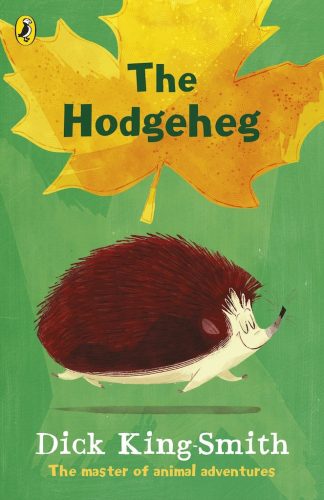
I love Dick King-Smith‘s work. There was a time when I read nothing except his books. I devoured story after story, the way children do when they get hooked on to an author. I remember just one book I didn’t enjoy – Godhanger. But everything else? I loved.
And that’s why we’re rereading The Hodgeheg, one of my favourites! It’s a sweet story about one determined hedgehog who makes it his mission to find out how to cross a road safely. How do humans cross? Can’t a hedgehog do the same? Here’s what we’ll do with this book at my book club.
Slang
The Hodgeheg begins with another hedgehog having ‘copped it’. Later on, we have the phrase ‘that’s flat’.
What do these phrases mean? The way in which words and phrases develop regional variations is fascinating. I remember reading the phrase ‘I bet a monkey’ while I was reading Georgette Heyer. I first thought Heyer was just being funny. I looked it up and discovered that a monkey is British slang for five hundred pounds, American slang for five hundred dollars, and Australian slang for – wait for it – a sheep!
We’ll look at a few funny phrases from different parts of the world; I can’t wait to see what we’ll discover!
Unscramble
When the hedgehog Max is hit on the head, his words come out all scrambled, which is what gives the book its name.
Of course, this leads to a simple, fun activity – unscrambling letters to make words, putting words in the right order to create sentences, and putting lines in the right order to create a poem.
Creating Characters
The first thing that sets Max apart is his name. But there’s more to Max than a unique name. What makes a character leap out of the pages?
As my reading programme for ages nine and ten has a strong creative writing component, we will use the text to work on creating memorable characters. If you have a character that your readers will root for, your story is already half done!
Join a programme!
Registrations are now closed for the August-September 2025 edition of Read, Write, Explore. New batches begin every alternate month. Join my mailing list if you would like to receive email notifications about my programmes. Alternatively, follow me on social media – Facebook and Instagram – for regular updates.