Journey to Jo’burg


Munni Monster

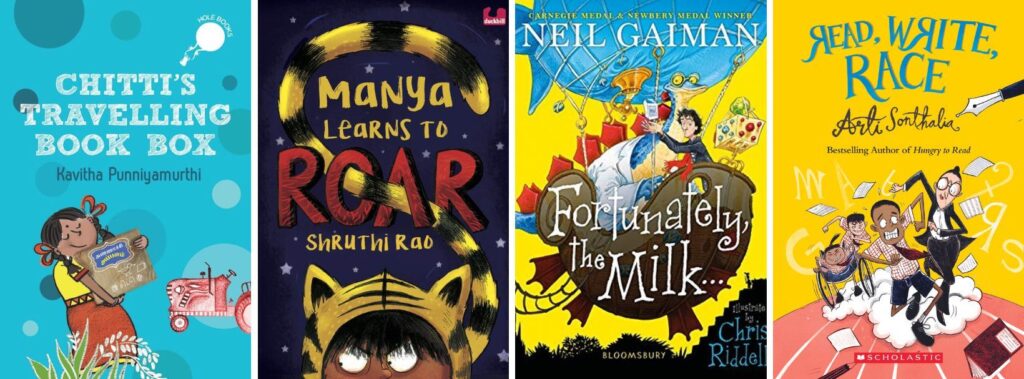
Chitti’s Travelling Book Box

Non-Boring Nonfiction

It is always so rewarding when a guest speaker repeats something you’ve been saying at your writing programmes for a long time! Thank you, Vaishali, for this session on non-boring nonfiction, and for reiterating so many things that keep needing to be said!
In November last year, I watched Vaishali Shroff conduct two sessions at Bookaroo Vadodara. One was based on Sita’s Chitwan; the other on Batata, Pao and All Things Portuguese. Right away, I was sure she would be the perfect person to do a nonfiction workshop with the children at my writing programmes. Unfortunately, working something out right away was impossible, but after much juggling of schedules, we finally managed to do it this time.
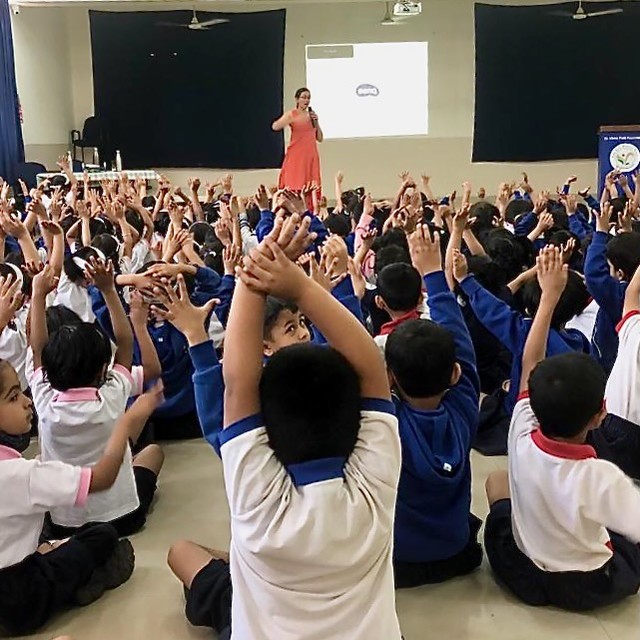
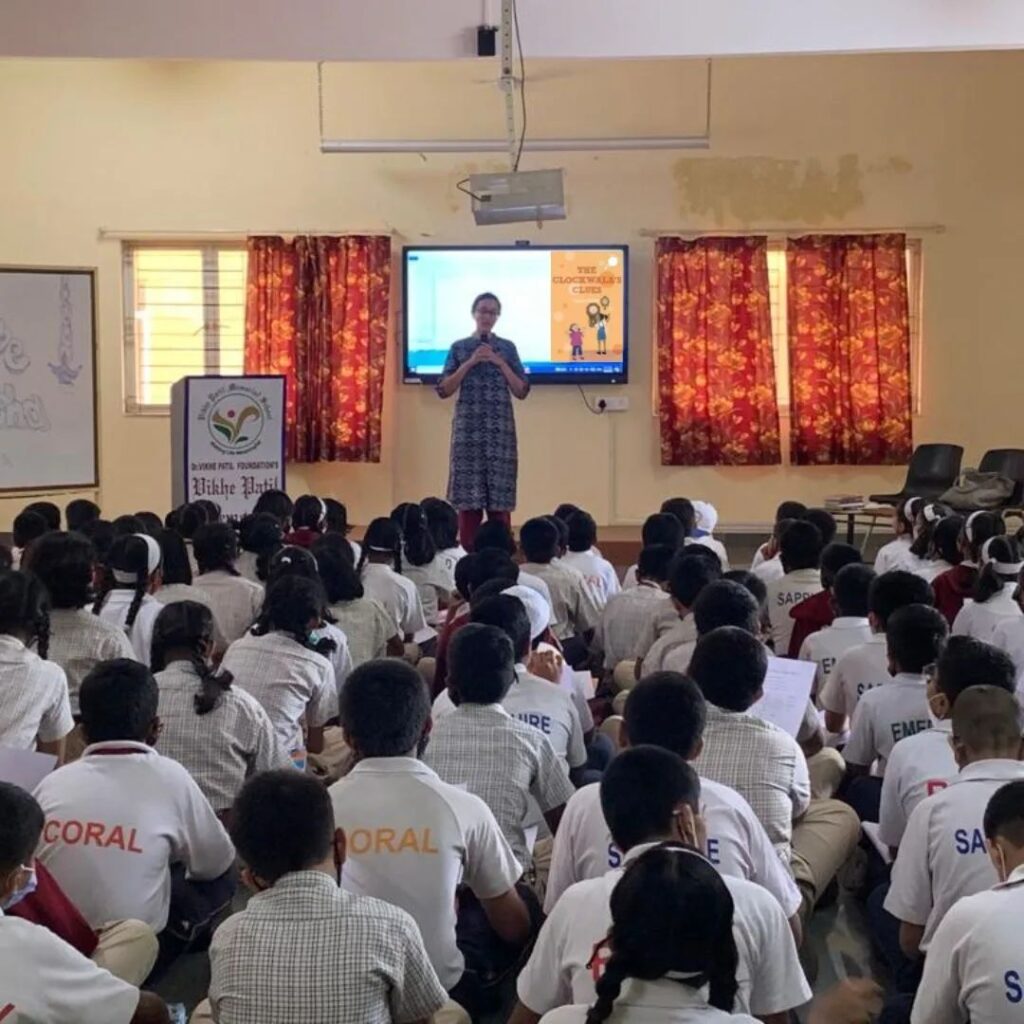
Step by step, Vaishali took us through the writing of engaging nonfiction. With an exercise inspired by something as simple as the picture of a mango, she helped the young writers understand the difference between a bland visual description and a hook that draws the reader in. I loved how different the first pieces the children shared were from the pieces they shared at the end of the session!
With examples from her books, she stressed the importance of research and fact-checking. Bringing a plot and story into our nonfiction is important too! And all the while, as she worked with mentor texts, she kept the children active, making them write and share one short piece after another.
Most importantly for me, there were several things Vaishali said that made me rejoice quietly, simply because it’s great to have someone else repeat something I keep trying to bring into my writing programmes.
One, don’t be lazy about rewriting. If something doesn’t work, delete it!
Two, focus. Your piece must have focus. I usually refer to this as purpose, and I keep asking: what is the purpose of this piece?
And three, research. Don’t just write things you find on the internet! Fact checking is important.
Guest sessions are rewarding; the next one will be here in June!
Poetry in Collaboration with Sampurna Chattarji

My first guest session of the season – Poetry in Collaboration – was such a success! With sixteen enthusiastic participants and one lively, energetic facilitator, the hour flew by before we knew it. Haiku, renga, nonets, free verse–we explored it all.
Often, we believe that writing must be a solo activity. We have creative thoughts and ideas, and we want to have full control over them. However, collaboration can lead to unexpected, sometimes beautiful, consequences. Sampurna is a serial collaborator, as she describes herself, and the stories she shared about her collaborative writing experiences were lovely. Step by step, she led the participants through their own work. How does one begin? What methods can we follow? How do we go on, while being mindful of our own creative impulses as well as those of our partner’s?
In a whirlwind of a workshop, Sampurna visiting one breakout room after another – there were eight in all! She helped overcome roadblocks, gave the pairs suggestions and feedback, and helped each writer ask questions about the choices they made. The poetry module of my writing programmes is almost over, and this was a grand way to bring it towards its conclusion.
A few key takeaways:
- Listening to your partner is important! Collaboration is about working together with a clear goal in mind.
- Collaboration works well when your partner is different from you. If you already have similar tastes and ideas, you are much more likely to create something quite predictable.
- Choosing a setting that both partners are familiar with, but in different ways, leads to surprising results.
There were so many more ideas and thoughts, but an hour’s workshop has never felt shorter. Here’s to more workshops filled with ideas and magic!
The Adventures of Tootsie Lama
Dungeon Tales
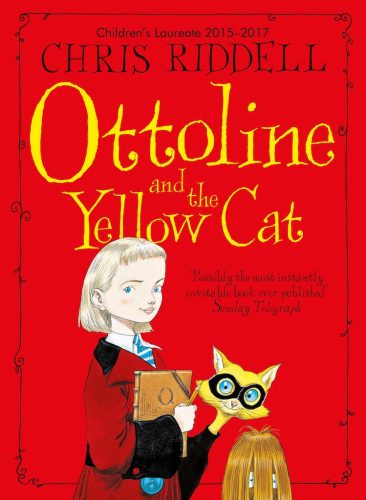
Ottoline and the Yellow Cat
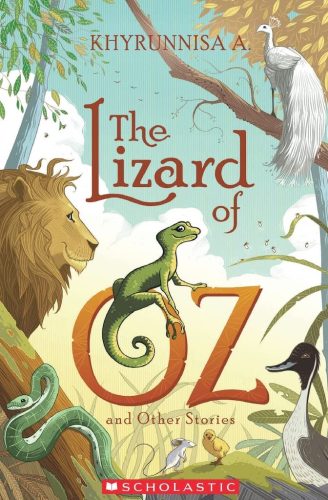
The Lizard of Oz and Other Stories
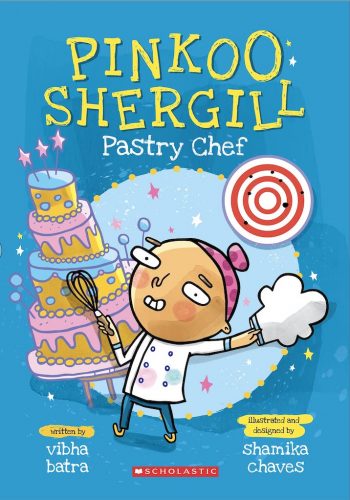
Pinkoo Shergill: Pastry Chef
Petu Pumpkin: Cheater Peter

Writing Poetry
I’ve been conducting writing workshops for a long time, and if there’s one thing I love working with, it’s poetry. Nearly every writing programme I conduct begins with a poetry module. Why? Because it’s accessible. It’s far easier to write a poem in a week than it is to write a story in a week.
And so, each time, I try to work with different kinds of poetry. We’ve done list poems and narrative verse, limericks, rhymes, poems with strong verbs, and much, much more. Everything serves as a poetry prompt for me, and I think it can work for anyone!
For instance, what we read always helps us to get creative, and so, my reading programmes too have an element of poetry sometimes. Here’s a brief look some of the kinds of poetry we’ve explored recently.
Cinquains
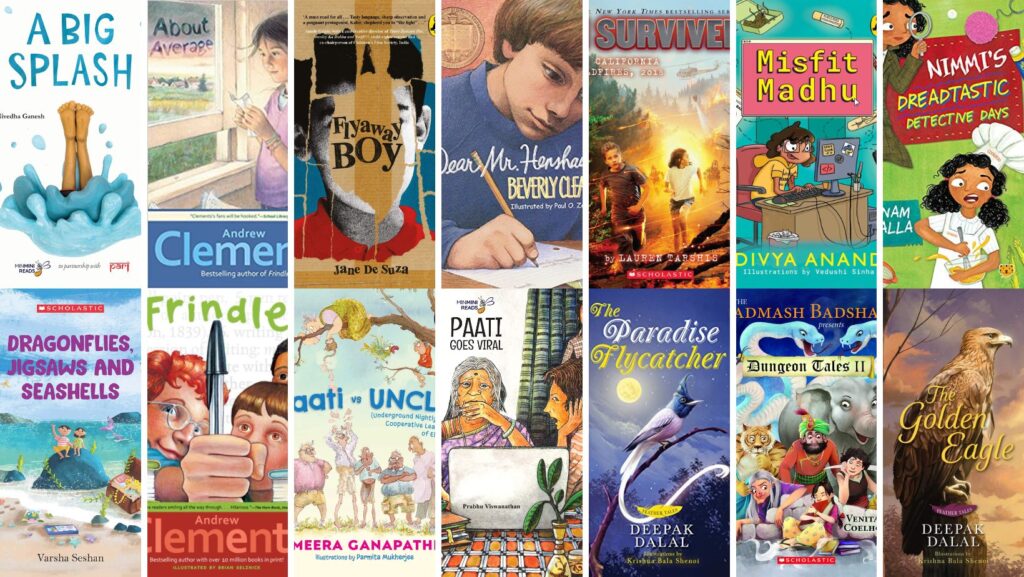
The first poem below is a cinquain, which the children wrote when we read I Survived: The California Wildfires, 2018. Climate change is a phrase children encounter all the time. What signs of climate change do we see around us? Cinquains push children to pay attention to each word they choose. Teaching cinquains creates opportunities to brainstorm, explore our vocabulary, and attempt to find the perfect fit.
List Poem
I led the children through the second poem below when we read Crenshaw. Guided writing exercises, with poetry worksheets, work so well! In the story, Jackson and Robin put together a keepsake bag, and this prompted us to write about a keepsake bag of our own. I think it’s a lovely way for children to think about what is precious to them.


Of course, writing programmes allow us to explore even more. With each writing programme I conduct, I, too, become more ambitious. During the last two editions of the programme, I chose the best pieces and put together a zine (download issue 1 here and issue 2 here). This pushed the children to work even harder, editing and rewriting their pieces until they were satisfied.
Free Verse and (Rhyming) Puzzle Poems
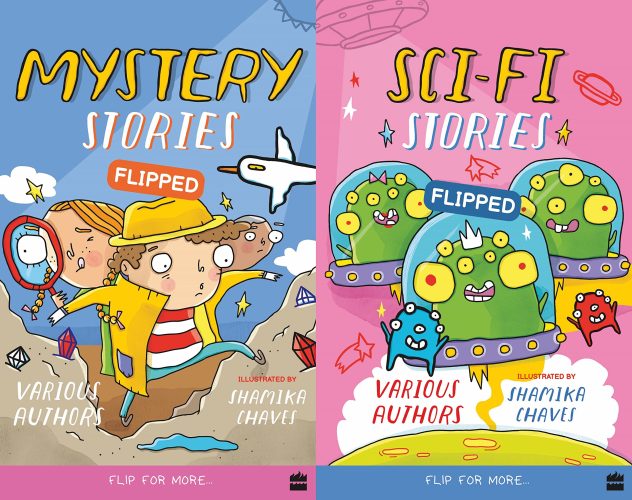
In the April to June session, I introduced the participants to Emily Dickinson’s Hope is the thing with feathers, and then I guided them through a poem in free verse, comparing an emotion to an animal. I also worked with puzzle poetry because I love riddles, particularly rhyming riddles. Plus, it was the perfect pre-writing activity for us to work on detective stories!
Free verse allows children to become more familiar with metaphors, similes, personification, onomatopoeia and the like. It allows them to look at these literary devices as more than just terms, understanding what poetic effect they create. And the puzzle poems we wrote? While working on rhyme and meter, we also find ways to involve the reader!


Haikus, Acrostics and Reverse Poetry
In the latest edition of the writing programme, we grew more ambitious. I came across Brian Bilston’s review haikus, and I wondered whether we could do something along those lines. We took this idea further and explored recipe haikus too.
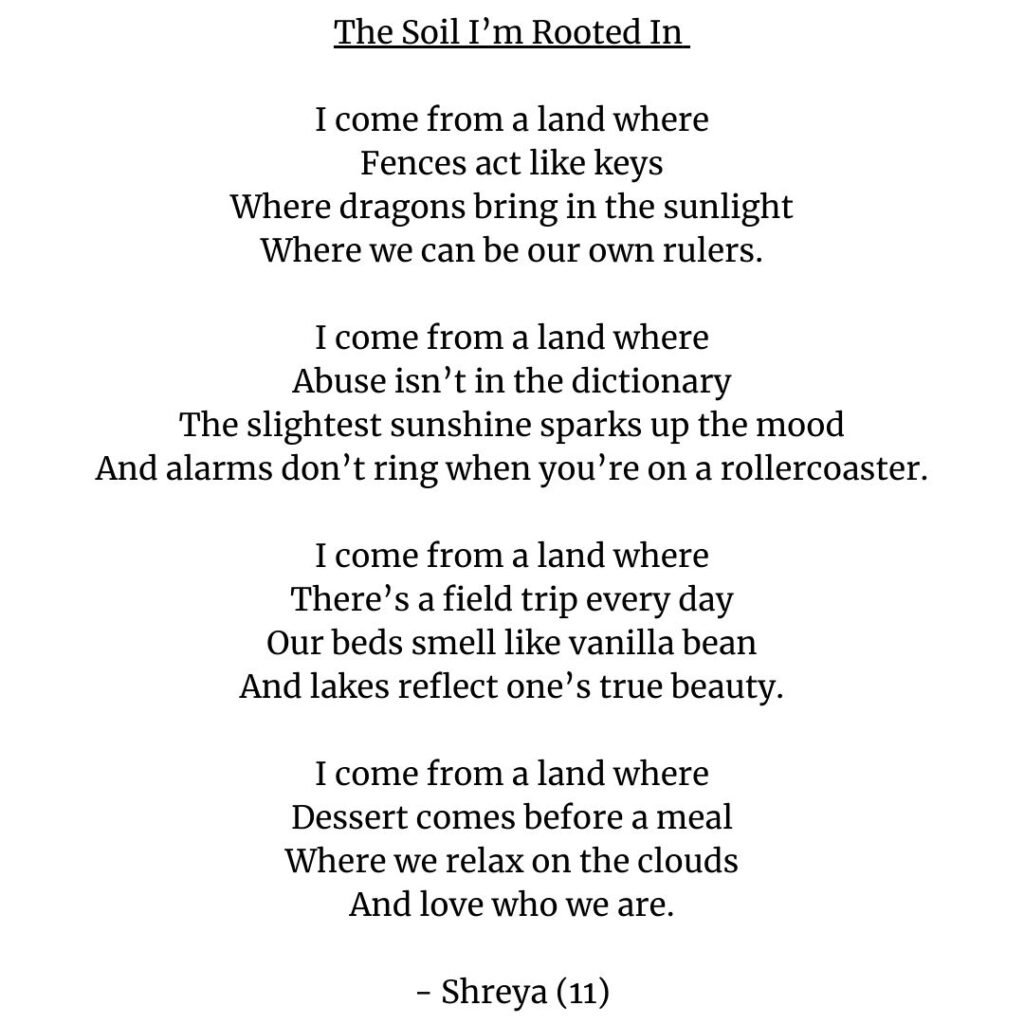
In keeping with the same idea of testing our limits, I also wondered if we could take a form that every child explores at some stage – acrostics. Whether it’s for greeting cards or for a chart in school, children write, or at least read, acrostic poetry at some stage. So, we took this familiar form and tried to do something new. Can we write a backwards acrostic? Take a look at one of my favourite ones below!
Our most ambitious project so far has been reverse poetry, and I was impressed with the poems the children wrote. I’m not usually someone who is effusive with praise, but the reverse poems they created were clever and lovely. Of course, we read multiple examples, and of course, I guided them through the process. But to successfully write a reverse poem – which conveys the opposite meaning when read in reverse – is a feat. There are many more in the latest issue of WORDS, our very own zine!


Writing poetry is fun, and getting children to write it is, honestly, equally rewarding. When creative writing seems difficult, I turn to poetry. Not because it’s necessarily easier, but because it is liberating. More importantly, especially when working with children, I think it’s important to play with poetry. Explore it, enjoy it, create something new. Rhyme is great. But there’s so much more that all of us can explore.
Do read our zine, and tell us what you think. Before you read it, though, I’d like to say – I’m sure there are typos. I’m also sure that lots of people could have designed it better – I’m a writer, not a designer. Even so, I can unabashedly say that I’m proud of it and I’m waiting for the next edition.


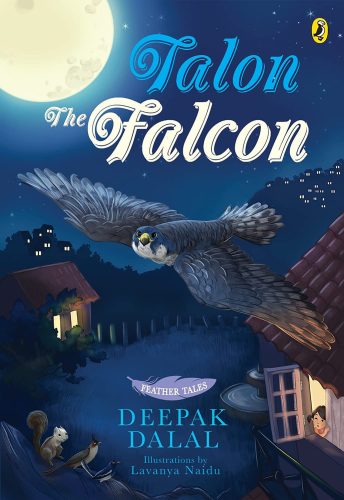
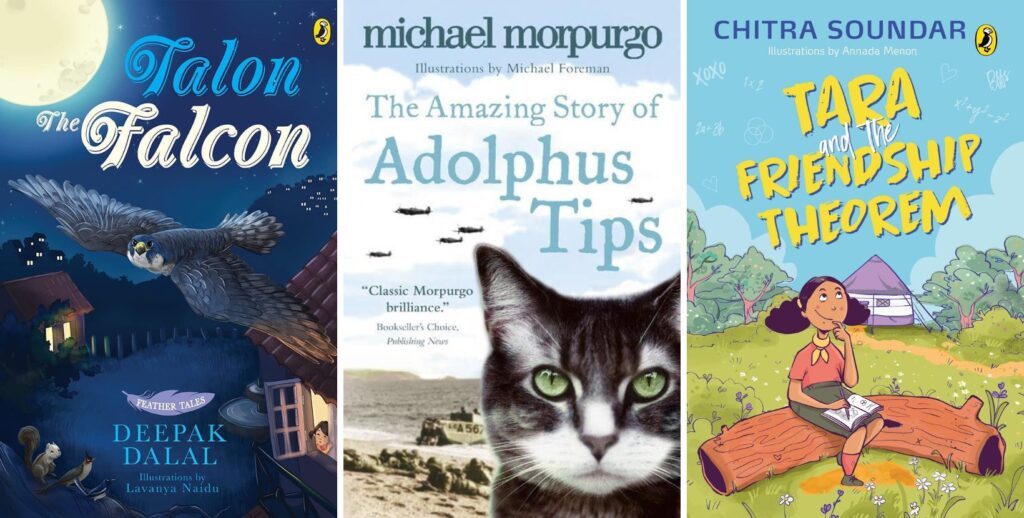
Talon the Falcon
My Year in Workshops: 2022

Building Dramatic Characters

What fun we had at ‘Building Dramatic Characters’ – a guest session conducted by Neha Singh for my creative writing programme!
To quote Neha, anything can be a character. Maybe even a chair talking to the moon! The strength of a character simply depends on how much you have invested in the character to make it full-fledged and believable.
Step by step, she led us through the process of creating dramatic characters of our own, and before we were even halfway through, here are the characters we met:
- Bland – a lonely blade of grass
- Orange – a carrot with no friends
- Slippmery Slippers – an unwanted pair of slippers
- Mr Squeak – a mouse who loves to build things
- Madame Gabriella the Fifth – the poltergeist who simply cannot do something mischievous
- Gray – a sidewalk that’s about to be dug up
- Alexandra or Alex – half a personality in search of a human home
- Six-Face – a Rubik’s cube whose owner has sharp nails
Each child chose three props and gave their character a unique voice. Neha asked the characters questions, and we explored how we could help each one reach its goal. Now, I wonder what stories the children will come up with based on the characters they created today!
Flipped – Mystery Stories and Sci-Fi Stories
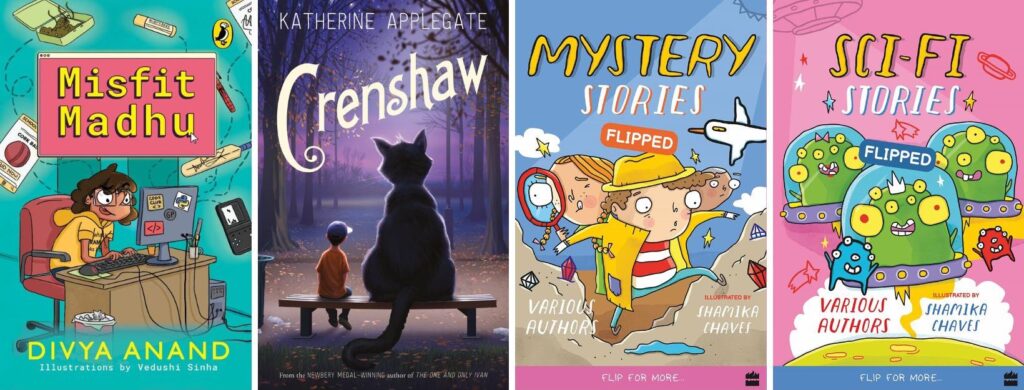
Crenshaw

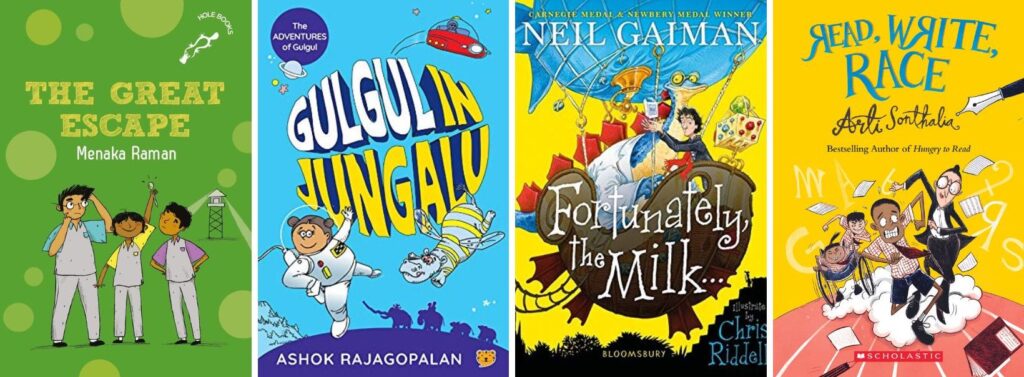
Gulgul in Jungalu

Demystifying Publishing
One of the best things about my creative writing programmes is how much I learn on the way. For one, before each class, I research for hours. One hour of class time typically requires at least four hours of research.
And for another, I invite guests to talk about a variety of subjects from science fiction to cyber crime, historical fiction to comics.
Our latest guest was Andaleeb Wajid, a hybrid author who has published 37 novels in the last twelve years! Since so many parents and children have questions about Kindle Direct Publishing and whether they should publish their children’s work at all, Andaleeb was the ideal guest. Step by step, she took us through the process of publishing, comparing traditional publishing with KDP, with complete frankness when it came to costs, timelines and control.

For the most part, we followed a Q and A pattern for the session. Here are two answers that stood out to me.
What do you think about self-publishing, especially when it comes to children?
Free publishing platforms are now available to us, so go ahead and publish! Remember, though, that you should publish the best version possible. Work on your writing, edit, and get feedback. Because your name is going to be associated with that book.
Do you have advice when it comes to publishing children’s work?
Whether adults or children are looking to publish, my question is the same: why do you want to be published? Do you want to make money? Become famous? Or do you just want to get your work out there?
If you want to make money, publishing via KDP could work. If your book is well written and you market it well, you will find readers and make money.
If you’re looking to publish because you want to become famous, KDP is not the route I recommend. Your book isn’t going to be at a store. In India, KDP is restricted to ebooks, plus distribution networks don’t really make space for self-published books.
If you want to publish your book because you have spent so much time and effort writing it that you just want it out there, go for it! Publish. It gives you a sense of achievement!
The session was informative and useful; I can’t wait for the next one!
Dragonflies, Jigsaws and Seashells
Yikes! Bikes!
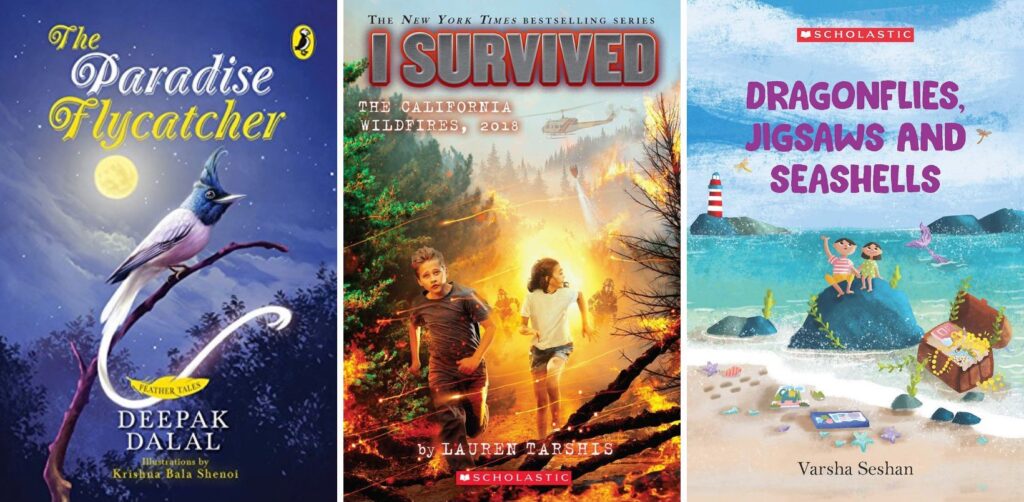
I Survived the California Wildfires, 2018

A Cello on the Wall
The Shy Supergirl

Ivy + Bean

The Great River Magic
Petu Pumpkin – Tiffin Thief

The Editor’s Perspective
The last guest session at this edition of my creative writing programme was with Daphne Lee, consulting editor at Scholastic Asia. It was everything I expected it to be – informative, detailed, and full of laughter. She answered questions, told us about the publishing process, and shared a manuscript with us, detailing how the editing process works. It was fascinating to see how the book took shape!
Here are a few of the questions I asked and the responses we received.

Varsha:
How do you decide whether to publish a book?
Daphne:
It’s hard to say. Voice is key. Things like grammar and spelling mistakes matter less. To me, even plot does not matter as much as voice. Thoughts and ideas draw me in.
Varsha:
While I understand that typos and grammar may not be the only things that are crucial, what do you feel about shoddily edited work? Work that seems carelessly written?
Daphne:
I think it really depends on the story and whether I’m willing to put in the work that publishing it would involve. The grammar won’t make my decision for me; the story and the potential I see in the voice do.
I also don’t like writing for an author. I make suggestions, but I don’t want to do the writing for them. More than once, I’ve cancelled a contract because a book isn’t shaping up the way I would like it too. But I suppose that is part of the job!
Varsha:
How many manuscripts do you typically receive per week?
Daphne:
Between 20 and 50 unsolicited manuscripts, I would say. I mark them as submissions and I allot some time to read them, but it’s time-consuming. The Scholastic website does mention how long to wait before considering it a pass from me.
Varsha:
Do you ever publish work written by children?
Daphne:
No, that’s also the company policy. You have to be 18 to submit work, and I agree with it. Where’s the rush? I know that when I was a child, I found myself imitating the style of the book I last read, and that is natural! I think you need to give yourself the time to find your own voice.
Varsha:
What about self-publishing? What do you feel about that?
Daphne:
Just my opinion, but like I said, children haven’t yet found their best voices. Yes, they are writing the best they can, but self-published work is often unedited. It isn’t even proofread. Do you think it’s fair to charge people to buy a book that is sub-par? Writing doesn’t pay anyway, so I think that publishing is just the icing on the cake, to use a cliche. If you enjoy the process of writing, don’t obsess over publishing your work.
Daphne also spoke about writing our own stories – stories about people and places that represent who we are. I was so glad she did!
All in all, it was quite an intense session, one that I wish I could have attended when I was a child!
Reflections: Day Three at AFCC 2022
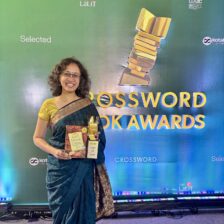
Day three at AFCC 2022 was the whole reason I was there. Book launch day! Of course, that was the highlight of my day, so even though that did not technically come first, I’m going to begin with it.
Book Launch by Scholastic Asia

My book, Red Eyes, has been a long time in the making. I’ll write about the story behind the story (like I did for Dragonflies, Jigsaws and Seashells, The Clockwala’s Clues and Sisters at New Dawn) soon, but launching it at the Asian Festival of Children’s Content was such a delight! Equally delightful was listening to the other three authors talk about their books. I would love to read them all!
The book launch was a public event, so you can still watch it here.
Now, I’ll come back to everything I attended as a participant, and all that I took away from the festival.
When Comics Come to the Classroom

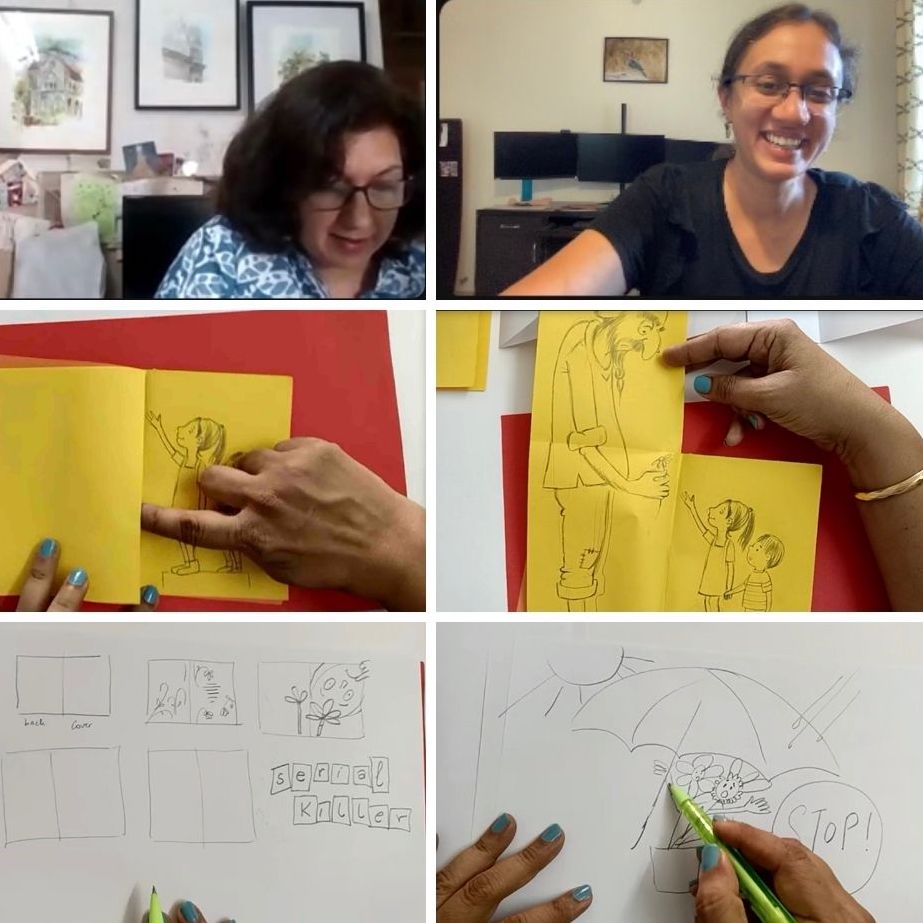
A few weeks ago, I organised a comic-making workshop for the children at my creative writing programme, and I was amazed that every single one of them managed to make a four-panel comic strip in an hour. Honestly, that was the main reason I attended this session on comic-making. The power of comics is huge! And teaching comics can be quite rewarding too.
We use comics in one form or another all the time. For instance, how many comics have you seen over the last couple of years telling you to wash your hands? For reluctant readers, comics are far more approachable, and even for adults, infographics often work better than dense text.
One important idea I took away from the session is the fact that if you’re not seeking to be a comic artist, i.e. if you are using comics as a trigger to express yourself, you really don’t need to draw at all! Take pictures of yourself and paste them, creating a comic of your own!
Publishers Discuss: Diversity and Inclusion in Books

I attended the presentation on diversity and inclusion synchronously, and I thoroughly enjoyed it. Among other things, Radhika Menon spoke about exposing children to diverse stories to make them aware that languages other than the ones they speak exist. Adivasi stories are important and are finally being translated and published. The inclusion of languages that children may not understand helps build awareness that there exist other realities.
Just like in so many other sessions I attended at the AFCC, Reni Roxas spoke about how much talking pictures do in picture books. In the context of inclusion, I loved the image she shared of the book Seven Slippers. Along with three pairs of slippers, there’s one singleton. And then, within the pages of the book, we see that the single slipper is accompanied by a crutch. All the text says is Lonely slipper, come join us!
Lighten Up with Laughter: A Serious Look at the Genre of Humour

This was one of the most enjoyable sessions of AFCC 2022! Of course, it is unsurprising that so many people have studied humour, but I was amazed at the number of theories as to how humour is created – the superiority theory, cautionary tales, the incongruity theory, irony, the concept of the carnival, benign violation … And the speakers explained each of these ideas with examples. It was eye-opening!
Although I did attend other sessions on day three, I didn’t find them as engaging. I also know that the magic of a lit fest fades as days go by, so I’m not as enthusiastic about watching recorded sessions as I am about attending them live. I didn’t attend much on day four, so that’s all: AFCC 2022 was a two-week long lit fest for me!
Reflections: Day Two at AFCC 2022
Day two at the Asian Festival of Children’s Content was on 27 May, but I caught up with all the sessions I wanted to just yesterday. I felt like I had a time-turner because I attended three simultaneous sessions, thanks to a virtual AFCC 2022! Here’s an overview of how the day was for me.
Environmental Advocacy in Children’s Books

This was one of the sessions I attended synchronously, and the experience of doing that is quite different from catching up with an event later.
The environmental is a subject close to my heart, and I read a lot of literature about nature and being outdoors. However, I’m a little iffy when it comes to books that are clearly issue-based, no matter what the issue may be. Story, for me, comes first, and advocacy second, not the other way around. I like it when books are subtle, with characters nudging us in particular directions. And that was one of the reasons I wanted to attend this session!
And it was a rewarding one. A great takeaway was the list of books Sarah Ang shared to promote eco-consciousness amongst children. In addition to books, however, she spoke of activities we can do, emphasising that books are important, but even more important is being outdoors. Environmental advocacy can begin in a book, but must go further!
Bonds, Bridges & Books: Building Better Mental Wellness

Much of Dimity Powell’s session worked with ideas that are not new, and I think I enjoyed listening to it for exactly that reason. Had I been younger, I would probably have found a lot to take home from the session – including the idea of balancing the story you want to tell with marketability, something a younger me would have been quite disillusioned by!
The discussion about the interpretative nature of books made me think of both my book clubs and the books I’ve written. When we read When the World Went Dark, for instance, the children were convinced that Pitter Paati was not dead – and this is something that Powell spoke of too, in the context of another book. Children do not necessarily make links that adults make very easily. However, this makes a book more relatable, rather than less understood.
The discussion on illustration was enriching too! Once upon a time, I used to think that writers and illustrators work closely together. Now, having written four picture books and two chapter books, I know that an author may not even know who the illustrator is until the final pdfs are ready! And this is a good thing because, as the moderator David Liew said, the book then tells not one, but two stories. One story is told through the words and the other through the pictures. One of my favourite examples of that is The Monster Hunters, which we read at my book club!
Finding the Light: Hope and Despair in Children’s Literature

What a beautiful session this one was! I wish I could have attended it synchronously because I would have loved to “talk” to Margarita Engle in the chat box. Especially as I’ve been writing a lot of verse recently, much of what she said resonated with me.
While teaching a poetry module recently, I began to do some research on how to introduce children to free verse. I came across the idea that breaking sentences up into smaller lines creates poetry.
I was uncomfortable with this.
No.
This does not create free verse, or so I feel.
That’s why it was especially heartwarming to hear Margarita Engle put this into words! You have to be in love with poetry to write poems, she said. Inserting random line breaks into prose does not create poems.
Yes!
And yet, poetry can be whatever you want it to be. Engle spoke of the white spaces in poetry being open spaces where the reader can meet the writer, where emotions and thoughts can interact. Verse novels, she said (and I agree), are so full of open space that a young reader who may not always enjoy reading is not intimidated by dense text. It’s approachable, easy, accessible – diametrically opposed to the idea that poetry is somehow erudite and incomprehensible. And again, I found myself saying, yes, yes, yes!
Developing Critical Reading Skills for our Children

The moment I saw that there was a session on developing critical reading skills at the AFCC, I knew I wanted to attend it. And guess what? Already, less than a week after the event, I’ve used some of what I picked up from the session.
Often, I conduct workshops for teachers on Bloom’s taxonomy and the importance of critical thinking. The more I engage with critical thinking in its many forms, listening to new perspectives and reaffirming older ones, the more I have to share in the form of training. Debra Ann Francisco’s clear list of challenges we face while attempting to develop critical reading was useful!
What is critical reading? This is the question we began with. Mary George drew a lovely analogy, comparing reading with SCUBA diving, and critical reading with deep sea diving. What I particularly liked about the comparison is that reading is a kind of diving too; it isn’t skimming the surface!
I also found it interesting to think about the importance of listicles in providing information in a capsule while also understanding that listicles take a toll on reading stamina. It’s easy to think that we know a lot because we’re exposed to a variety of subjects thanks to social media. But how much do we know? Have we considered that there might be other perspectives? Developing the ability to formulate these questions and answer them is really what critical thinking is all about.
Using Picture Books to Promote Inclusion

What a sweet, fun session this one was! I do not work much with very young children, so I wondered how useful I would find a session on picture books. Even post-session, I don’t know about its usefulness, but I am glad I attended it because of the step-by-step approach the speakers took.
Inclusion is a three-step process – awareness, acceptance and appreciation. How do books help with that? When we read picture books with children, we help them notice difference, building awareness. With leading questions, we move towards acceptance. And finally, by taking the story beyond the book and into the world around us, we begin to appreciate difference.
Moving forward with this methodical approach, Soh Aiwen and Stephanie Ng spoke of three reading strategies to promote inclusion. When we read, we begin with literal questions before moving on to inferential and evaluative questions. Using clear examples of both texts and questions, the speakers went on to explore hands-on activities linked to the book too, which I loved!
That was day two for me – I’m still catching up with the sessions that happened on day three!