Varsha Seshan's Official Website

  • Home
  • Published Work
    • Books for Ages <5
    • Books for Ages 7-10
    • Books for Ages 10+
    • Reviews
    • Learning Resources
  • About
    • About Me
    • Recognition
    • Media Coverage
  • Workshops
    • Book Clubs
    • Creative Writing Programmes
    • School Visits
    • Workshops for Adults
  • Join a Workshop
    • Programmes
    • Cart
  • Blog
  • Contact

Terms, Conditions and Refund Policy

© Copyright 2013 - 2026
Varsha Seshan

Workshops

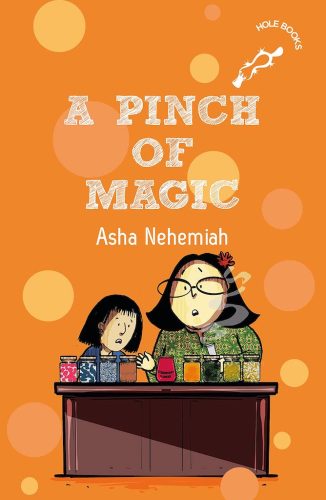
A Pinch of Magic

January 2, 2024

We’ve read Trouble with Magic at my book club; it’s time to read the sequel! A Pinch of Magic is a fun read, full of surprises. I read and reviewed the book some time ago, and I’m excited to be introducing it to my book clubbers. Here’s what we’ll do with it.

A-Pinch-of-Magic-book-cover

Innovative Address

One of the first things that made me chuckle as I read A Pinch of Magic was the Maha Guru’s highly accurate address. And this leads us to our first activity. How would you write your address if you did it in a similar fashion?

I love linking screen time with the world around us. Looking around them, I want the children to tell me: what tree is closest to them? What is the shape of tree near the gate? How tall is the tree at the end of the lane? Together, we’ll create an innovative address for each one of us!

Label Design

We thoroughly enjoyed creating different kinds of chocolate when we read The Chocolate Touch. We took it step by step, choosing our ingredients, creating a recipe, naming the product and pricing it.

With A Pinch of Magic, I want the children to take a name from the book – Simply-Dab Cavity Repair Gel or Baby-Soothing Gum Jelly – and design a label for it. I know the children will surprise me with their creativity!

Measurements

A book that is all about a broken pinching spoon is the perfect introduction to the idea of measuring tiny things. Drawing from a journal-writing activity I did at my writing programme recently, we’ll write a few details about ourselves, measuring as we go along. How long is your little fingernail? Do you have any scars? Measure them! Use a string and measure your knee. I’m waiting to do this with the children!

Join our book club!

REGISTRATIONS ARE NOW CLOSED FOR THIS EDITION OF MY BOOK CLUB.

New batches begin every alternate month. If you would like to receive email notifications about my programmes, please fill this form. Alternatively, follow me on social media – Facebook, Instagram and Twitter – for regular updates.

FAQs

The Diary as Story

December 6, 2023

In just a few weeks, yet another writing programme will come to an end! Yesterday was the third and last guest session of the season–a creative writing workshop with children’s book author Sowmya Rajendran.

I love it when guests reinforce something I’ve been talking about for a while. During yesterday’s session, it was ‘write what you know’. Of course, I do give children the opposite advice too–write what you don’t know–but the point, for me, is to bring stories into familiar contexts.

When Sowmya told us about how her book Mayil Will Not Be Quiet was born, she stressed that she and her co-author Niveditha Subramaniam wanted to write a book about being a child in India. What is it like to go to an Indian school? What sort of conversations do we have at home? This idea is well worth repeating, especially as most children continue to write stories about Michael and Felicity, who live in Massachusetts (which, of course, many cannot spell)!

Sowmya spoke about the importance of an authentic voice because finally, it’s the voice that will keep the reader invested in the story. Step by step, she led us through the process of making the diarist’s voice feel real. For one, we must have a clear idea of the character. For another, we need to look at the character’s social circle because naturally, a diary would be full of stories about people around this character.

From character and form to little quirks and doodles, Sowmya helped us make our epistolary story believable. It’s with conflict that a story really becomes a story, and that’s what we explored through yet another writing activity.

Just like that, we’ve had three rewarding guest sessions, creative thinking, and a lot of writing. The last writing programmes of the year with fourteen young writers are racing to an end!

Stories: Comic-Page Style

November 19, 2023

What a rewarding session we had with Nandita Basu! At workshops like this one, I think I learn as much as the young writers who sign up.

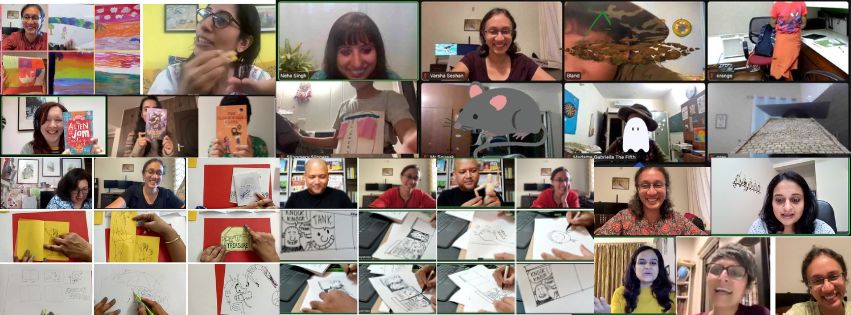
Step by step, Nandita led us through the creation of one page of narrative that brings together text and illustration in the style of a graphic novel. We launched straight into the workshop with an interesting prompt that made all of us think. We’ve all wronged someone at some point in our lives; there’s been a time when we were needlessly nasty to someone who didn’t deserve it. This formed the basis of the plot we went on to sketch over the next hour.

Layouts, structure, characters, setting, conflict, emotion … in a single hour, Nandita led us through the whole lot. How important is background when setting the context of our story? Is it all right to make stick figures rather than fully detailed characters? How large or small should the characters be in a given box?

Ten minutes at a time, Nandita led us through the creation of a one-page story. We created the setting and conflict first, and then moved on to emotion and the climax of the story.

Nandita urged us not to rush, but to take our time to finish. I’m waiting to see what the participants came up with!

Green Stuff and Nonsense

October 27, 2023

Green Stuff and Nonsense
with Bijal Vachharajani
Varsha Seshan's Online Creative Writing Programme
Guest Session
Otober 2023

What a fun session we had on green writing with Bijal Vachharajani! In a single hour, we spoke of a million creatures from elephants to frogs, ferrets to spiders, lion-tailed macaques to slugs that aren’t slugs.

Bijal’s workshop was a guest session at my writing programme. We’ve just reached the end of our poetry module, so it was the perfect time to invite a guest to do a workshop for us, and I thought of Bijal because the Art is Everywhere series – which Bijal has co-authored – is one of my favourite sets of rhyming verse. I loved how she led us through the workshop yesterday, beginning with a free writing exercise for us to shed our inhibitions and get writing and then moving on to more structured writing.

In the central element of the workshop, Bijal showed us seven images (all taken by one of her co-authors Radha Rangarajan), and asked us to write two lines of poetry about each one. Here are the animals we wrote about:

  • Jumping spider
  • Asian elephant
  • Baya weaver bird
  • Lion-tailed macaque
  • Bush frog
  • Mudskipper
  • Ghost crab

I loved what the children shared!
Guest sessions add a vibrancy to the writing programme. The best ones sparkle and stand out, making us excited to write again. The next guest session is already in the pipeline, and it promises to be just as much fun!
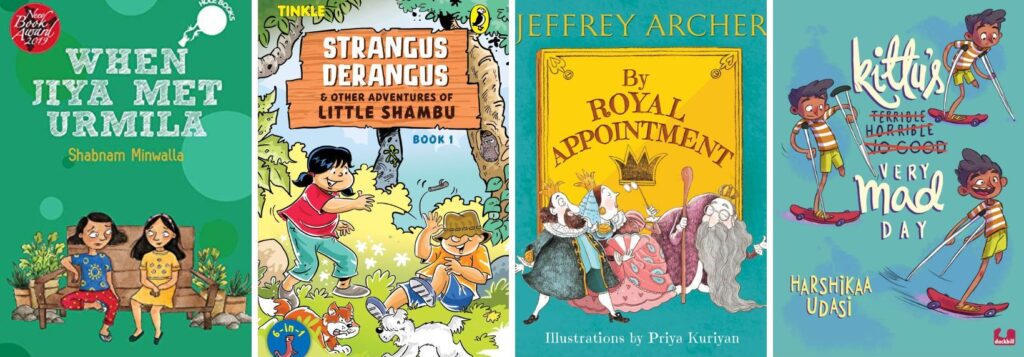
Kittu’s Very Mad Day

September 7, 2023

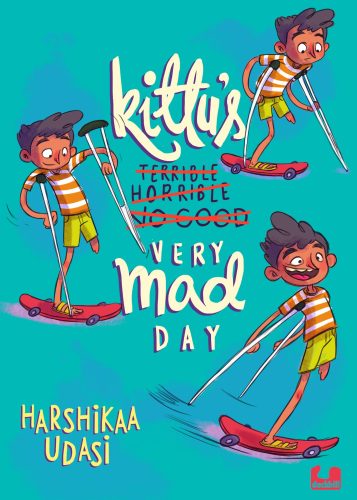
I remember meeting Harshikaa Udasi, author of Kittu’s Terrible Horrible No Good Very Mad Day at a lit fest several years ago. I had read her book already, but unfortunately, I had a Kindle edition, so I couldn’t go up to her and get my copy signed. I told her that, and then, casually, a few days later, she texted me and asked me for my address. I sent it to her, and in a few days, I had a parcel at my door–my very own signed copy of the book!

It’s time to introduce this zany book to my book clubbers. Kittu is a more difficult read than the others in this time’s selection, but I’m quite certain that won’t make it any less enjoyable.

Kittus Very Mad Day book cover

Being Lost

In the opening scene of Kittu’s Terrible Horrible No Good Very Mad, Kittu is lost. Unlike most other children who are lost, however, he seems to think of it as some sort of adventure. This is the perfect moment for the children to share stories of times they thought they were lost, and what they did about it. 

The World's Most Chaotic Family

Kittu may belong to the world’s most chaotic family, but our families can be quite chaotic too! Let’s explore just how chaotic. On the screen, I’ll invite each child to draw two interesting members of their family. What if all these people went on holiday together? Where would they go and what do the children think would happen?

Family Tree

Making a family tree might be challenging for a seven-year-old, but it’s still fun! We’ll try to make a simple one, writing down one sentence about each person on the tree.

Join my book club!

REGISTRATIONS ARE NOW CLOSED FOR THIS EDITION OF MY BOOK CLUB.

New batches begin every alternate month. If you would like to receive email notifications about my programmes, please fill this form. Alternatively, follow me on social media – Facebook, Instagram and Twitter – for regular updates.

FAQs

Unfair

September 6, 2023

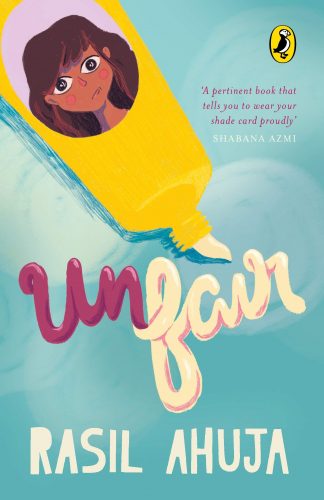
I read Unfair quite some time ago, and what I loved most about it is how pacy it is. One chapter just rolls into the next, making it the perfect read for my book club. 

From discussing themes to exploring narrative voices and structure, there’s so much I can do with a book like Unfair!

Unfair-Book-Cover

Discrimination

What does discrimination mean?

At my writing programme last year, we worked on writing persuasive speeches, and I was stunned by the kinds of things children write. Two children – one boy and one girl – chose to write about gender equality, and both speeches were powerful in their own ways.

Especially as my reading programme for ages nine and ten has an important creative writing element, we will begin with a discussion on discrimination, and move on to writing persuasive texts on the subject.

Narrative Voices

Unfair employs two narrative voices – Meher’s and Lina’s. How do writers choose a point of view to tell a story? What are the different kinds of narrative voices? We will do a short exercise on changing the narrative voice, exploring how a story changes based simply on who is telling it.

Auditions

I love bringing drama into my reading programmes. I’ve done it with very young children (like when we read Manya Learns to Roar), as well as with older ones. When children learn and recite poetry, they throw themselves into the act and make it a performance to remember! 

A story about auditioning for a part in a play is perfect to explore a little bit of drama, elocution and performance!

Join a programme!

REGISTRATIONS ARE NOW CLOSED FOR THIS EDITION OF READ, WRITE, EXPLORE.

New batches begin every alternate month. If you would like to receive email notifications about my programmes, please fill this form. Alternatively, follow me on social media – Facebook, Instagram and Twitter – for regular updates.

FAQs

Earwig and the Witch

September 4, 2023

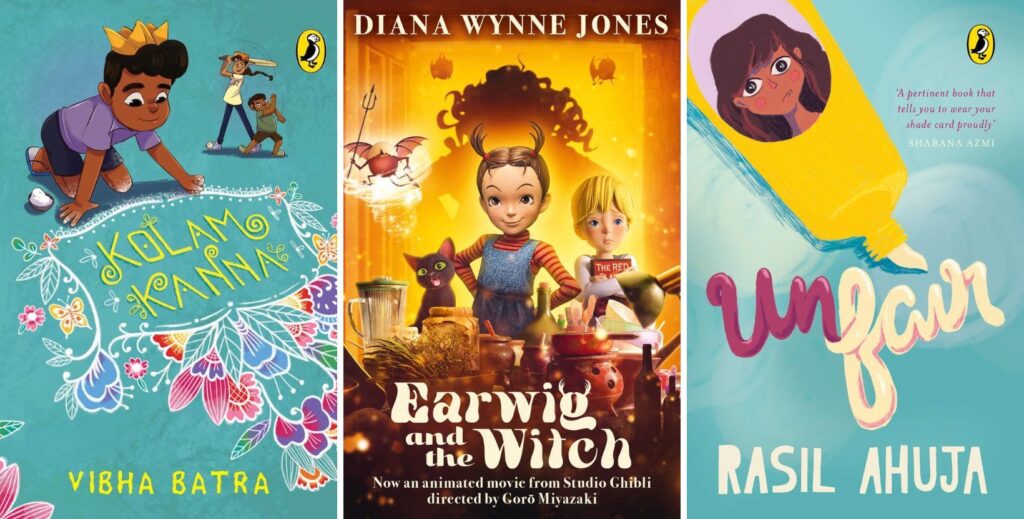
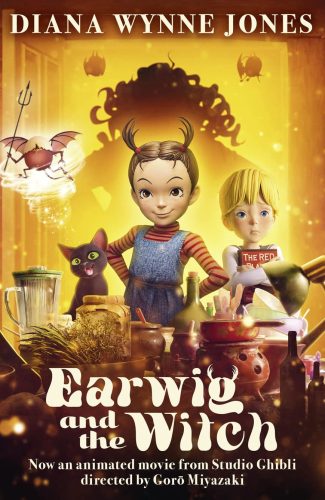
When I learned that Earwig and the Witch is a movie too, I debated a long time over whether to read it with my book club or not. Finally, I decided that whether the children I meet have watched the movie or not, we can read and enjoy the book together. In fact, those who’ve watched the movie will be able to compare book and movie, which is always an interesting exercise!

Earwig and the Witch

Vocabulary Brainstorm

Before we start reading Earwig and the Witch, we’ll do a quick written activity on word association. What words come to mind when you think of the word ‘orphanage’? How about ‘adopted’? ‘Witch’? ‘Spells’? Once we have a few ideas, we’ll get reading!

Horror and Fantasy

Horror is not a genre I work with often at my book club. In fact, it was after much hesitation that I introduced The School is Alive, and I’ve set aside several books that I know I would have found too scary to read as a child.

Yet, when horror and fantasy come together, there’s often a little thrill, as I know from the Creepy House reading challenge at the British Library. In groups we will explore themes, characters and ideas that are often associated with horror, and see whether we can write a little scary scene of our own.

Protagonists and Antagonists

Books which challenge the idea of the traditional hero of a story are always interesting. As we read Earwig and the Witch, we will try to create a character that is not necessarily loveable, but has spunk and can hold her own no matter who her adversary!

Come, read with us!

REGISTRATIONS ARE NOW CLOSED FOR THIS EDITION OF READ, WRITE, EXPLORE.

New batches begin every alternate month. If you would like to receive email notifications about my programmes, please fill this form. Alternatively, follow me on social media – Facebook, Instagram and Twitter – for regular updates.

FAQs

Kolam Kanna

September 2, 2023

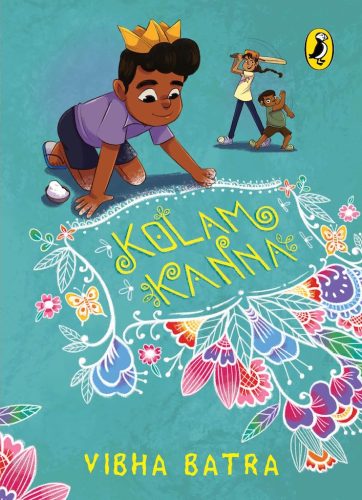
October 2023 sees us reading another brand-new book, hot off the press! I read Kolam Kanna just about a month ago, and I loved it. What’s not to love about a kolam-drawing child with friends who stand up for him? Here’s what we’ll do as we read this book.

Kolam-Kanna-book-cover

Kolam

Have you read Susheela’s Kolams? If we can, we will read the story together. But whether we can or not, we will try to make a kolam in class. I remember being fascinated by kolams because of the geometry and patterns. I was never good at drawing, but I loved the idea of creating a simple but quite fancy-looking kolam all based on a framework of dots.

I’ve written about art integration before. It’s an important part of learning!

Themes

All too often, book club discussions follow the pattern of ‘what-do-you-think-of …’ This time, I would like the children to discuss what they think the themes of the book are. Will they talk about diversity? The class divide? Gender stereotypes? Without nudging them in a direction of my choice, I want to see where there conversation will go!

Dialogue Writing

I love the use of dialogue in Vibha Batra’s books! Using an excerpt from the book as our mentor text, we will explore dialogue writing, paying attention to both our choice of words and the structure of dialogue.

Come, read with us!

REGISTRATIONS ARE NOW CLOSED FOR THIS EDITION OF READ, WRITE, EXPLORE.

New batches begin every alternate month. If you would like to receive email notifications about my programmes, please fill this form. Alternatively, follow me on social media – Facebook, Instagram and Twitter – for regular updates.

FAQs

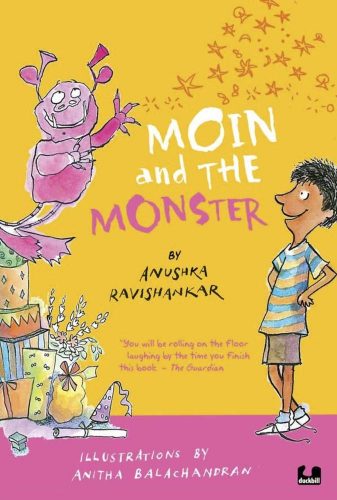
Moin and the Monster

July 6, 2023

I’m rereading Moin and the Monster with my book club! I read it in June 2021, and all those who read it with me are now too old to be part of Read, Write, Explore, so it’s time to introduce it to a fresh batch of children.

At my last creative writing programme, one of the children wrote a story about a pink 2D zombie the size of a pineapple coming to life. I immediately thought of Moin and the monster! How could I not? And I knew I had to read the book again.

Moin and the Monster

Rhyme

Everyone loves rhyme. For me, the biggest problem with poetry that children write and send me is forced rhyme without a sense of rhythm. Sure, sometimes it works. Maybe. But most often, it does not.

When do we use rhyme and why? What kind of poems would you like to write? What kinds of poems do you read?

Beginning with a discussion, I hope to write a little poetry together.

Surprising the Reader

Quirky, humorous stories are difficult to write, but one place to begin is by surprising the reader. I love it when a story surprises a laugh out of me! What monster rules can we create to make readers laugh? How else can we bring in the element of surprise?

Through free writing activities and story worksheets, we’ll try to create that unexpected jolt which makes us chuckle.

Making a Drawing Come Alive

What if the last thing you drew came to life? What would we meet and what problems would you face with it? 

Come, read with us!

REGISTRATIONS ARE NOW CLOSED FOR THIS EDITION OF READ, WRITE, EXPLORE.

New batches begin every alternate month. If you would like to receive email notifications about my programmes, please fill this form. Alternatively, follow me on social media – Facebook, Instagram and Twitter – for regular updates.

FAQs

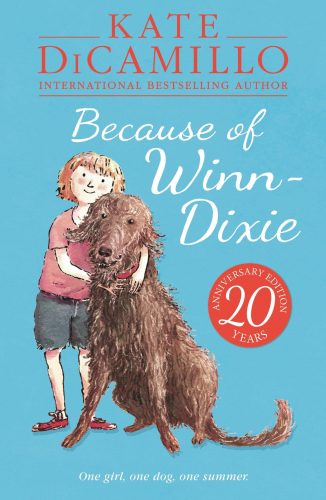
Because of Winn-Dixie

July 4, 2023

Kate DiCamillo’s Because of Winn-Dixie has been on my list of books to read for a l-o-n-g time. Yet, I didn’t get around to reading it until I thought of introducing it to my book club. And I’m so glad I did! It’s a gorgeous book. It’s the kind of book that makes your heart ache and swell with its sweetness and its gentleness.

India Opal’s mother left her father and her, and it’s because of Winn-Dixie, a dog she adopts at the spur of the moment, that she begins to come to terms with her loss. Not just that; all thanks to Winn-Dixie, she makes friends and learns what it means to be part of a community where everyone not only has a story to share and but also has ghosts that haunt their past.

I can’t wait to read it with my book club!

Because of Winn-Dixie book cover

Vocabulary

Playing with words is always fun! I have three vocabulary activities in mind for Because of Winn-Dixie. One, before we start reading, we’ll do a word search puzzle and then string together some of the words to build a story of our own. Next, we’ll try to make a list of words we associate with dogs. And finally, we’ll do a crossword puzzle based on the book. There are so many resources available online; I hope to use at least some of them!

Ten Things

As Opal is ten years old, she asks her father to tell her ten things about her mother. What ten things would you tell us about a parent or best friend? Do you think they give us a clear picture of what the person is like?

Letter to Mom

There are so many writing activities we can do with Because of Winn-Dixie! One thing I would love to explore is to get into Opal’s character and write a letter to her mother about Winn-Dixie. What would Opal say? Writing a little about how she feels about each of her new friends would be a great way to begin!

Come, read with us!

REGISTRATIONS ARE NOW CLOSED FOR THIS EDITION OF READ, WRITE, EXPLORE.

New batches begin every alternate month. If you would like to receive email notifications about my programmes, please fill this form. Alternatively, follow me on social media – Facebook, Instagram and Twitter – for regular updates.

Upcoming Programmes
FAQs

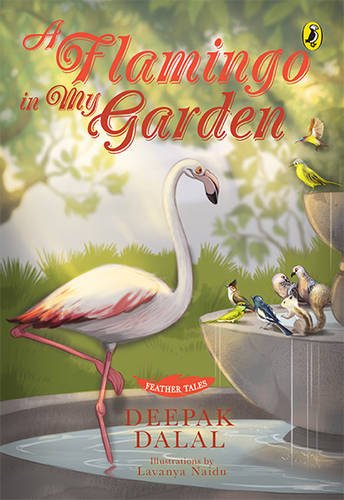
A Flamingo in My Garden

July 2, 2023

We’ve read Talon the Falcon, The Golden Eagle and The Paradise Flycatcher. How can we not read A Flamingo in My Garden?

The entire Feather Tales series is stunningly illustrated in full colour, and that is most certainly part of the charm. Like The Golden Eagle, A Flamingo in My Garden is a story within a story. Mitalee is delighted to see a flamingo in Rose Garden, and she watches as her favourite squirrel–whom she calls Snowdrop–and the birds chatter together. In that little circle of birds, the skybird Longtail tells the story of how Sunglow the flamingo found his way to Rose Garden. It’s a lovely story full of suspense and the universal theme of good versus evil.

Here’s what we will do as we read the book.

Words

The sea is called bigwater. Police-birds are skybirds. Terra-staan is the earth.

During author events on The Prophecy of Rasphora, I often do an activity where children make up Rasphoran words for various English words. Similarly, as we read A Flamingo in My Garden, we’ll make up words in a language of our own – not bird-language, perhaps, but perhaps pup-language or bug-language!

Bird Similes

We’ve worked on bird idioms several times; it’s time to work on bird similes. How many do we know? As wise as …? As happy as …? As proud as …? Let’s explore!

Freedom

Just like The Golden Eagle, A Flamingo in My Garden is a story about freedom. Especially as this is the first book we will be reading in August, it will be the perfect time to talk about independence and the freedom struggle. What does freedom mean to you? Can we work on a piece of guided writing based on the idea of freedom?

Come, read with us!

REGISTRATIONS ARE NOW CLOSED FOR THIS EDITION OF READ, WRITE, EXPLORE.

New batches begin every alternate month. If you would like to receive email notifications about my programmes, please fill this form. Alternatively, follow me on social media – Facebook, Instagram and Twitter – for regular updates.

FAQs

Art Workshop with Kripa

June 16, 2023

Each time a new writing programme begins, I feel it whizzes by. Twelve weeks are nearly over, and here we are, after our last guest session of the programme, an art workshop with art educator and children’s illustrator, Kripa. It was such a treat!

I’ve been looking at Kripa’s art for a while, and I love it. Her tea journal, her little dough babies, her city sketches … each picture she shares on social media is stunning. Art and writing go together, no matter how much I may say that I cannot draw at all, and that is why I invited Kripa to conduct an art workshop for us.

Watching all the children fill their pages with colour warmed me up. It’s a joy to watch them engage in the reflective experience of creating art, and I loved how Kripa guided them through it. The title of the workshop itself is lovely, isn’t it?
Purple sea and pink sky,
Nothing in art is a lie.
Kripa began by showing us her gorgeous artwork featuring the sky and the sea. Often, we restrict ourselves to traditional colours when we draw. The sky is blue, the sea is blue-green, and land is brown. Yesterday’s session was about experimenting with these colours, by using bold, unconventional colours to express ourselves.

I also loved Kripa’s first and most important rule: don’t erase. There are no mistakes! She asked the children to imagine that their eraser had fallen into the sea, or better, that the eraser had not been invented yet.

Beginning with a single horizontal line, Kripa taught them about positive space and negative space. Using non-traditional colours, the children explored mixed media to create seascapes of their own. Even as they worked, Kripa spoke about strokes, both for oil pastels and for poster colours, encouraging the children to create layers.

And voila! In an hour, each of the children had a work of art to show. I’m waiting for them to finish their pieces and send me pictures, but the little we saw was lovely too.

With that, another set of workshops comes to an end. But before I know it, October will be here, and I’ll be planning my next set of guest sessions …
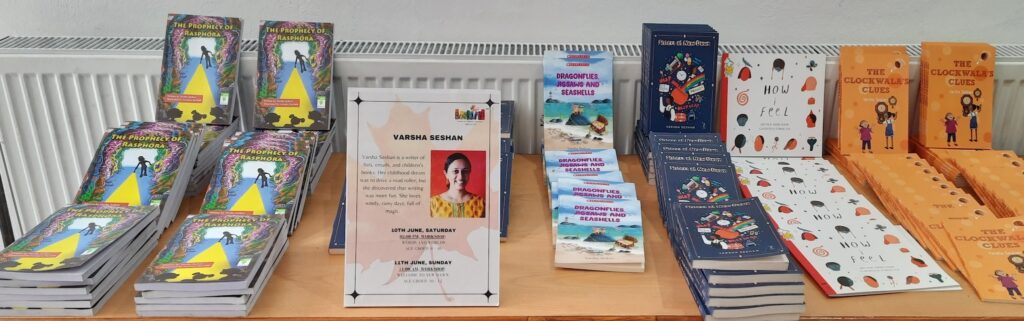
Bookaroo Srinagar 2023

June 14, 2023

What can one say about a literature fest without being repetitive? Lit fests are special. They fill you up with energy and enthusiasm. They remind you of the joy of reading, writing, and stories.

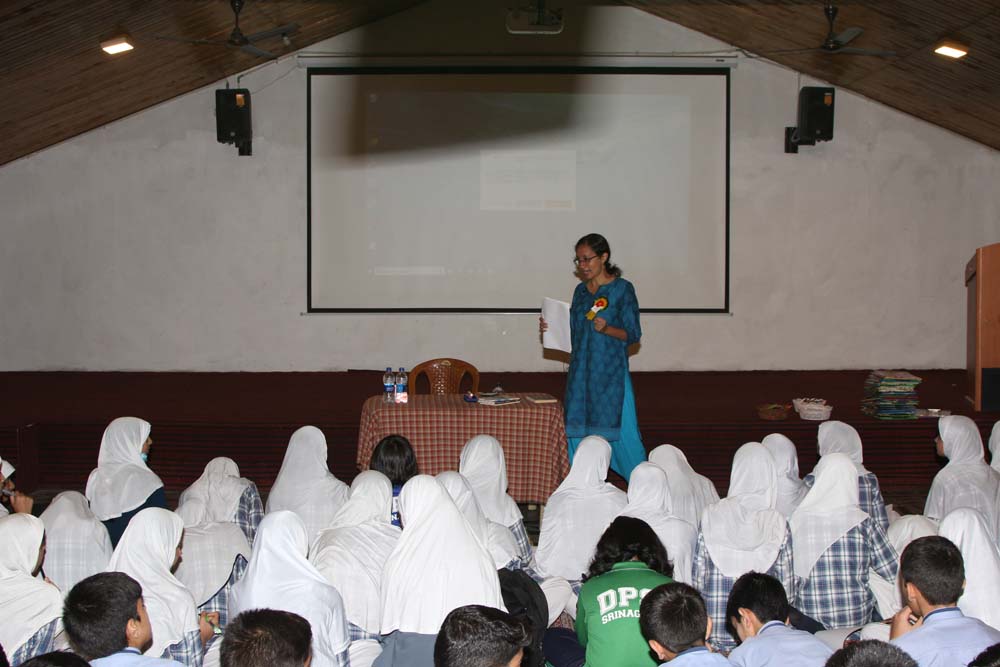
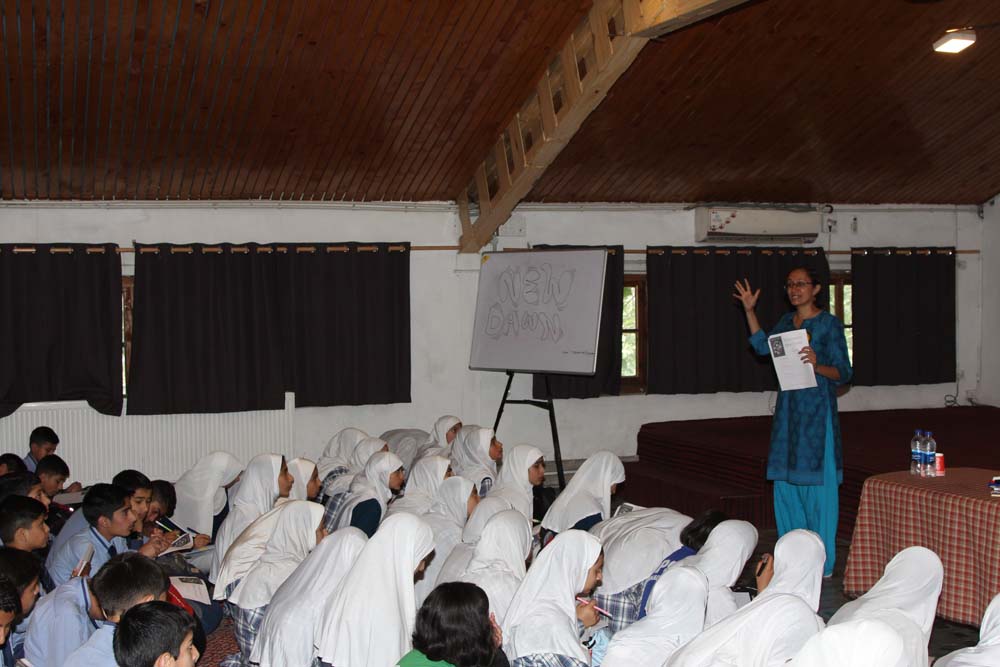
And lit fests in beautiful spaces? They’re inspiring. Srinagar is lovely, and equally, Delhi Public School, which hosted Bookaroo, was charming. Look where I conducted both my sessions!

Over the last few years, I’ve been invited to several lit fests. Last year alone, I did events at lit fests in Vadodara, Gurugram, Jaipur and Pune, in addition to smaller ones at various schools in the country. I’ve shared pictures and anecdotes, and at the risk of repeating myself, I will say that lit fests always leave me on a high.

Yet, for a writer, lit fests are a means to an end. They’re a way for children to get to know about our stories. They help create some shelf space for our books at stores that are dominated by Percy Jackson, Harry Potter, the Famous Five, and Geronimo Stilton.

Of course, the author interactions themselves are lovely. It’s grand to address a full house and have dozens–sometimes hundreds–of enthusiastic children in the audience. But we are finally writers first. We want our stories to be read.

And that’s what makes Bookaroo truly special. The fact that there is a space for authors to be seen. Their books are celebrated, not just for the way they bring children together at an event, but for the way they bring children together through the stories themselves.

Authors are notoriously shy, and I fit into the stereotype perfectly. I don’t find it easy to ask the bookstore if they have my books. Nor am I comfortable checking with the festival director if they have a space for author signings.

At more than one lit fest I’ve been invited to, my books have not been available. Even when books are available and there’s a table for authors to sign books, I–and I know I’m not alone in this because of multiple conversations with fellow authors–often just stand around awkwardly wondering whether to sit because when we sit, we’re often mistaken for the cashier.

Smoothening the whole process makes the lit fest experience a treat. While you can never make someone buy a book, you can facilitate the process with volunteers who make announcements and guide writers to a desk with a name plate and a pen.

And that makes the whole process come full circle. You write a book, get it published, people find out about it through the event, and then finally, you write a little note and hand the book over to a reader, the one to whom the story finally belongs.

Bookaroo, thank you!

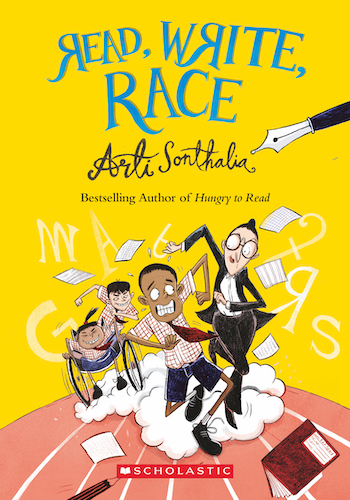
Read, Write, Race

May 14, 2023

Over two years ago, we read Hungry to Read by Arti Sonthalia at my book club. The children thoroughly enjoyed the story, and the book discussion was completely different from what I expected. I thought we would talk about stereotypes and about how judging reading speed isn’t ideal … but none of that happened. Instead, the children talked of how much they loved the book.

For me, Read, Write, Race was a much more enjoyable read, but I can’t help wondering how this one will go with the book club!

Very recently, I realised that even older children are not familiar with dyslexia. This surprised me, as several schools I’ve worked with have encountered dyslexia and spoken to children about it. While I have no idea how old I was when I first encountered the word, I look forward to talking to the children about learning disabilities. With Read, Write, Race, we’ll follow Raghav’s journey, as he struggles to read and write like a neurotypical child.

Dyslexia

The protagonist of Read, Write Race, Raghav, is dyslexic. What does this mean? I’ll share a few dyslexia worksheets to help the children understand the term better, following which we’ll read a reverse poem about dyslexia and do a few unscrambling puzzles.

Book Discussion

How inclusive is your school? Do you have children who are hearing impaired, visually impaired, or wheelchair bound? What do you think would change if your class was inclusive?

This is a subject close to my heart. I think it is worth discussing the idea that accommodating people with special needs is very different from including them!

Spell Bee

Spelling bees are fun, and they’re even more fun when you try to spell in a team, or backwards! Looking forward to quite a bit of hilarity as we spell words from the book and challenge one another!

Join my book club!

REGISTRATIONS ARE NOW CLOSED FOR THIS EDITION OF MY BOOK CLUB.

New batches begin every alternate month. If you would like to receive email notifications about my programmes, please fill this form. Alternatively, follow me on social media – Facebook, Instagram and Twitter – for regular updates.

FAQs

The Prophecy of Rasphora

May 13, 2023

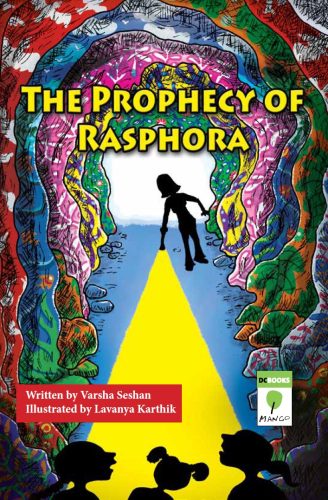
It is always a little daunting to introduce a book of my own to my book club. But I’ve done so many events based on The Prophecy of Rasphora, and so many of them have gone so well, that I feel (hope) this will be fun too!

Tara, Afreen and Vandana discover a land behind a waterfall, the land of Rasphora. Vandana, ever practical, knows that they must get out of Rasphora as soon as they can. Life is not easy for them, and they cannot afford to miss a day’s work, even though they are just children. But when she learns that she is part of a prophecy of this beautiful, mysterious land, she can’t help but pause. She should, at least, listen to the prophecy before returning to her home in the hills. Shouldn’t she?

The Prophecy of Rasphora Written by Varsha Seshan Illustrated by Lavanya Karthik DCBooks Mango Image description - a tunnel with very colourful paintings on the walls. In front, silhouettes of three young girls. Two have their mouths open in surprise. Away from the viewer, a woman (silhouette) with a torch that casts a beam towards the viewer.

Language Games

What is the first problem you would face if you found yourself a new land? This question always leads to the problem of communication. How would we talk to people who don’t speak the same language as we do? Based on our discussion, we will do a fun language activity where we explore how quickly we can switch from one language to another.

Words and Worlds

How easy or difficult is it to create a language of our own? With cryptograms, we will try to figure out what the prophecy of Rasphora says, after which we will invent words of our own. This will also lead to a conversation about words we love and why we love them. 

Fantasy

Most children I’ve met love writing fantasy. Step by step, I will take them through the writing of a fantasy story. How can we find inspiration in the world around us? How can we make the feeling of going through a portal come alive to the reader? And finally, how can we build a world that readers fall in love with?

Let's read together!

REGISTRATIONS ARE NOW CLOSED FOR THIS EDITION OF READ, WRITE, EXPLORE.

New batches begin every alternate month. If you would like to receive email notifications about my programmes, please fill this form. Alternatively, follow me on social media – Facebook, Instagram and Twitter – for regular updates.

FAQs

Fortunately, the Milk …

May 12, 2023

Some time ago, we read Help, My Aai Wants to Eat Me! at my book club. As planned, one of the things we did as we read the book was to make a list of pros and cons, like the protagonist Avi. Look at some of what we discussed.

Out of all these ideas the last one stayed with me. When it comes to reading (and most other things), choice is key. If I want children to love books and reading, they must have the freedom to choose! Curating books is all very well, but every so often, it’s important to take suggestions.

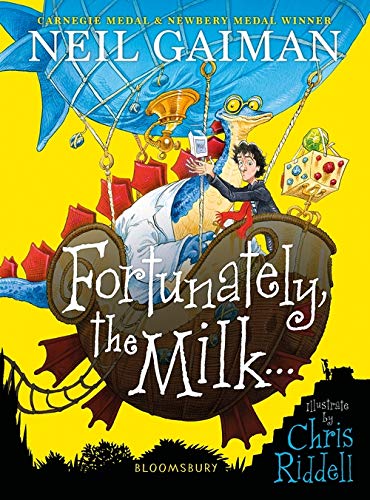
And so, we chose Fortunately, the Milk … by Neil Gaiman. It’s silly, hilarious and all kinds of impossible. I know that some elements will not be every child’s cup of tea, but we’re going to have a lot of fun with it. It’s a quick read too, which gives us all the more time to do some activities.

Fortunately, Unfortunately

I love playing this game with both children and adults, and a book like Fortunately, the Milk … provides the perfect opportunity to explore it again. I begin with a statement, and then, in turn, each child adds a sentence, alternately beginning with fortunately and unfortunately. We’ll also read either Fortunately by Remy Charlip or Fortunately, Unfortunately by Michael Foreman as we do this. 

Time Machine

Imagine you could use Professor Steg’s time machine. Or better yet, imagine if you could build a time machine of your own. How would your time machine work? Where would you go? Just like when we read Rattu & Poories Adventures in History: 1857, we’ll have some fun with time travel!

Puzzles

Word search puzzles, spot the difference activities, mazes … the internet has all these resources for Fortunately, the Milk … Let’s see how many of these we can use at my book club!

Join my book club!

REGISTRATIONS ARE NOW CLOSED FOR THIS EDITION OF MY BOOK CLUB.

New batches begin every alternate month. If you would like to receive email notifications about my programmes, please fill this form. Alternatively, follow me on social media – Facebook, Instagram and Twitter – for regular updates.

FAQs

Journey to Jo’burg

May 11, 2023

I picked up my copy of Journey to Jo’burg when I visited The Dogears Bookshop a couple of months ago. As I read it, I wondered whether I could introduce it to my book club. It is simply and beautifully written, but it touches upon difficult themes that I don’t know a lot about. I remember reading When Morning Comes, a YA book by Arushi Raina set in South Africa, but I’ve read little else set in the country.

Plus, talking about apartheid, inequality and injustice at an online book club isn’t always easy because we can’t quite judge the children’s moods. For instance, I remember a child writing to me privately in the chat box didn’t like the conversation about what frightens us because it made him even more scared. 

Yet, books about difficult subjects are important. Books like Journey to Jo’burg give us hope. Although set in a different age, the book gives us a glimpse of a time that is not entirely gone. We feel the repercussions of apartheid in racism even today, and that’s why I decided we would read this book together. Having introduced a conversation about unfairness with Munni Monster, our first read next month, who knows how far we can go?

Journey to Joburg

Geography

It’s astounding how many adults think that Africa is a country. Beginning with the map, we will look at the continent of Africa, examine what we know, and investigate what we don’t. I will ask each child at the book club to find out a little about one country and tell us what they discovered. I know we’ll all learn something in the process!

Newspaper Clippings

At the beginning of the book Journey to Jo’burg are excerpts from two newspaper clippings. These will serve as a prompt for two activities. One, I will give the children a headline and ask them to write a paragraph of the news piece using their imagination.

Two, we’ll play a game based on newspapers. If the children have access to newspapers, great. If not, I’ll share my screen and we’ll play a word-based game.

Journeys and Journaling

Naledi and Tiro, the two children in the book undertake a journey that seems impossible. The kindness of strangers makes the ending happy.

Journeys make for stories, though, and as creative writing is an important part of this book club, we’ll explore journaling in various forms. This does not have to take the form of travel writing! Instead, we’ll explore mundane journeys, like a journey to school. What do we see, do and hear? What could make the journey exciting?

Let's read together!

REGISTRATIONS ARE NOW CLOSED FOR THIS EDITION OF READ, WRITE, EXPLORE.

New batches begin every alternate month. If you would like to receive email notifications about my programmes, please fill this form. Alternatively, follow me on social media – Facebook, Instagram and Twitter – for regular updates.

FAQs

Munni Monster

May 9, 2023

I read Munni Monster a few months ago and loved it. It’s a beautiful book, written with empathy and ending with hope. I knew I had to introduce it to my book club, and I can’t wait to do so.

Munni Monster is a book about a difficult subject, but for me, dwelling on only the subject matter of the book as we read is a bit of an overkill. The children will, I know, understand the messages the book conveys without any interference on my part. Of course, we will talk about cerebral palsy, but that cannot be the only thing we discuss without ruining the beauty of the book, so here’s what we will do as we read.

Munni-Monster-book-cover

Secret Hiding Places

Mishti has her own little hidey-hole that no one else is allowed to enter.

Do you have a private place of your own? I know I did, as a child. I made my own hiding places too, with umbrellas in a corner, or saris under a dining table. 

During an earlier edition of my book club, the children created all kinds of innovative reading nooks; let’s see whether we can make one for ourselves this time too!

Precious Objects

All of us have something precious that may not be so precious to anyone else. For Mishti, it’s her bed.

What is precious to you? What would you be very unhappy about losing? Through a show-and-tell activity, I would love to explore how the story of how we got something makes it precious.

Unfairness

How often do we complain that something is not fair? In Munni Monster, Mishti discovers just how unfair life can be. Through a guided writing exercise, we will explore some things we find unfair and what, if anything, we can do about it.

Let's read together!

REGISTRATIONS ARE NOW CLOSED FOR THIS EDITION OF READ, WRITE, EXPLORE.

New batches begin every alternate month. If you would like to receive email notifications about my programmes, please fill this form. Alternatively, follow me on social media – Facebook, Instagram and Twitter – for regular updates.

FAQs

Chitti’s Travelling Book Box

May 8, 2023

The most rewarding books to read at my book club are books about books. I remember reading The Reading Race, Book Uncle and Me, Bookasura and Koobandhee; it’s likely that there were others too.

Even as I read Chitti’s Travelling Book Box when it came out in February, I knew I would read it with my book club sooner or later. Here’s what we will do as we read!

Chittis-Travelling-Book-Box-cover

Reading is Boring!

If your friends think reading is boring, what will you do? What do you think can make reading fun?

We’ll begin by talking about this and sharing ideas, but if we can, I’d love to implement the children’s ideas in class. If there is something the children think will make reading more fun, let’s do it together!

The Monster Game

Inspired by Chitti, we will play a game I love – the monster game! Together, we will create a monster and then maybe draw it and give it a name. 

Book Scavenger Hunt

We love book scavenger hunts at my book club. Running around and hunting through our books is always fun. In a book about books, how can we not do this activity we love?

Here are two book scavenger hunts we’ve done in the past. I’m all set for another!

Join my book club!

REGISTRATIONS ARE NOW CLOSED FOR THIS EDITION OF MY BOOK CLUB.

New batches begin every alternate month. If you would like to receive email notifications about my programmes, please fill this form. Alternatively, follow me on social media – Facebook, Instagram and Twitter – for regular updates.

FAQs

Non-Boring Nonfiction

May 7, 2023

It is always so rewarding when a guest speaker repeats something you’ve been saying at your writing programmes for a long time! Thank you, Vaishali, for this session on non-boring nonfiction, and for reiterating so many things that keep needing to be said!

In November last year, I watched Vaishali Shroff conduct two sessions at Bookaroo Vadodara. One was based on Sita’s Chitwan; the other on Batata, Pao and All Things Portuguese. Right away, I was sure she would be the perfect person to do a nonfiction workshop with the children at my writing programmes. Unfortunately, working something out right away was impossible, but after much juggling of schedules, we finally managed to do it this time.

Step by step, Vaishali took us through the writing of engaging nonfiction. With an exercise inspired by something as simple as the picture of a mango, she helped the young writers understand the difference between a bland visual description and a hook that draws the reader in. I loved how different the first pieces the children shared were from the pieces they shared at the end of the session!

With examples from her books, she stressed the importance of research and fact-checking. Bringing a plot and story into our nonfiction is important too! And all the while, as she worked with mentor texts, she kept the children active, making them write and share one short piece after another.

Most importantly for me, there were several things Vaishali said that made me rejoice quietly, simply because it’s great to have someone else repeat something I keep trying to bring into my writing programmes.
One, don’t be lazy about rewriting. If something doesn’t work, delete it!
Two, focus. Your piece must have focus. I usually refer to this as purpose, and I keep asking: what is the purpose of this piece?
And three, research. Don’t just write things you find on the internet! Fact checking is important.

Guest sessions are rewarding; the next one will be here in June!

Poetry in Collaboration with Sampurna Chattarji

April 21, 2023

My first guest session of the season – Poetry in Collaboration – was such a success! With sixteen enthusiastic participants and one lively, energetic facilitator, the hour flew by before we knew it. Haiku, renga, nonets, free verse–we explored it all.

Often, we believe that writing must be a solo activity. We have creative thoughts and ideas, and we want to have full control over them. However, collaboration can lead to unexpected, sometimes beautiful, consequences. Sampurna is a serial collaborator, as she describes herself, and the stories she shared about her collaborative writing experiences were lovely. Step by step, she led the participants through their own work. How does one begin? What methods can we follow? How do we go on, while being mindful of our own creative impulses as well as those of our partner’s?

In a whirlwind of a workshop, Sampurna visiting one breakout room after another – there were eight in all! She helped overcome roadblocks, gave the pairs suggestions and feedback, and helped each writer ask questions about the choices they made. The poetry module of my writing programmes is almost over, and this was a grand way to bring it towards its conclusion.

A few key takeaways:

  • Listening to your partner is important! Collaboration is about working together with a clear goal in mind.
  • Collaboration works well when your partner is different from you. If you already have similar tastes and ideas, you are much more likely to create something quite predictable.
  • Choosing a setting that both partners are familiar with, but in different ways, leads to surprising results.

There were so many more ideas and thoughts, but an hour’s workshop has never felt shorter. Here’s to more workshops filled with ideas and magic!

The Adventures of Tootsie Lama

March 7, 2023

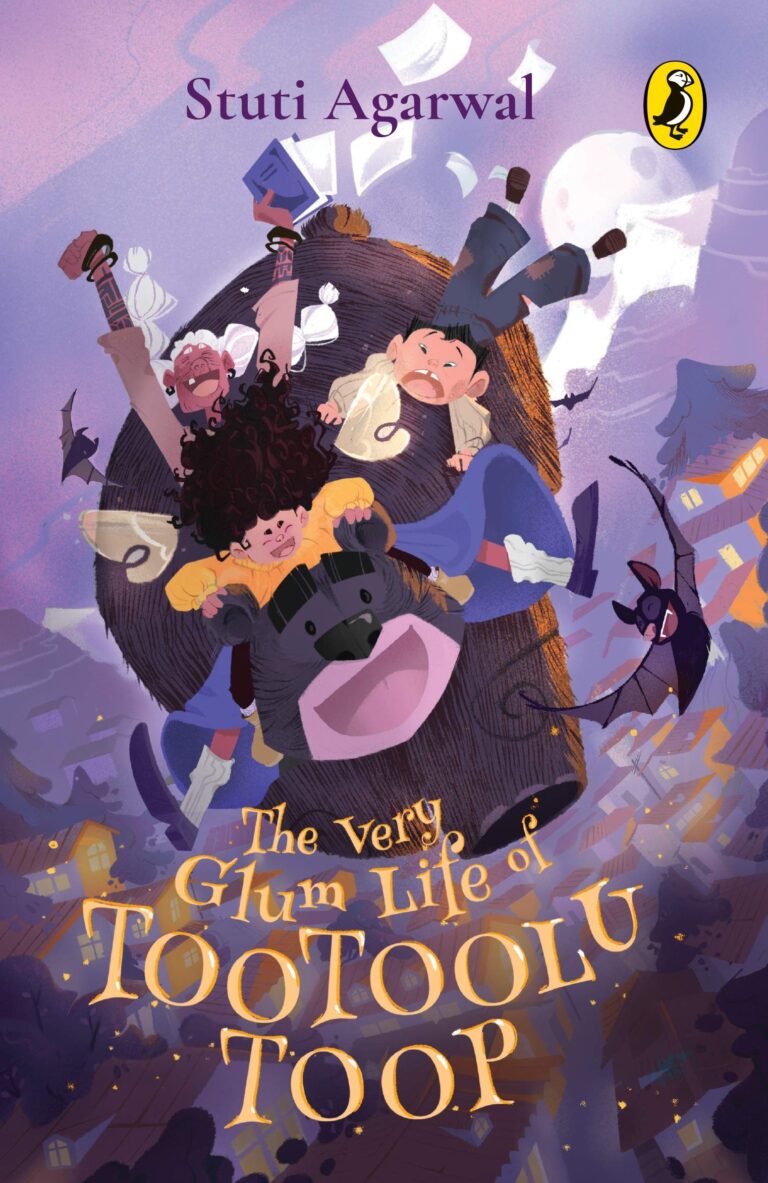
We read The Very Glum Life of Tootoolu Toop a couple of years ago at my reading programme for ages nine and ten, and we loved it. That’s why I picked up The Adventures of Tootsie Lama. It has the same kind of craziness, which makes it perfect for my book club.

Tootsie Lama is reminiscent of Pippi Longstocking in her independent, almost amoral, way of functioning. She wants thukpa, and she will steal it if she must. Her friend Tenzing is the perfect ally, more than willing to be part of her madcap schemes, even if it means getting into trouble with his mother. But in this adventure, perhaps Tootsie Lama goes a little too far and has to face consequences that she didn’t quite imagine … It’s such a fun story!

Food

Tootsie Lama goes to astonishing lengths for a bowl of thukpa. What food would you do anything for? And if we’re being completely wacky, how far would you go to get the food you want?

Darjeeling

The Adventures of Tootsie Lama is set in Darjeeling, a place that, for many of us, is a holiday destination. I think this is a great time for the children to tell me about their own hometowns, or the city in which they live. What makes their city special? Where do they like to go on holiday?

Best Friends

Tootsie finds a perfect friend in Tenzing. Without a friend, would she be able to do everything she wants to do?

Childhood friendships are special, and I want to hear about what makes each child’s best friend the best best friend of all. What do they do together? What do they want to do together? We’ll try to write a little poem about it too!

Join my book club!

REGISTRATIONS ARE NOW CLOSED FOR THIS EDITION OF MY BOOK CLUB.

New batches begin every alternate month. If you would like to receive email notifications about my programmes, please fill this form. Alternatively, follow me on social media – Facebook, Instagram and Twitter – for regular updates.

FAQs

Dungeon Tales

March 6, 2023

We read Dungeon Tales II in September last year and loved it. In fact, it was everyone’s favourite read from the August-September selection, even though it competed with Paati Vs UNCLE and Frindle. So how can we not read Dungeon Tales, or, as the children at my book club call it, ungeon ales?

A brilliantly crafted collection of stories, this book takes us through the creation of the tome we encounter in the second book. The Badmash Badshah is all set to make heads roll, until one young prisoner comes up with a plan – of regaling the emperor with stories. One by one, the prisoners are brought before him, and they tell him their magnificent, fantastical, hilarious tales.

Word Choice

Why does the author Venita Coelho use the word ‘dungeon’ rather than a word like ‘prison’ or ‘jail’? How does word choice affect a story?

Through a quick vocabulary activity, we’ll discuss synonyms for simple words like said and walked. How do writers change the mood of their stories by choosing specific words?

Ballads

The stories in Dungeon Tales are old-fashioned ones with a twist, the perfect way to explore old-fashioned storytelling styles like ballads. Can we take a section of a story and rewrite it in the form of rhyming narrative verse? This is the perfect way to introduce the importance of meter and rhythm when we write rhyme!

Prisoners

Creative writing is an integral part of Read, Write, Explore, and so we’re going to write a story of our own. Imagine you’ve been thrown into the Badmash Badshah’s prison. Why are you there? What is your story?

At my creative writing programmes, we will be working on fractured fairytales, and this exercise will follow much the same pattern. What stereotypes and norms can we invert while telling a fantastic story?

Join a programme!

REGISTRATIONS ARE NOW CLOSED FOR THIS EDITION OF READ, WRITE, EXPLORE.

New batches begin every alternate month. If you would like to receive email notifications about my programmes, please fill this form. Alternatively, follow me on social media – Facebook, Instagram and Twitter – for regular updates.

FAQs

Ottoline and the Yellow Cat

March 5, 2023

I love Chris Riddell! I read Ottoline Goes to School sometime last year, but I couldn’t introduce it to my book club because it wasn’t available in India. Less than a month ago, I learned that Ottoline and the Yellow Cat is available, so of course we must read it!

I love serious humour. I know that’s an oxymoron, but for me, it’s the kind of book that’s earnest and written in such a way that something utterly ridiculous reads like it is perfectly normal. And that’s what makes the Ottoline series delightful. Lovely pictures and a perfectly lovely story come together in this quick, beautifully illustrated story about a girl and her unusual friend. Here’s what we’ll do as we read Ottoline and the Yellow Cat at my book club.

Ottoline and the Yellow Cat book cover

Collections

Ottoline’s parents travel all over the world and collect all kinds of things, including masks, extremely small paintings, and portable fishbowls. Ottoline loves to look after the collections, and I think most children do! I collected perfect pencil shavings, for instance. And my sister collected tissues from restaurants. What do my book clubbers collect? Through a small Show and Tell session, we’ll find out.

Make Your Own Business Card!

I love bringing artsy activities into my book club! Lots of people who take care of Ottoline and Mr Monroe. One spread of images shows us all their business cards, so let’s make our own! What special services could we offer? What are we good at, and what would we call our business?

Maps

Ottoline’s story is full of maps, not all of which seem very useful. Nonetheless, maps are entertaining and could be fun to explore.

Can you draw a map from your front door to your room? What about a fictitious map? Can you draw one of those?

Join my book club!

REGISTRATIONS ARE NOW CLOSED FOR THIS EDITION OF MY BOOK CLUB.

New batches begin every alternate month. If you would like to receive email notifications about my programmes, please fill this form. Alternatively, follow me on social media – Facebook, Instagram and Twitter – for regular updates.

FAQs

The Lizard of Oz and Other Stories

March 3, 2023

As a child, I adored animal stories. Dick King-Smith was a favourite, and I scoured the British Library for his books. Another favourite was the Animal Ark series – completely different in the sense that the animals aren’t anthropomorphic, but fun, all the same.

That’s one of the reasons we’re reading The Lizard of Oz at my book club. Although I haven’t worked with short stories with my book club for ages seven and eight before, they work excellently with the older ones, so I’m excited to read this set next month. Humour, adventure and sparkling surprises come together in this collection that I’m sure we’ll have fun exploring!

The Lizard of Oz book cover

Word Puzzle

Several years ago, the theme for the reading challenge at the British Library was ‘Animal Agents‘. I loved the books in the collection, as well as all the activities we did! One of those activities is a word puzzle that I’m sure my book clubbers will enjoy. Searching for words is always fun!

Favourite Animals

When we read A Very Naughty Dragon, the children at my book club made wonderful presentations on animals they find intriguing. I discovered animals I hadn’t heard of, and this was rewarding for all of us! This is an activity well worth repeating because children are treasure troves of trivia that they’re eager to share. Here’s our chance to learn about more animals from around the world, while also giving each child the chance to talk about something that excites them!

Creating an Animal Story

The Lizard of Oz and Other Stories features all kinds of unexpected animals – a mosquito, a bee, an ant, a mouse … What  animals can we write about? What strange characteristics could they have? Together, as well as individually, we will create protagonists for animal stories of our own.

Join my book club!

REGISTRATIONS ARE NOW CLOSED FOR THIS EDITION OF MY BOOK CLUB.

New batches begin every alternate month. If you would like to receive email notifications about my programmes, please fill this form. Alternatively, follow me on social media – Facebook, Instagram and Twitter – for regular updates.

FAQs

Pinkoo Shergill: Pastry Chef

March 2, 2023

When the publishers sent me a review copy of Pinkoo Shergill: Pastry Chef, I devoured it. Even as I read it, I knew I wanted to introduce it to my book club soon. The only question I had was as to whether to introduce it to ages seven and eight, or nine and ten. Ultimately, I chose the latter for several reasons. For one, there’s so much we can do with the book in terms of creative writing! For another, it’s rather longer than the books I usually read at my book club for seven and eight-year-olds, so I felt I would not be able to do it justice with younger readers.

Pinkoo’s story is filled with a sense of urgency, which makes it a pacy read. I like the characters, the storyline and the telling – what more do I need?

Here’s what we will do with the book at my reading programme.

Pinkoo-Shergill-Pastry-Chef-Book-Cover

Portmanteau Words

We’ve worked with portmanteau words at my book club for the younger ones, and each time I do vocabulary activities of various kinds, I realise how much fun they are! Some activities are also worth repeating, simply because each time we do them, we enjoy them more. Fabtastic! Wowmazing! Spectaculous! These are words that Vibha Batra uses in the story. What can we come up with?

Recipes

In a book that is all about food, let’s create recipes of our own! The best thing about recipes that we don’t actually have to follow is that we can let our imaginations run wild. What ingredients could we put together? What cheftastic creations can we conjure up?

Creative writing is all about having fun with words and enjoying the process of writing. I can’t wait to see what this activity will lead to!

Genre

As this is the first book we will be reading in March, it is a good time to explore genre. 

What genres do children enjoy reading? What kinds of stories do they like to write? We will do a genre quiz, following which we’ll briefly explore how we classify and categorise stories.

Join a programme!

REGISTRATIONS ARE NOW CLOSED FOR THIS EDITION OF READ, WRITE, EXPLORE.

New batches begin every alternate month. If you would like to receive email notifications about my programmes, please fill this form. Alternatively, follow me on social media – Facebook, Instagram and Twitter – for regular updates.

FAQs

Petu Pumpkin: Cheater Peter

March 1, 2023

Petu Pumpkin is a cheat!
Or at least, so Jatin is convinced.
And if Petu Pumpkin continues to cheat and lie, what will become of him? One day, he fakes a stomach ache. He used to be a tiffin thief. Tomorrow, he’ll be a pickpocket. And then soon, he’ll be a murderer! His friends have a duty. They must get him to confess, no matter what it takes. That’s the only way they can save him from a life of crime.

Humorous and fun, Petu Pumpkin: Cheater Peter has that element of silliness that I know my book club will enjoy. Here’s what we’ll do as we read it.

Petu Pumpkin Cheater Peter book cover

Book Cover

The episode featured on the cover of Petu Pumpkin: Cheater Peter is probably my favourite part of the book. It’s as mad as it looks, and so, I’m going to begin by asking the children what they think is happening there. Is that … an egg? What are the boys doing?

And with all the hypotheses my book clubbers come up with, we’ll begin to read!

Renaming Old Games

When I learned that Ludo simply means I play, I was amused and amazed. What do you think would be a better name for it?

Petu Pumpkin and his friends play ‘Firebreathing Dragons and Spiralling Staircases’, which is just a fancy name for Snakes and Ladders. What other names can we come up with?

And connected to that, what other games can we come up with?

Two Truths and a Lie

How easy or difficult is it to tell if someone is being truthful or lying? Let’s find out through this game we play together – two truths and a lie!

Join my book club!

REGISTRATIONS ARE NOW CLOSED FOR THIS EDITION OF MY BOOK CLUB.

New batches begin every alternate month. If you would like to receive email notifications about my programmes, please fill this form. Alternatively, follow me on social media – Facebook, Instagram and Twitter – for regular updates.

FAQs

Writing Poetry

February 2, 2023

I’ve been conducting writing workshops for a long time, and if there’s one thing I love working with, it’s poetry. Nearly every writing programme I conduct begins with a poetry module. Why? Because it’s accessible. It’s far easier to write a poem in a week than it is to write a story in a week.

And so, each time, I try to work with different kinds of poetry. We’ve done list poems and narrative verse, limericks, rhymes, poems with strong verbs, and much, much more. Everything serves as a poetry prompt for me, and I think it can work for anyone!

For instance, what we read always helps us to get creative, and so, my reading programmes too have an element of poetry sometimes. Here’s a brief look some of the kinds of poetry we’ve explored recently.

Cinquains

The first poem below is a cinquain, which the children wrote when we read I Survived: The California Wildfires, 2018. Climate change is a phrase children encounter all the time. What signs of climate change do we see around us? Cinquains push children to pay attention to each word they choose. Teaching cinquains creates opportunities to brainstorm, explore our vocabulary, and attempt to find the perfect fit.

List Poem

I led the children through the second poem below when we read Crenshaw. Guided writing exercises, with poetry worksheets, work so well! In the story, Jackson and Robin put together a keepsake bag, and this prompted us to write about a keepsake bag of our own. I think it’s a lovely way for children to think about what is precious to them.

Of course, writing programmes allow us to explore even more. With each writing programme I conduct, I, too, become more ambitious. During the last two editions of the programme, I chose the best pieces and put together a zine (download issue 1 here and issue 2 here). This pushed the children to work even harder, editing and rewriting their pieces until they were satisfied.

Free Verse and (Rhyming) Puzzle Poems

In the April to June session, I introduced the participants to Emily Dickinson’s Hope is the thing with feathers, and then I guided them through a poem in free verse, comparing an emotion to an animal. I also worked with puzzle poetry because I love riddles, particularly rhyming riddles. Plus, it was the perfect pre-writing activity for us to work on detective stories!

Free verse allows children to become more familiar with metaphors, similes, personification, onomatopoeia and the like. It allows them to look at these literary devices as more than just terms, understanding what poetic effect they create. And the puzzle poems we wrote? While working on rhyme and meter, we also find ways to involve the reader!

Haikus, Acrostics and Reverse Poetry

In the latest edition of the writing programme, we grew more ambitious. I came across Brian Bilston’s review haikus, and I wondered whether we could do something along those lines. We took this idea further and explored recipe haikus too.

In keeping with the same idea of testing our limits, I also wondered if we could take a form that every child explores at some stage – acrostics. Whether it’s for greeting cards or for a chart in school, children write, or at least read, acrostic poetry at some stage. So, we took this familiar form and tried to do something new. Can we write a backwards acrostic? Take a look at one of my favourite ones below!

Our most ambitious project so far has been reverse poetry, and I was impressed with the poems the children wrote. I’m not usually someone who is effusive with praise, but the reverse poems they created were clever and lovely. Of course, we read multiple examples, and of course, I guided them through the process. But to successfully write a reverse poem – which conveys the opposite meaning when read in reverse – is a feat. There are many more in the latest issue of WORDS, our very own zine!

Writing poetry is fun, and getting children to write it is, honestly, equally rewarding. When creative writing seems difficult, I turn to poetry. Not because it’s necessarily easier, but because it is liberating. More importantly, especially when working with children, I think it’s important to play with poetry. Explore it, enjoy it, create something new. Rhyme is great. But there’s so much more that all of us can explore.

Do read our zine, and tell us what you think. Before you read it, though, I’d like to say – I’m sure there are typos. I’m also sure that lots of people could have designed it better – I’m a writer, not a designer. Even so, I can unabashedly say that I’m proud of it and I’m waiting for the next edition.

Read WORDS – Issue 1
Read WORDS – Issue 2

The Egghead Detective Agency

January 10, 2023

What child has never dreamed of being a detective?

The Egghead Detective Agency is perfect for my book club in so many ways. For one, there are clues to solve within each story. For another, the characters are young children, accompanied by a friendly ghost, making the book fun to read. I enjoyed the cases too – raining cupcakes, a missing chicken, a pink pool and more!

Here’s what we’ll do as we read the book together.

The Egghead Detective Agency book cover

Solve It Yourself!

Can we all become detectives? We’ll begin by trying to solve the clues in the stories, but we’ll move on to observing the world around us. What unusual things do we notice the moment we pay attention? A mark on the wall? A strange smell? Good detectives are, first, good observers!

Magical Chairs

Many children are familiar with Enid Blyton’s wishing chair. Here, in The Egghead Detective Agency, we have another kind of magical chair – one in which a ghost appears. Can we imagine something new? What else could a magical chair do?

Story Worksheet

Story worksheets are always fun, and a set of detective stories provides us with the perfect opportunity to write a mystery story of our own. Using a worksheet, we will write a complete detective story – an activity that is always satisfying.

Join my book club!

REGISTRATIONS ARE NOW CLOSED FOR THIS EDITION OF MY BOOK CLUB. 

New batches begin every alternate month. If you would like to receive email notifications about my programmes, please fill this form. Alternatively, follow me on social media – Facebook, Instagram and Twitter – for regular updates.

FAQs

Talon the Falcon

January 9, 2023

We love the Feather Tales series at my book club! I didn’t choose to read Talon the Falcon earlier because it is much shorter than The Golden Eagle and The Paradise Flycatcher, but when children fall in love with a series, how can we not read the whole lot together?

Set in the familiar Rose Garden, Talon the Falcon opens with a beloved character, Shikar, who wonders where all the birds have disappeared. He soon finds the reason – the presence of a falcon in the neighbouring garden! Of course, the birds, terrified, have flown away. But everything isn’t as it seems, and Shikar soon realises that the mighty falcon needs their help.

Here’s what we’ll do as we read Talon the Falcon together.

Talon the Falcon book cover

Idioms and Proverbs

Birds of a feather flock together.
Bird-brained.
Chicken-hearted.

I never tire of working with theme-based idioms with children. A quiz always brings a surge of energy!

Birds

The stunning pictures in Talon the Falcon add magic to the story. More, illustrations like these are perfect to learn about birds around us. As a child, I knew nothing of bee-eaters, drongos and sunbirds. Books like this can change that! During one class, I will also ask the children to talk about a bird they love, and what makes that bird special.

Poetry

The falcon and the other birds sing two beautiful songs, which will serve as the perfect introduction to list poetry. I love list poems, and I’ve lost track of the number of times I’ve worked with them. Here’s one that a child wrote at one of my first creative writing programmes. It’s time for more!

Join my book club!

REGISTRATIONS ARE NOW CLOSED FOR THIS EDITION OF READ, WRITE, EXPLORE. 

New batches begin every alternate month. If you would like to receive email notifications about my programmes, please fill this form. Alternatively, follow me on social media – Facebook, Instagram and Twitter – for regular updates.

FAQs
« Older Entries
Newer Entries »