
May 31, 2022

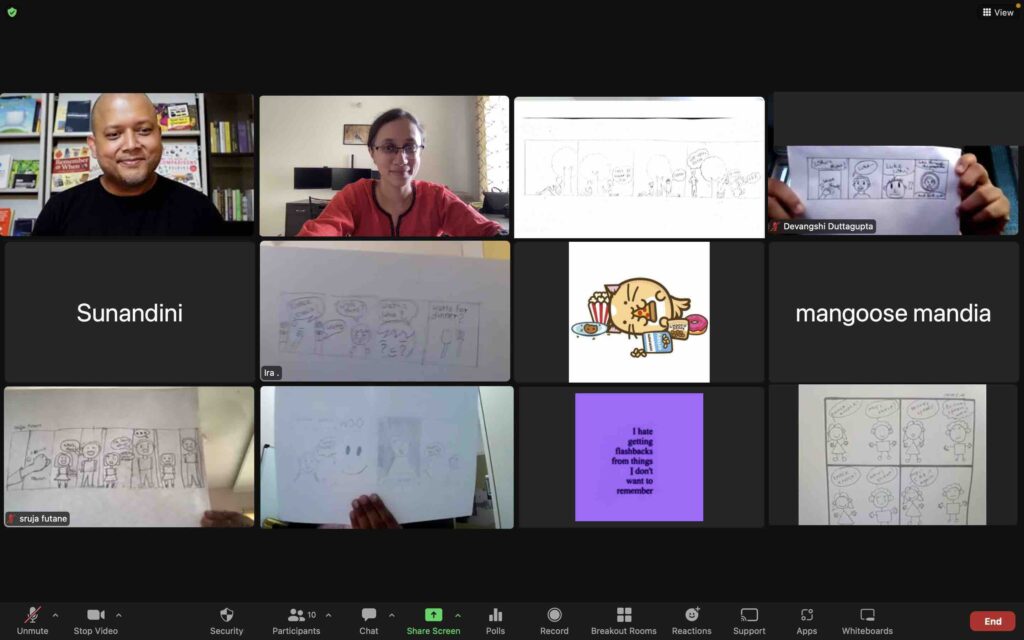
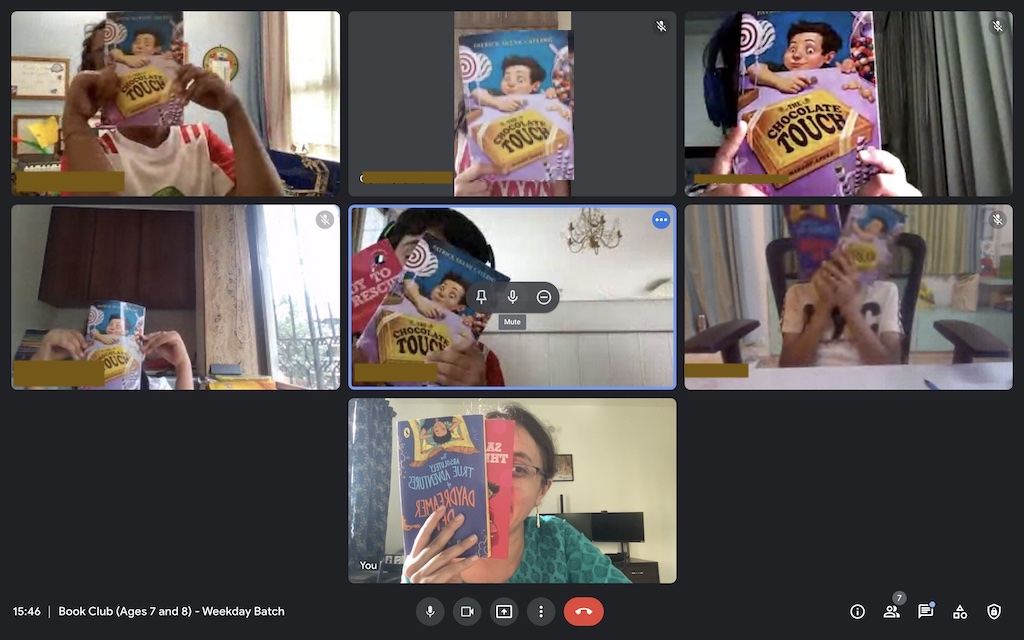
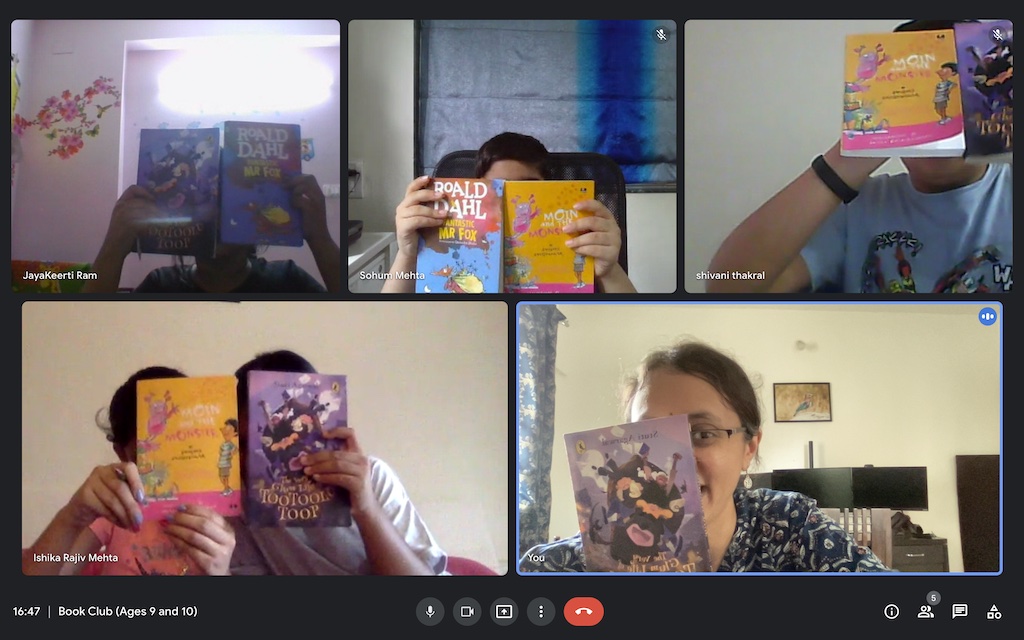
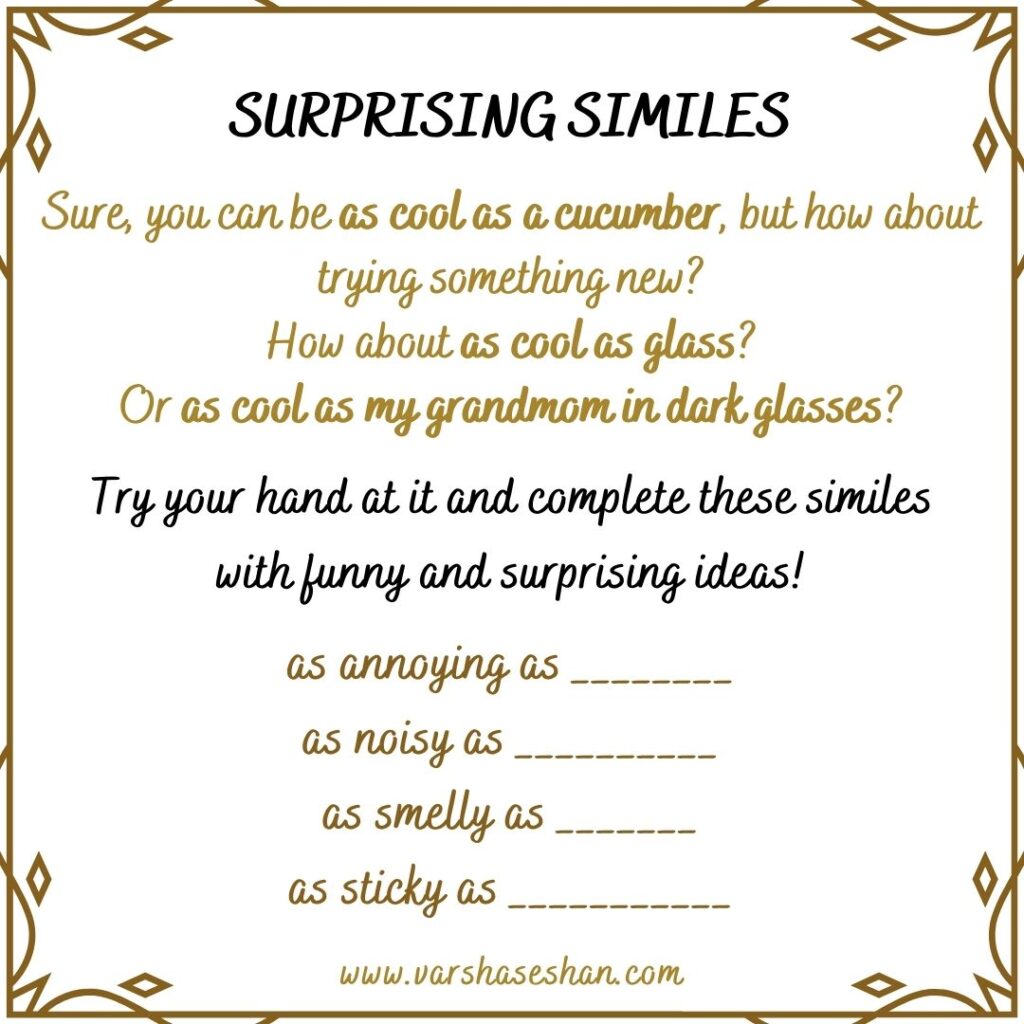
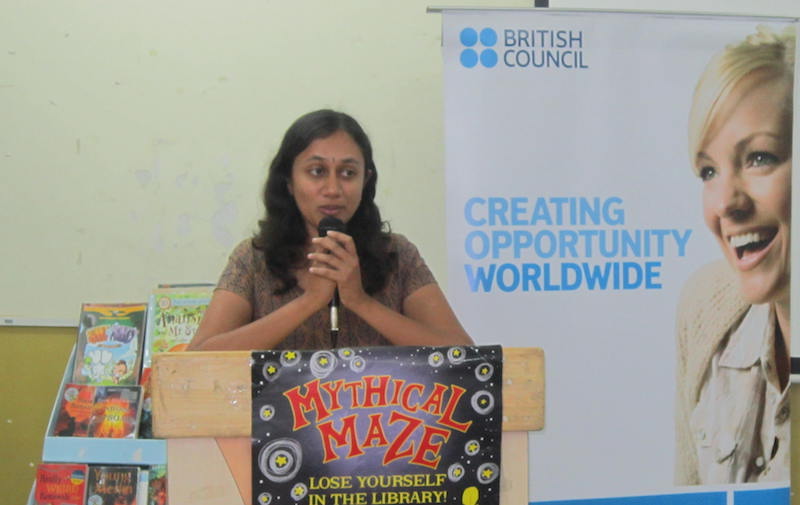
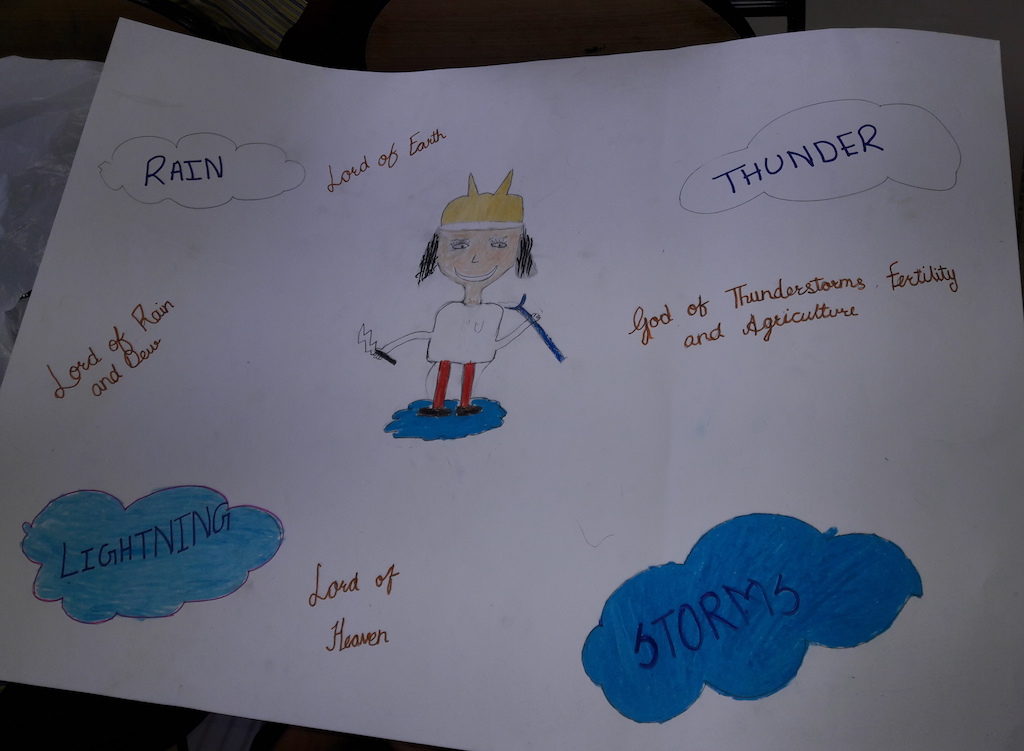
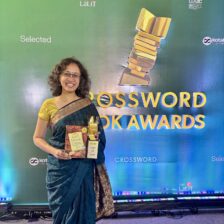
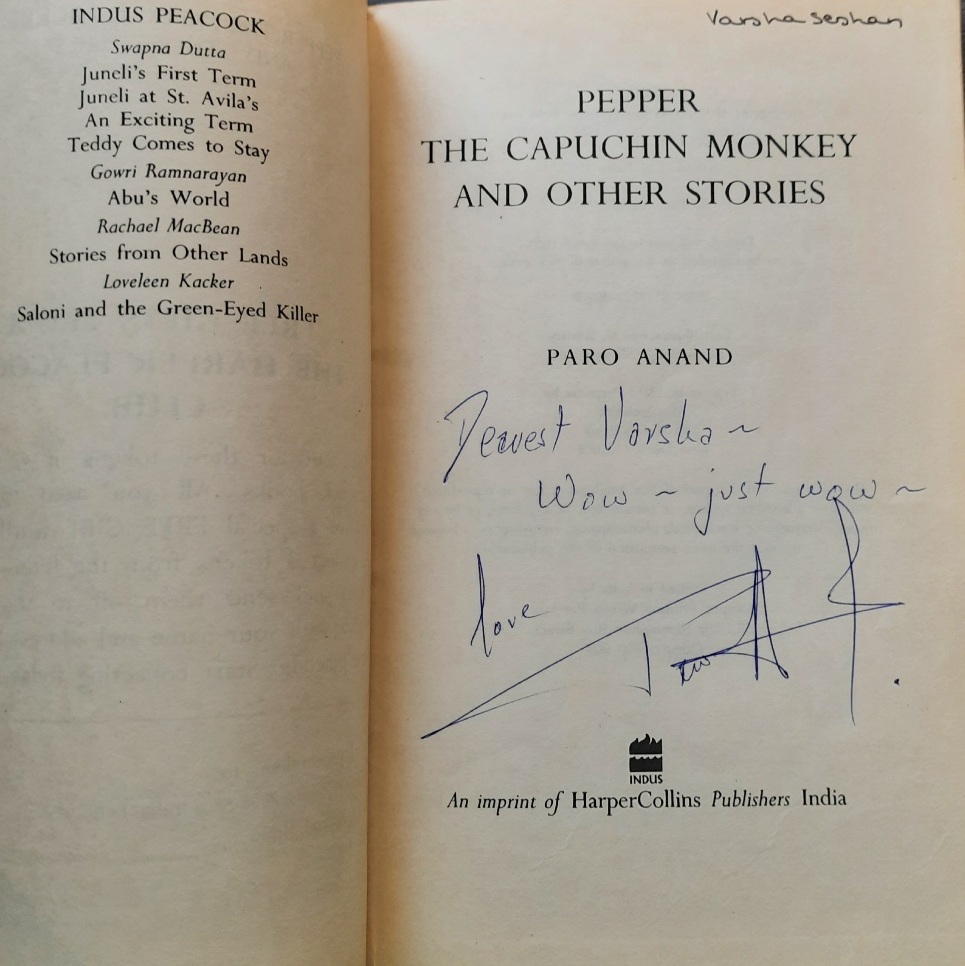
We just had another rewarding guest session! Niloufer Wadia, an illustrator and Urban Sketcher, covered so much ground in one short hour with my creative writing programme – you can guess what I mean from the picture above! From showing us different kinds of zines to telling us about storyboarding, she led us through the process of illustrating our works, choosing what to draw and helping us understand how to draw it.
The zines Niloufer showed us to begin with were lovely. Even though we’re going to be creating an e-zine at my writing programme, exploring form and shape was fun! Moving towards helping us sketch on our own, she shared some limericks with us and then proceeded to show us how we could illustrate them. She began with a storyboard with very basic line drawings, and together, we came up with ideas of how to illustrate the set of limericks she chose.
I also love it when guest speakers mention the importance of copyright. Even as we began to read the limericks, Niloufer paused to tell us about copyright, reminding us that even if we cannot find the name of the creator online, stuff on the internet is not ours to use as we wish!
Though there were a lot of takeaways from today’s session, if I had to choose one point I’d like to share, it would be the last bit of advice Niloufer shared with us. When you have an idea, don’t draw immediately. Think about how you can make it more – more ridiculous, warmer, more dramatic. And then, begin to draw.
It’s great advice!
May 31, 2022
It’s been four years since I attended the Asian Festival of Children’s Content.
2016 – my collection of short stories (now published as Dragonflies, Jigsaws and Seashells) was shortlisted for the Scholastic Asian Book Award, so I attended for the first time.
2017 – I submitted a paper titled Writing About Us, which was selected as part of a panel, so off I went for the second time.
2018 – my middle grade book (now published as Red Eyes) was the first runner-up for the Scholastic Asian Book Award, and yes, I attended the AFCC again.
I didn’t go in 2019 and then, with the pandemic, 2020 and 2021 were out of the question too. This year, Scholastic Asia sponsored a virtual ticket for me, so of course, I’ve been making the most of it. Attending virtually isn’t nearly as exciting as being there in person, but it does have one big advantage – I go back and attend sessions I missed because they’re available for viewing on the AFCC website for 30 days longer!

Yes, this was 6:30 am for me, but the keynote address was well worth attending! I took away so much from the session – both from what the speakers said and how they spoke. Neil Humphreys is a humorous, fun storyteller, and I thoroughly enjoyed how he talked about what inspired him to write his stories. But most of all, what resonated with me was his answer to the question on how to be a writer.
His answer?
Write.
And I couldn’t agree more. There are no shortcuts. If you want to ride a bike, you get on a bike and practise, practise, practise. And if you want to be a writer, you just get with it and write.
Of course, in a festival that is all about children’s literature, there were several conversations about reading and ways in which children start their reading journeys. The moderator Kim Beeman, a librarian, pointed out how, increasingly, children are drawn to books because they love the movies based on them. That hasn’t happened to me, but I understand! A movie is just a snippet, and if you love it so much that you want more, you’ll turn to the book!
Another important idea for me is focusing on content rather than the medium. Parents and educators complain all too often about children watching trash online. It is worth noting that the trash is the problem, not the screen! Would we feel better about children reading virulent material in print? I loved the session – a great start to a packed day!

Sessions like Depicting the ‘Unspeakable’ help me understand how much is happening in the world of children’s literature. For instance, most of us have read about the war against drugs in the Philippines, Oplan Tokhang, and Cheeno Marlo Sayuno spoke of literature that addresses this theme head-on. Often, parents and educators are wary of introducing dark, difficult themes to children, but something that came through multiple times both during this session and during other sessions at the AFCC was that children do shine and glow no matter how harsh the circumstances.
Stories about unconventional families, gender, socio-political struggles, abuse, disability and social inclusion – all of these exist. Gatekeepers of literature, including librarians, educators and parents need to bridge the gap between the books and the children. I loved the session; it made me think. How courageous am I as a writer? And how courageous am I willing to be?

The most powerful moment for me during the session on writing about children with special needs was when the moderator Quek Hong Shin asked, “What can parents of neurotypical children do to ease the path?”
This is such an important question, and one that is not asked nearly often enough.
I loved the responses too: language that we use at home finds its echoes in the language children use. Phrases like Don’t be silly! and Are you crazy? come from home. The moment children see other children doing something differently, they imitate things their parents say at home. That’s where parents of neurotypical children can be more mindful!
While Jill and Ilyana spoke from the perspective of parents of children with special needs, Abirami spoke as an educator. Not for the first time, an idea that was brought home to me was that inclusion is not the same as accommodation. Bringing a neurodiverse child into mainstream education and expecting them to adjust is not inclusion! Inclusion takes effort and time, and the willingness to make learning enjoyable for every child.

A few years ago, I would not have attended a session on STEAM, but I found this one rewarding, especially considering the number of workshops I conduct on reading and critical thinking. As a teacher trainer, two topics I regularly address are Bloom’s taxonomy and reading. And this sessionwas particularly interesting first to reaffirm what we already know – teaching through stories – and second, to look at activities we can do with stories we read.
However, one idea that stayed with me was that teaching a concept must go hand-in-hand with preserving the a sense of wonder. Yes, clouds are made of tiny water droplets. But isn’t it wonderful to look at the shapes of clouds and admire how fluffy they are? We find magic in rainbows, lava, slime, flowers … Magic is attractive and if we make each magical moment a teachable moment, we may ruin curiosity instead of sparking it.
That was the end of day one of AFCC 2022. Days two, three and four were equally exciting!
May 25, 2022
So often, we think of our grandparents simply as grandparents. We are the centre of the universe after all, aren’t we?
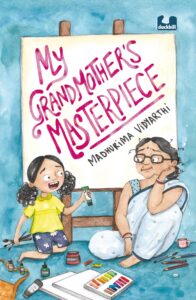
But Nini discovers that there is more to her grandmother than just being a grandmother. A stray conversation leads her to ask her mother to buy a box of paints for her grandmother, her Minima. And then, a journey of discovery begins – for Nini, her grandmother and the entire family.
My Grandmother’s Masterpiece is a lovely story that celebrates the relationship between grandparent and grandchild, but it’s more than that. It’s the story of Nini’s Minima who is suddenly free to do everything she wants to do all because her granddaughter got her a box of paints. Here’s what we’ll do with the book at my reading programme.

There’s one section in th book where Nini asks her Minima if she is drawing bhoots. Minima shakes her head and then draws a bhoot for her. Can you draw a bhoot? How about something you see around you like a box of paints?
Exploring vocabulary and drawing together is always fun, and we’ll see how well we can guess what the others draw for us on a shared screen!
Schools have Grandparents Day, and our book club will have something of the kind too. I would love for the children to show the others pictures of their grandparents and tell us a line or two about them. How many grandparents do they have? Do they meet their grandparents at all? What makes grandparents special?
Every child I’ve ever met has loved playing some version of being grown up. Whether they’re playing Teacher-Teacher or House-House, wearing a dupatta or spectacles, pretend games about being an adult are very much a part of childhood.
I’d love to explore this further with a small written exercise. How tall will they become? What will they do? I’ll give them a list of sentences to complete, sign and hide away, creating a little note to their future selves.
Registrations are closed for this reading programme. Watch out for the next ones on my workshop calendar!
New batches begin every alternate month. If you would like to receive email notifications about my programmes, please fill this form. Alternatively, follow me on social media – Facebook, Instagram and Twitter – for regular updates.

May 22, 2022
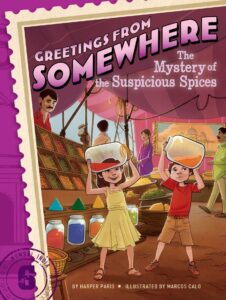
Greetings from Somewhere is a popular series of chapter books, and when I chose The Mystery of the Suspicious Spices for my book club, I hadn’t yet read it yet. The book I wanted was not available, and I just went with the idea that this one was popular and available. I knew I would, of course, read it well before my reading programme began.
And then, as I read it, I wondered if I wanted my book club to read it. It’s set in India and, simply put, doesn’t work.
The picture of a sari looks nothing like a sari.
There’s a section where an Indian character eats a paratha and wants to say that it is gross. He exclaims, ‘Sakala!‘
I had to look it up. And I discovered that Google translate had probably been used because yes, the word means ‘gross’, but in the context of gross weight!
How could I possibly read this at my book club?
And then, I began mulling over the fact that so many children I work with write stories about blue-eyed, blond Laura in Pennsylvania, not realising how problematic it is to set a story in a place you don’t know well. What better way to bring this into focus than with a book like this?

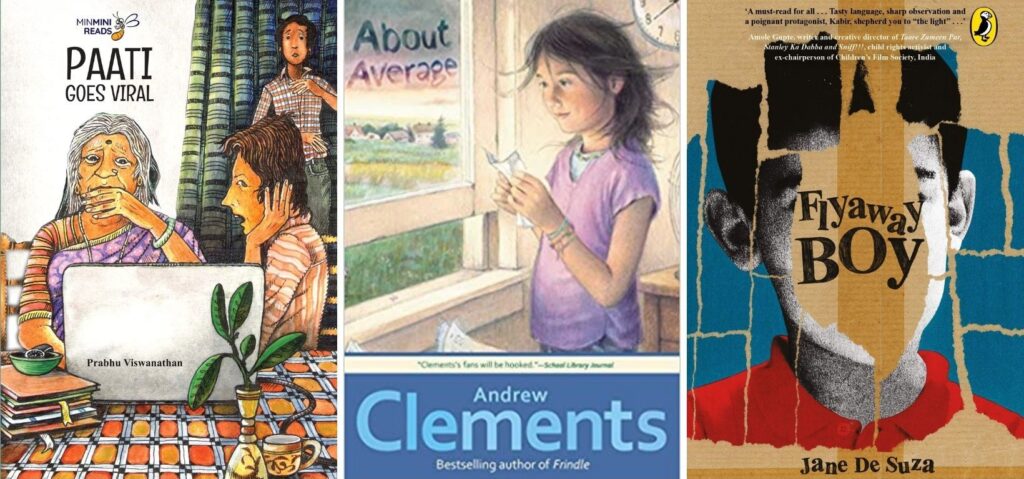
We made postcards when we read The Absolutely True Adventures of Daydreamer Dev, and Paati Goes Viral, andit was so much fun!
Greetings from Somewhere is all about travel too, but instead of postcards, we’ll make a greeting card this time, with an acrostic poem within.
As we read, I will ask the children to point out what doesn’t work for them, based on their knowledge of India. Have you or your parents ever seen an emerald green spice? Does coriander taste like oranges?
This will, I hope, lead the conversation towards writing what we know, and, equally, researching what we don’t.
What kinds of mysteries do the children think they can solve? I will give them a couple of simple “mysterious” puzzles and ask them how they think they would go about solving them. This promises to be exciting!
Registrations are closed for this reading programme. Watch out for the next ones on my workshop calendar!
New batches begin every alternate month. If you would like to receive email notifications about my programmes, please fill this form. Alternatively, follow me on social media – Facebook, Instagram and Twitter – for regular updates.

May 7, 2022

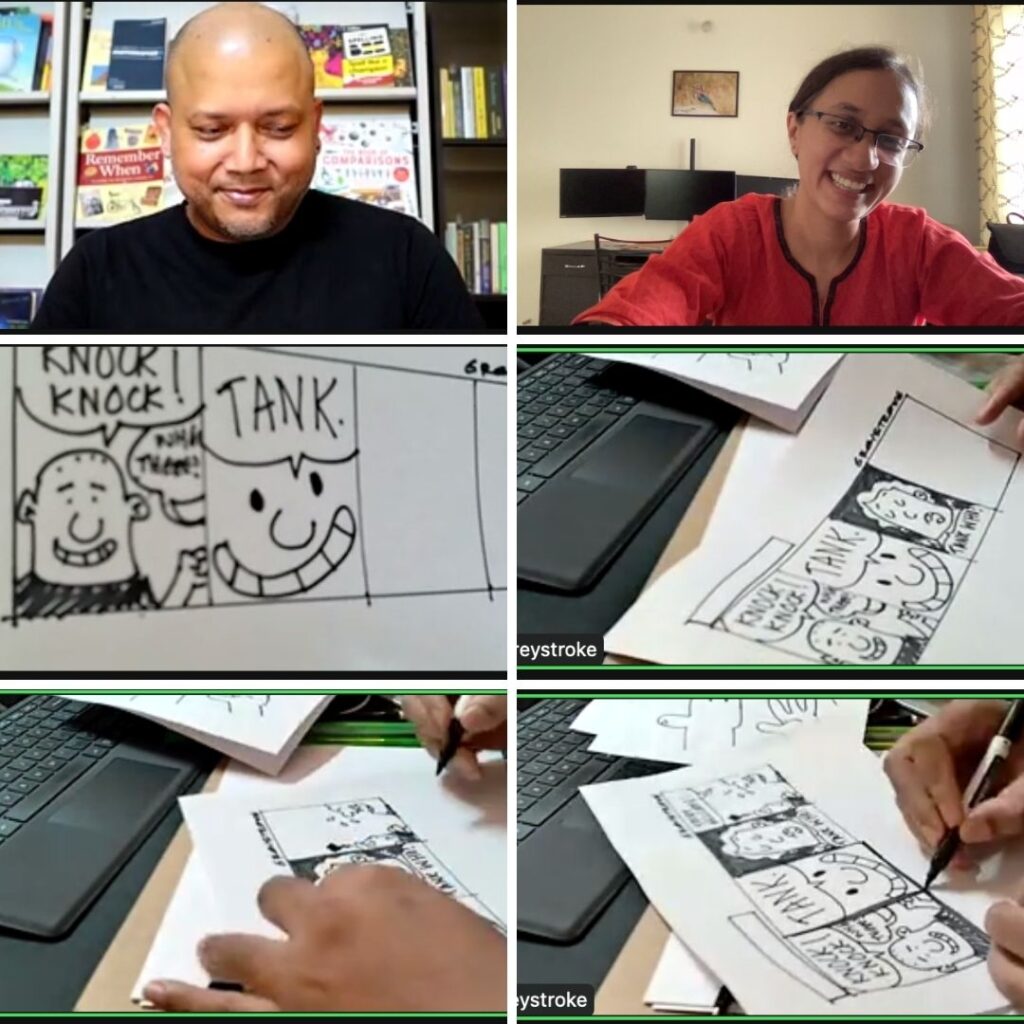
I’ve said it before, and I’m sure I’ll say it again. There’s nothing like inviting guests to my writing programmes. The energy, the fun, the enthusiasm … Can you believe that every participant (except me) managed to create a comic strip during the session?
Greystroke, an author, illustrator, filmmaker and entrepreneur, took us through the creation of a four-panel comic strip. I learned so much!
Among other things, we discussed the importance of pauses, something I mull over whenever I’m writing. Where would you pause in the telling of a joke? How do we create the perfect build-up before delivering a punchline? Each comic artist might choose a different place, and this leads to a variety of structures.


Tips and tricks to help draw characters and details, the visual appeal of a variety of perspectives, the similarities between a comic and a movie … the workshop was a treat from start to finish! One hour flew past, yes, but it’s incredible how much we were able to do during that hour.
The comic-making workshop was a guest session at my regular online creative writing programme. Visit my Workshop Calendar to find out about upcoming programmes.
If you would like to receive email notifications about other workshops and programmes, please fill this form. Alternatively, follow me on social media – Facebook, Instagram and Twitter – for updates.
March 29, 2022

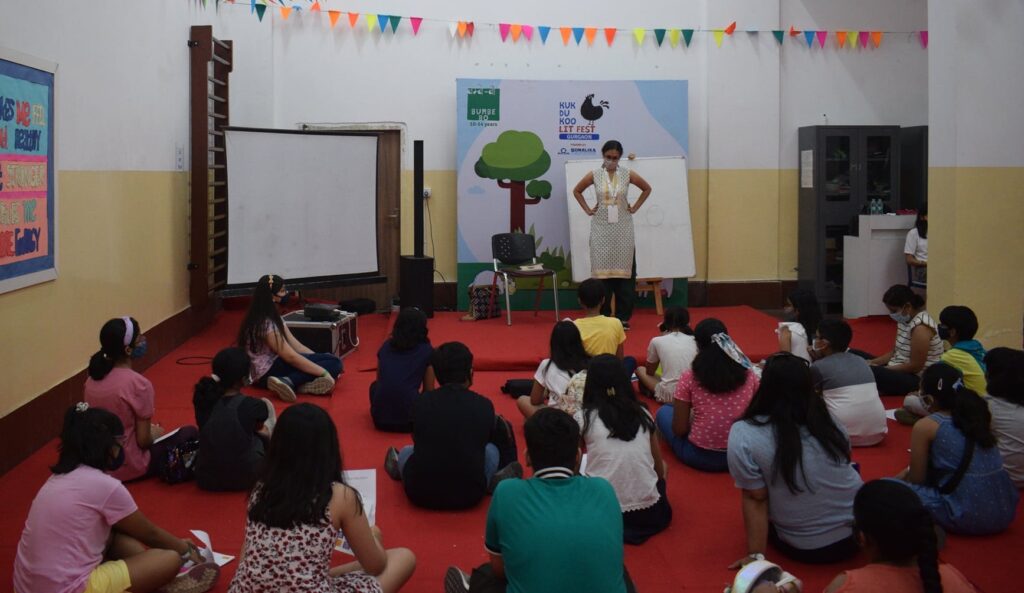
There’s nothing quite like the energy of a lit fest. Children running around, reading, getting excited about books … what more does a writer want?
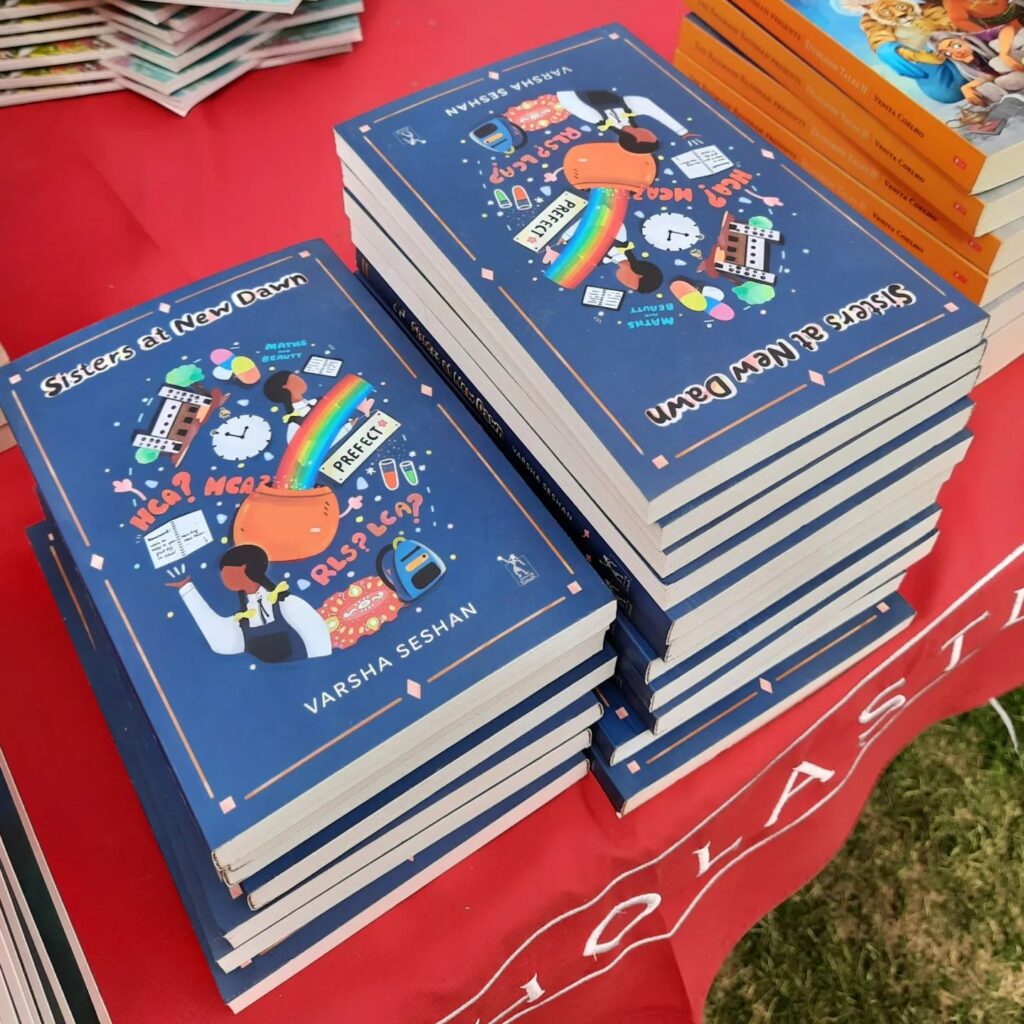
My first session of the day was all about my middle-grade book, Sisters at New Dawn. Do you see the sheets of paper in the children’s hands? They’re lists of subjects children at New Dawn choose from. I asked the children to imagine they received these lists. What would they choose? I loved listening to all their responses, and all their additions to my subject lists!
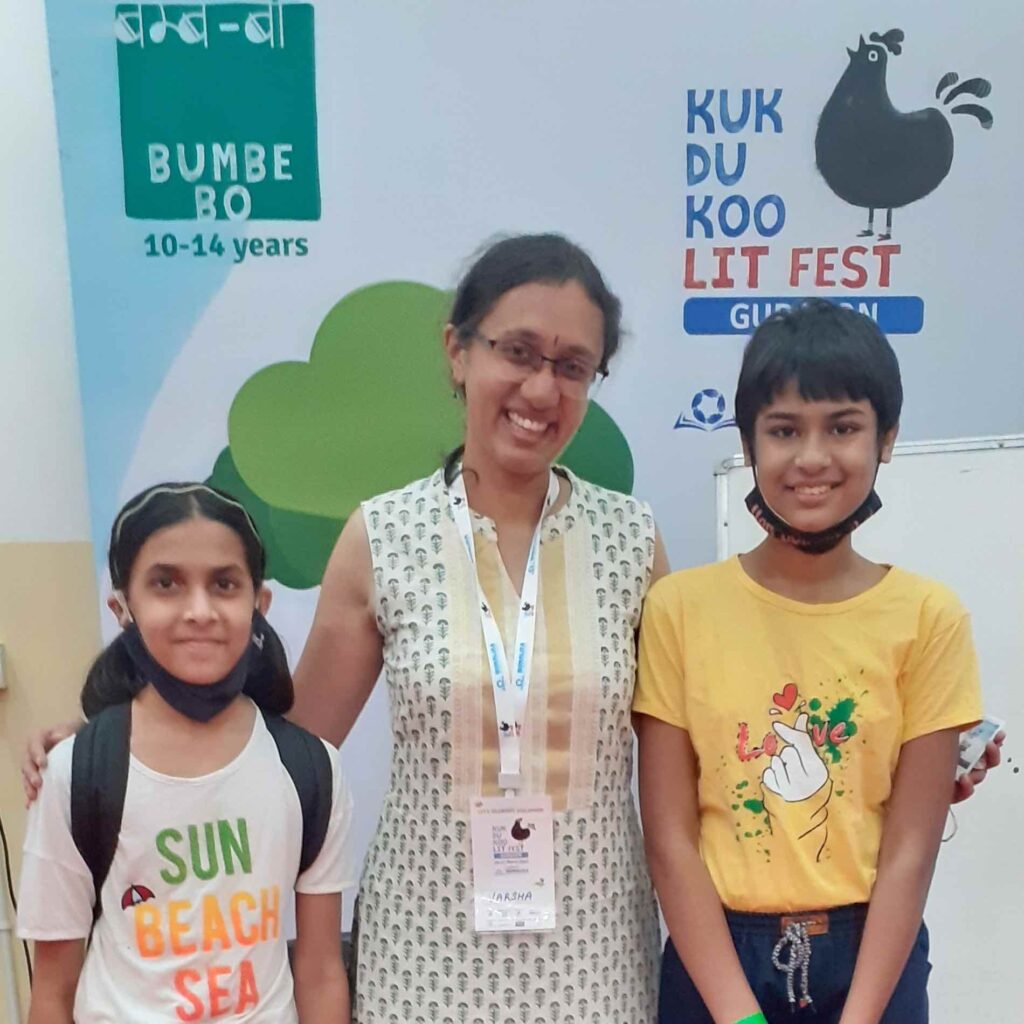
But what made my session extra special is the girl in yellow right in the front. That’s Sunandini, and we finally took a picture together too. She’s been part of my online creative writing programme for the last two years now, and she lives in Kolkata, but she stayed back just for my session! Sunandini bought Sisters, read it one day in advance, and brought it for me to sign at Kukdukoo. She’s the very first online participant I’ve met in person, and it was such a joy to meet her!


My second session was based on The Best Idea of All, and it was with littler ones, out on the field. As always, I was astounded by all their responses when it came to the question of conserving water and saving the world!
“We can use a sponge and bucket to wash a car.”
“We should collect rainwater in buckets.”
“Rainwater harvesting!”
“Bathe using a bucket, instead of taking a shower.”
We spoke of chemicals and making natural colours – and several of the children already knew how to make colours of their own!
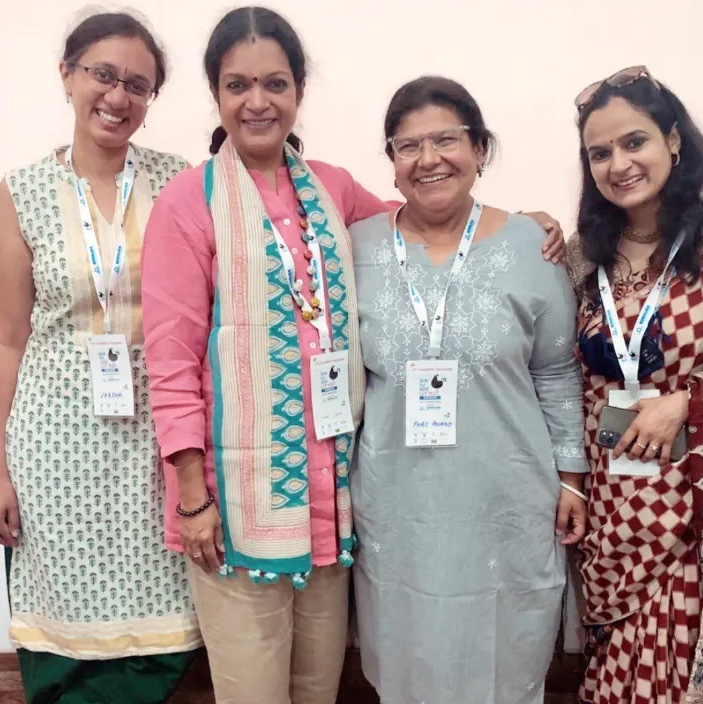
In some ways, however, what made Kukdukoo even more special was all the people I met there, people I’ve interacted with online, people whose books I’ve read and reviewed, people whose videos I’ve watched … It was lovely! I bumped into Ramya Srinidhi, who told two stories from my Dragonflies, Jigsaws and Seashells for Scholastic India. I met Janaki Sabesh, Rohini Vij, Shibal Bhartiya, Paro Anand … It was such a treat!

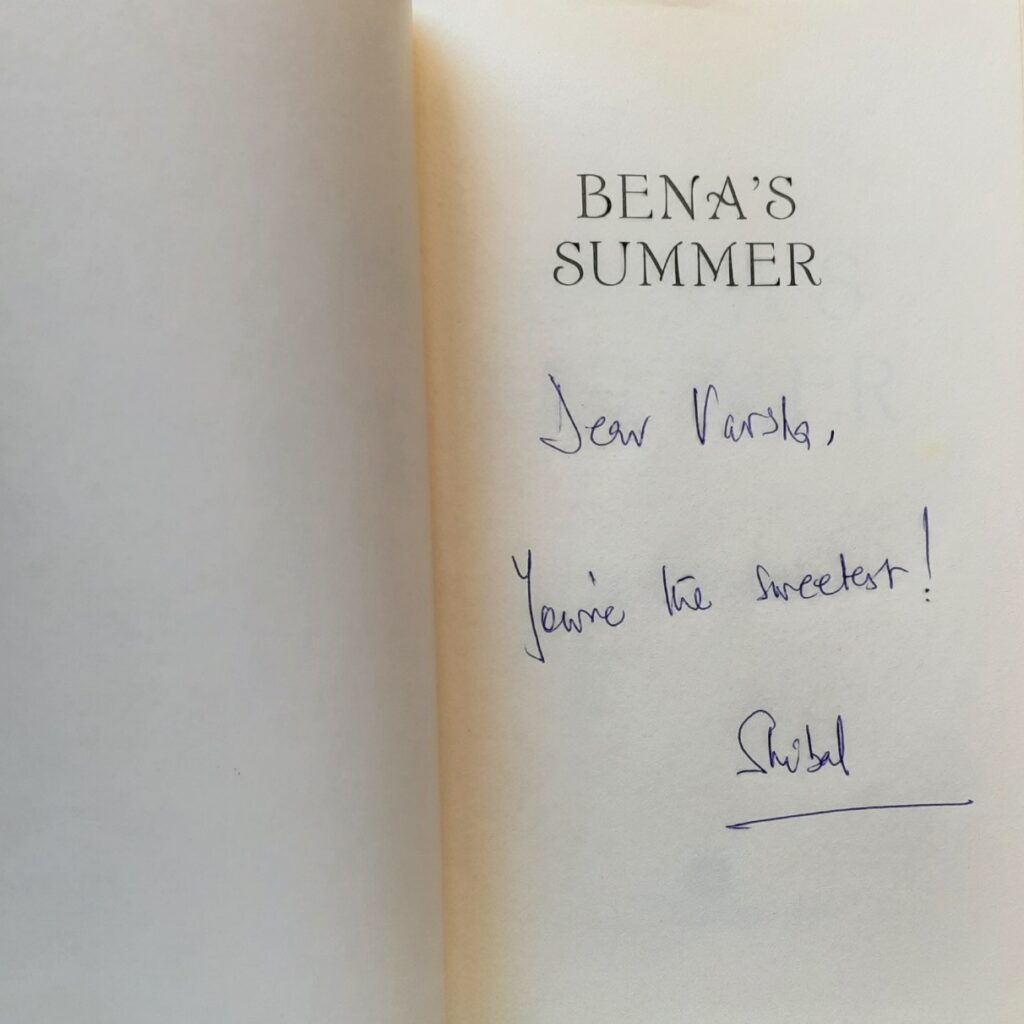
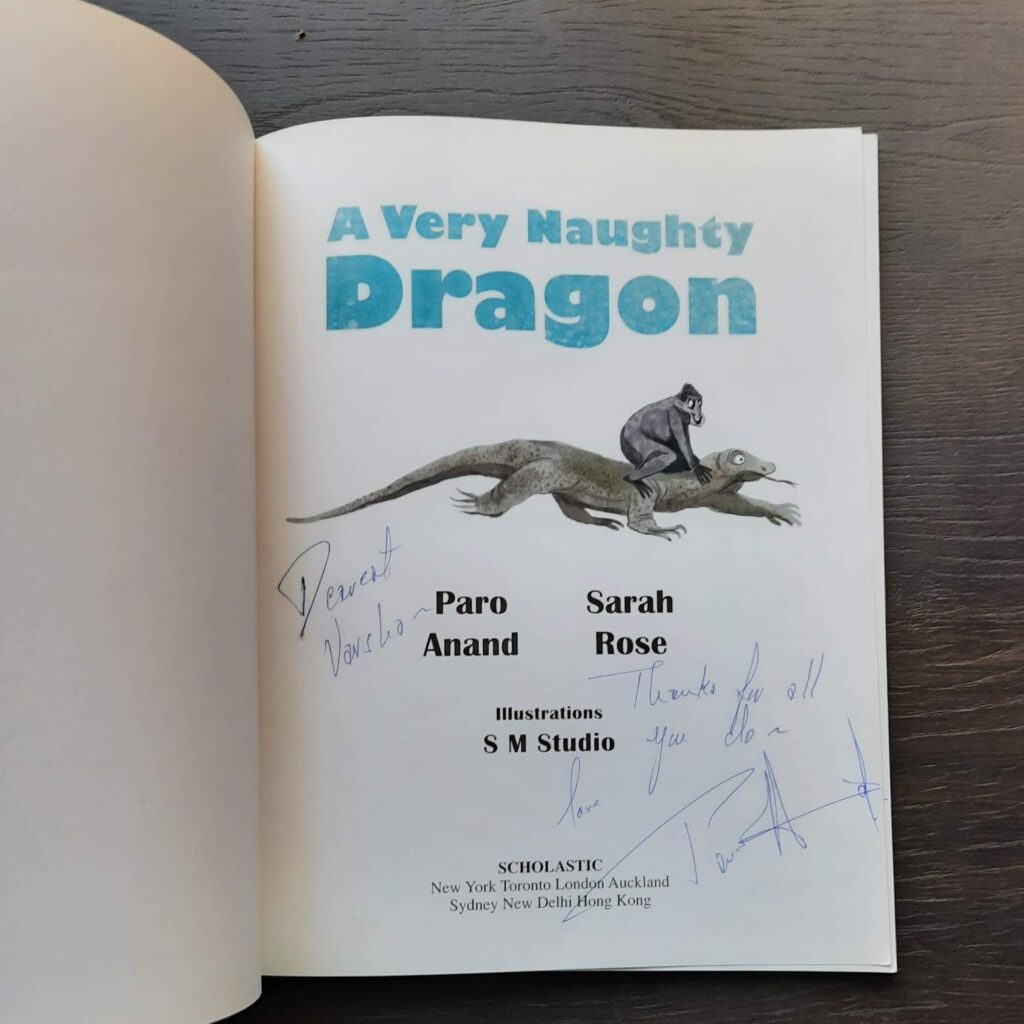
I also took my books along for some them to sign. Here are a few special ones.
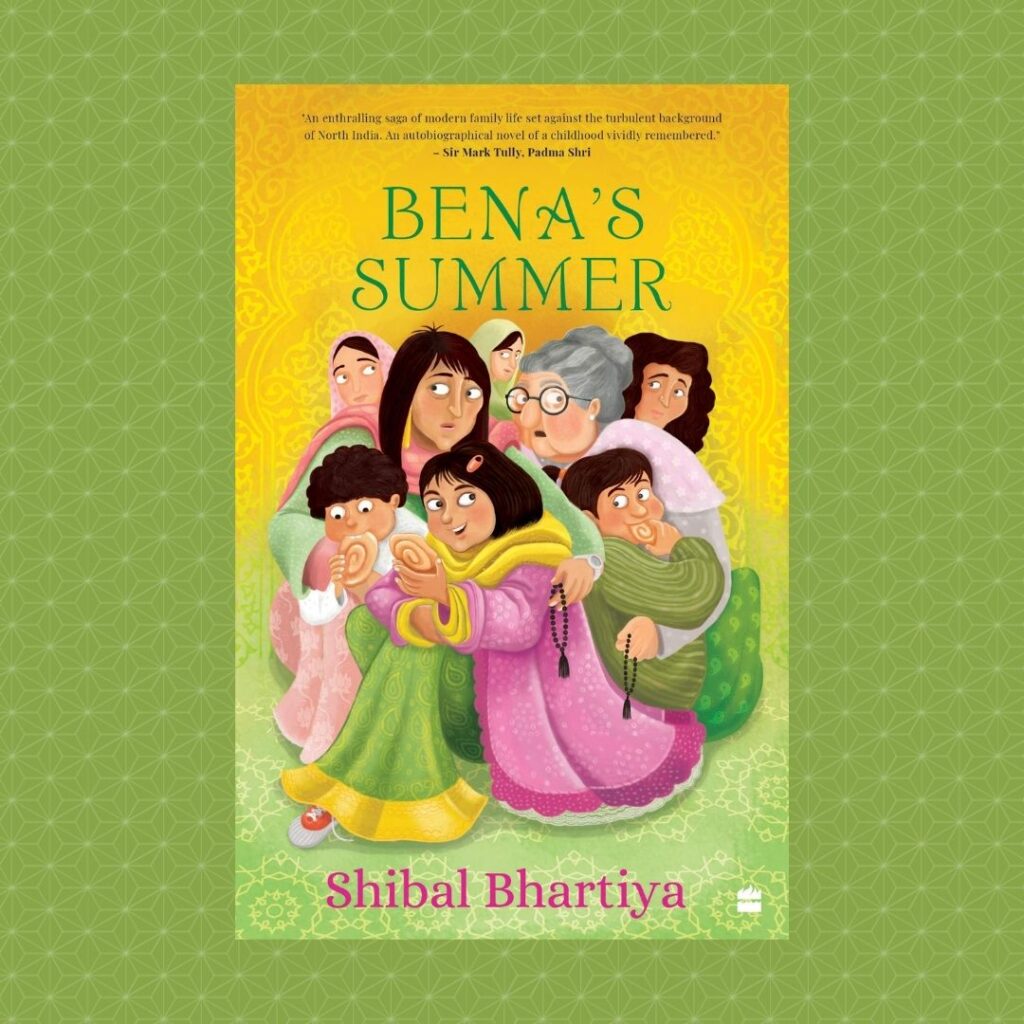
I read Bena’s Summer some time ago, and I was moved by the story. It’s such a beautiful, lyrical story, bursting with innocence and compassion. Of course I had to get my copy autographed!


Many years ago, when I was about nine years old, I read Paro Anand’s very first book, Pepper the Capuchin Monkey. I took it along for her to sign for me, and I agree with what she’s written there. It was wow … just wow.


And while I was at it, I also asked her to autograph A Very Naughty Dragon, which we read at my book club some time ago. I told her about everything we did with it, the way the children explored other endangered animals and the discussions we had.


The most surreal moment, however, was when she bought a copy of Sisters at New Dawn and asked me to sign it for her. I wish I were better at thinking of taking photographs!
Kukdukoo 2022 was my first in-person lit fest since 2019. It was full of energy, laughter and enthusiasm. Here’s to many more!
March 14, 2022
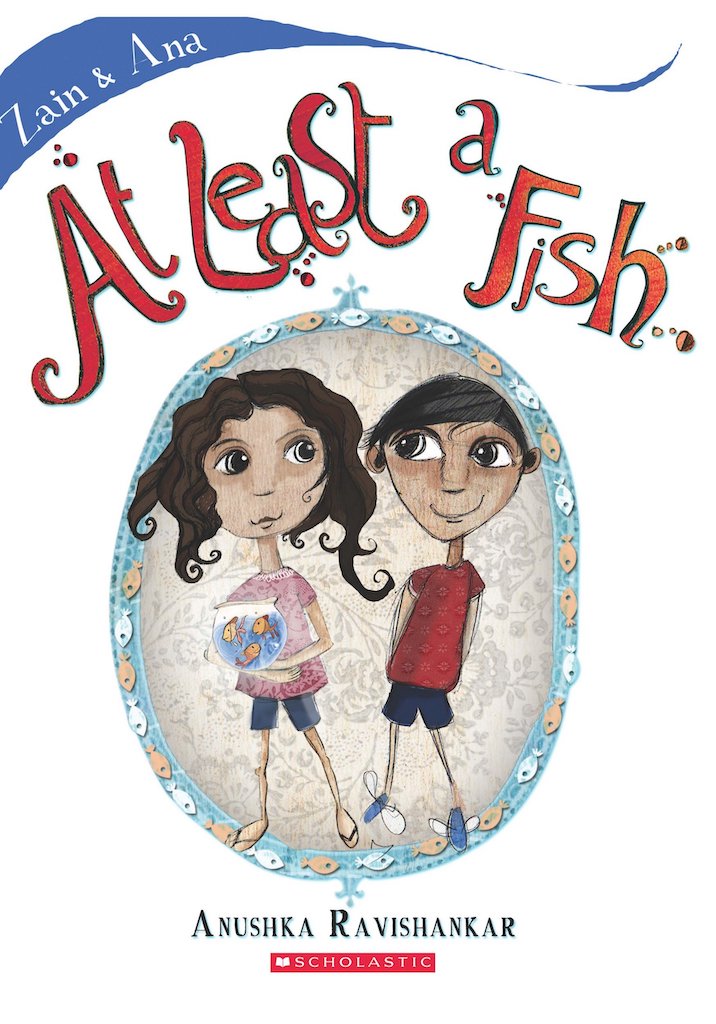
Ghosts Don’t Eat is the third of Anushka Ravishankar’s books that we’re reading at my online reading programme, and it promises to be just as much fun! We read Moin and the Monster at my book club for slightly older readers and the first of the Zain and Ana books, At Least a Fish, at an earlier edition of my book club for ages seven and eight.
Ghosts Don’t Eat is a hilarious book. I love children with good, earnest intentions, never mind what happens next. For instance, Ana wants to investigate the ghost in her neighbour Nikhil’s house, so of course she needs Zain to create some sort of distraction. And what’s the first idea that comes to mind? Start a fire! Is that the best idea? Um …
I’m waiting to read Ghosts Don’t Eat with my book club!
Ana loves words. Insufferable. Namby-pamby. Alibi.
What better introduction to a word game? I’d love to do all kinds of word games with the children – from a timed word-building game to unscramble. It promises to be fun!
Zain and Ana want to do a scientific experiment that might just win them a Nobel. They want to establish which part of their brain hurts when they exercise it in different ways.
I love linking reading to other activities, and so, we’ll talk about experiments the children would like to conduct. I might even introduce them to the Ig Nobel prize! If we have the time, we’ll do a little scientific activity of our own.
Until the very end of the book, we’re kept wondering what exactly Zain and Ana are going to give Nikhil. It’s not a dog, we know that much. And Zain is nervous about how good an idea it is to give Nikhil this animal. Hmm. What could it be? What animals would make for unusual pets?
March 12, 2022
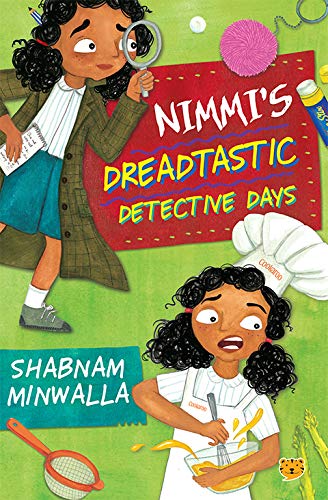
It’s been a year since I read Nimmi’s Dreadtastic Detective Days, and I’ve been mulling over whether to read it at my reading programme. It’s a little longer than the books we usually read, but there’s so much we can do with the book that I’ve been tempted to choose it. Finally, I decided I would just go ahead and see how it goes, since reading levels differ so widely anyway! Here’s what we’ll do with it.

Dreadful + Fantastic = Dreadtastic
Horrible + Despondent = Horrondent
Guffawing + Chortling = Guffortling
I love word games at my book club! As we read Nimmi’s Dreadtastic Detective Days, we’ll play with portmanteau words, both real and made up.
What if you had to make a whole meal based on a theme? What theme would you choose and what would you make?
We’ll let our imaginations go wild as we create recipes, names of exotic dishes and serving suggestions.
We love detective stories at my book club. One child diligently recorded clues as we read When the World Went Dark. The children came up with all kinds of theories (including that the lead character Kabir is an alien who’s abducted) as we read Flyaway Boy. This time, we’ll work with codes, cryptograms and red herrings as we lay the foundation of a detective story of our own.

March 9, 2022
Books about books are always fun to read at my reading programmes. At an earlier edition, we read a book with a few elements that didn’t appeal to me. For instance, I don’t like the idea of reading quickly, or a competition based on how many books you can read. I also don’t like the idea of particular books being read by girls and other books being read by boys.
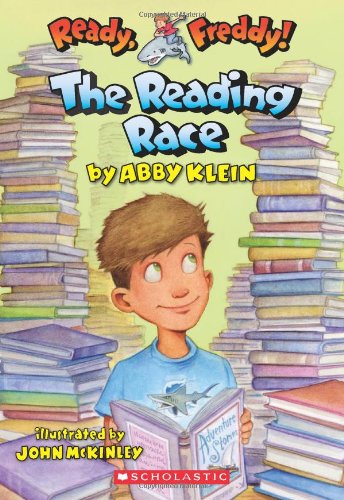
And The Reading Race heads in the right direction on both counts! At the Read-a-thon in Freddy’s school, the student who reads for the most minutes will win free books and an author visit! Plus, the teacher in the story actively challenges the idea of ‘boy-books’. And finally, the idea of rewarding reading with reading is a lovely message too!
There are parts of the story that are rather silly – especially the relationship between the siblings in the book – but I think the children at my book club will enjoy reading The Reading Race anyway. Here’s what we’ll do with it.

I love it when there are surprises lurking in the illustrations! I didn’t even notice the monsters in The Monster Hunters, for instance, but we had so much fun spotting them!
Every picture in The Reading Race has the word “fin” hidden in it because Freddy loves sharks. As we read, we’ll find the word everywhere, and I’m waiting for the excitement it brings!
Under the table! Out in the garden! In a treehouse! Where would you read? I would love for the children to take a picture of an unusual place where they like to sit and read and send it to me. More, I want them to share with me their favourite reading places where they can escape to worlds of their own.
When we read Book Uncle and Me, I asked the children to share a list of book recommendations with me. With The Reading Race, I’m going to do something different. The winner of the Read-a-thon gets five free books. What books would you like to get if you win? I’m waiting to find out!
March 6, 2022
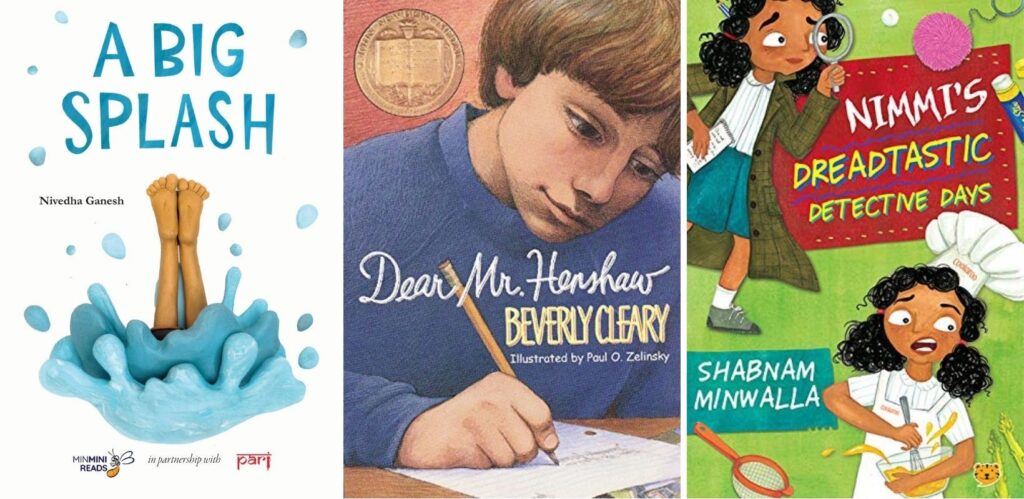
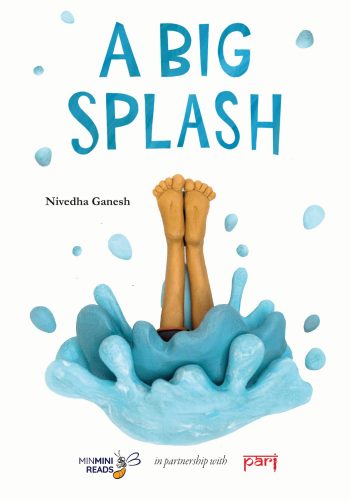
I read the entire PARI series a few months ago, and I’ve been mulling over them ever since. I’m not usually a big fan of nonfiction, and I haven’t yet worked with it at my online reading programme, but A Big Splash stayed with me.
And then, there were stray conversations that made me think of the book over and over again.
A child at my writing programme told me how much she liked it.
Earlier this month, we worked with Flyaway Boy by Jane de Suza, and during one of our activities, a label many of the children gave themselves was ‘sports-lover’.
A sportsy book? Sure! I’ve done just Cricket for the Crocodile before, and it’s time to introduce something else!
A Big Splash is a quick read, and that makes it the ideal first book for any batch of my reading programme. It’s a tale of grit and introduces so many big themes that I can’t wait to work with it!
The book opens with a dare that goes horribly wrong.
Yet, dares can be fun, and we’ll begin with a “daring” icebreaker. There’s nothing like doing something unconventional to get us to lose our inhibitions and become more comfortable with one another! From dares like saying the alphabet backwards to standing on one leg until it is the next person’s turn, we’ll have fun getting to know one another at my book club!
From the fun of the previous activity, we’ll move to something much more serious. Dhivya has no friends, or at least, that’s the way it seems. What is a friend? What does a friend do?
Since creative writing is an important component of my reading programme for ages nine and ten, we’ll also explore a few poems on friendship, attempting to write one or two of our own.
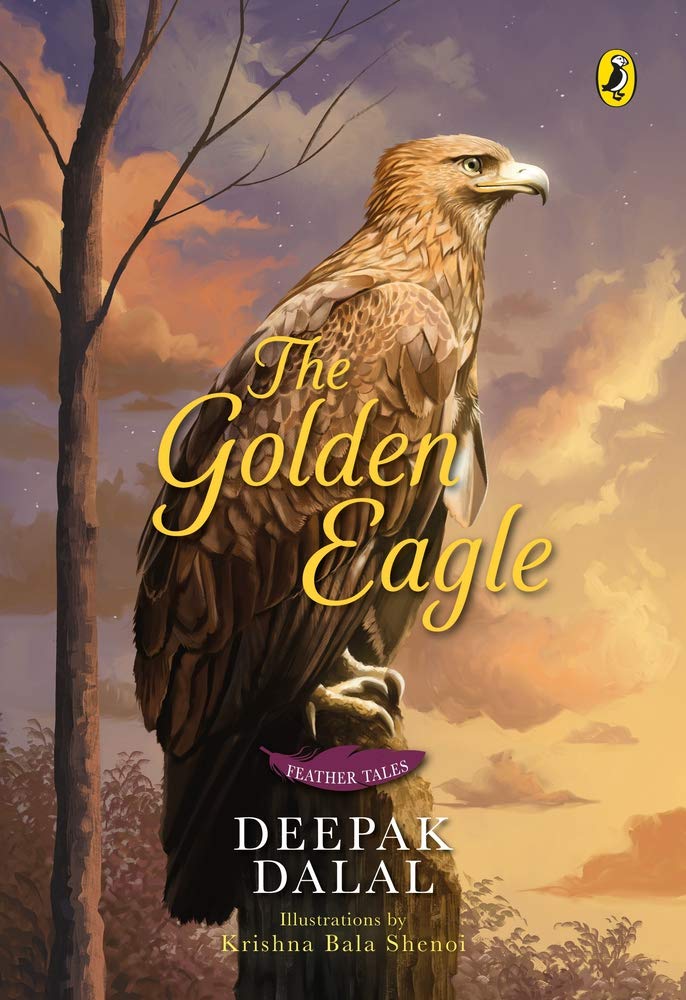
When we read The Golden Eagle, we worked with bird-related idioms. A Big Splash is perfect for water-related phrases of all sorts – troubled waters, testing the waters, in the deep end … What do these chapter titles mean? Working with idioms is always rewarding and enjoyable!

March 5, 2022
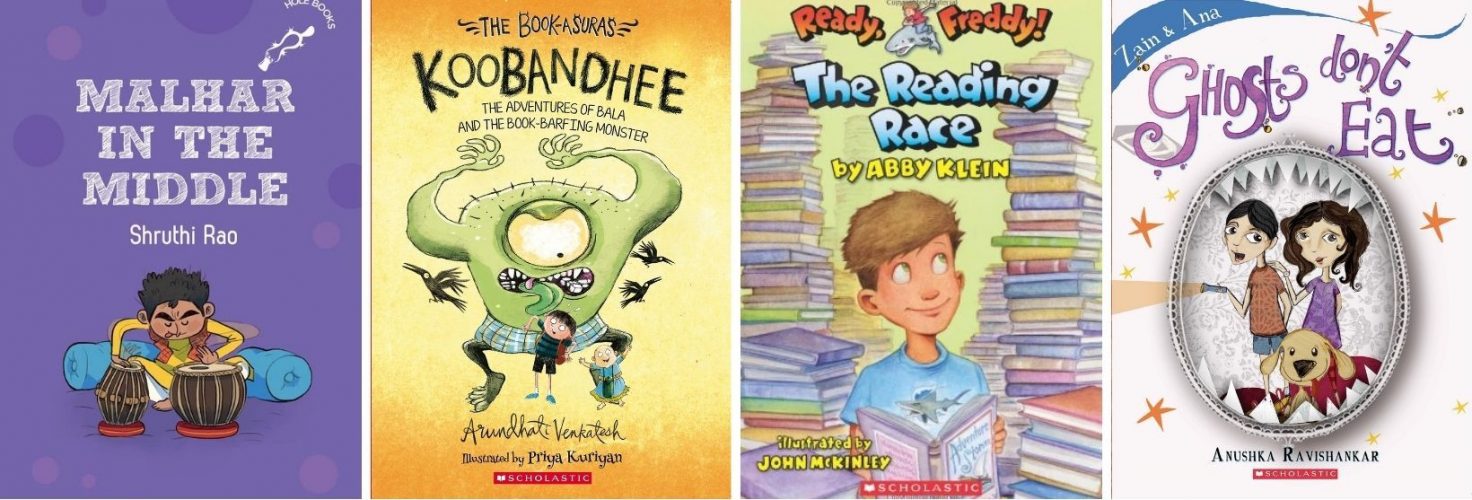
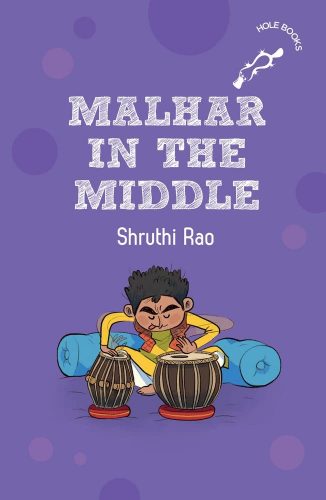
I LOVE Shruthi Rao’s books. We read Manya Learns to Roar at my first reading programme, and even before that, I read and loved Susie Will Not Speak. If anything, I liked Malhar in the Middle even more.
Malhar loves playing the tabla. But why does tradition demand that he should sit on the side? Why is he is the ‘accompanying artiste’? Isn’t the tabla player equally important at a concert?
A big theme like tradition is handled with the lightest touch possible, and it’s beautifully done. I love that Malhar manages to solve his own problem without needless drama or emotional conflict. He knows what he wants, he knows what to do, and he goes about doing it in a way that is as satisfying as it is lovely.
Here’s what we’ll do with the book at my book club.
What traditions do you like? Are there any traditions that you would like to change? I love that one of the minor characters in the story is a girl who plays the tabla. Is this a step away from tradition in some way?
Tradition could be a difficult topic with seven and eight-year-olds, but I’m sure it will be enlightening for all of us!
Sometimes, the smallest things can be acts of resistance. Based on Malhar’s story, I would love to introduce the children to other people who took a stand and made a difference in tiny little ways. If they have examples that they would like to share with me, all the better!
I love linking reading with other activities, and music is always special. As we read Peanut vs the Piano, the children played instruments, recited poems–and even performed kalaripayattu!
This time, we’ll do something slightly different. Malhar wants to take centre-stage, but we’ll all take centre-stage as we create musical instruments of our own in class, and use them to accompany a song!
February 8, 2022


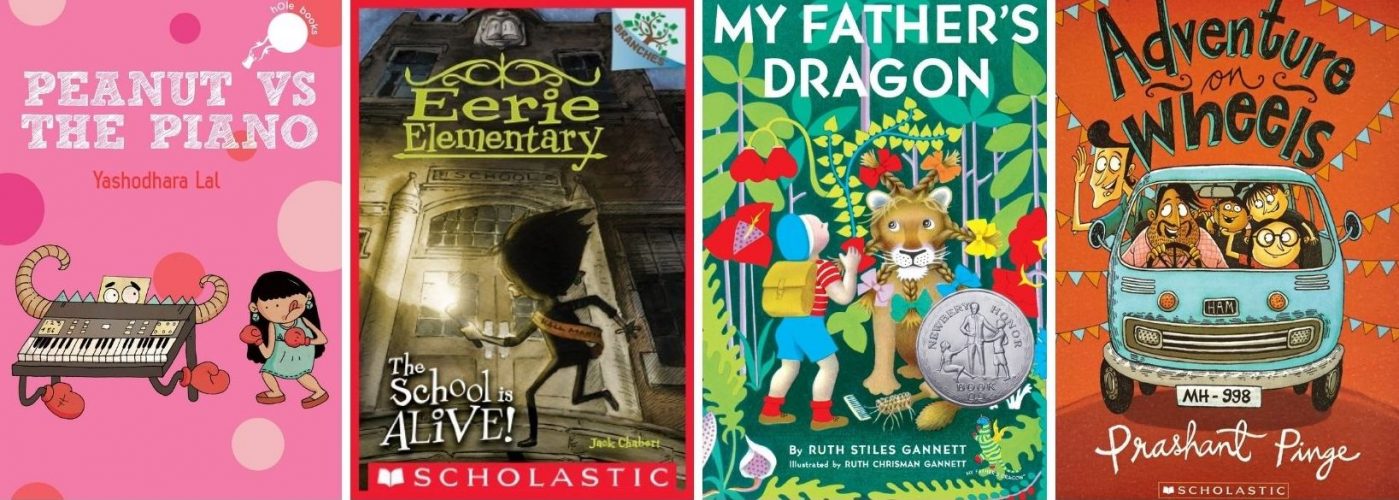
We’re reading Peanut vs the Piano at two of my book clubs. Peanut, Papad and Pickle. What funny names those are!
“I hope their parents named them after their favourite food!” I said. “Not things that were lying around. What if your parents had named you after their favourite foods? What would your names have been?”
“Fish!” said Zayn. “My name would have been Fish.”
“Like the dog in At Least a Fish!” someone said.
So, Zayn amended, “Fish fries!”
Aarav thought about it. “I think I would be called Kalidal Pizza.”
We couldn’t help laughing. And then, he changed his Zoom name to something even more specific – Dal Makhani Four Cheese Pizza.
Ira could not think of what her parents would name her. “They like everything!” she complained. Finally, she settled on ‘Mutton’. Mutton. That’s what she would be called.
And Aarya? Her parents like very different things. “If my father had named me, I would be called Sushi. If my mother had named me, I would be Potato Chips. So, Potato Chips Sushi. No. Sushi, Potato Chips!”
Promptly, they all changed their screen names and I had a feast on my screen that day!

Soon, it was time for my session with ages nine and ten. We’re reading Paati Goes Viral, and I’ve been thinking about the phrase ‘goes viral’. Where do words come from? How do circumstances lead to the invention of words like contactless and acronyms like WFH and LOL? We discussed etymology and then, we did a fun group activity. I asked them to think of any word we would use often in class and make up another word that we would use instead, right through the weeks that follow. Now, look at the words we have!
So, the strook we’re reading right now is Paati Goes Electric. The C. R. activities are going to be fun, yes, sclem!
January 24, 2022
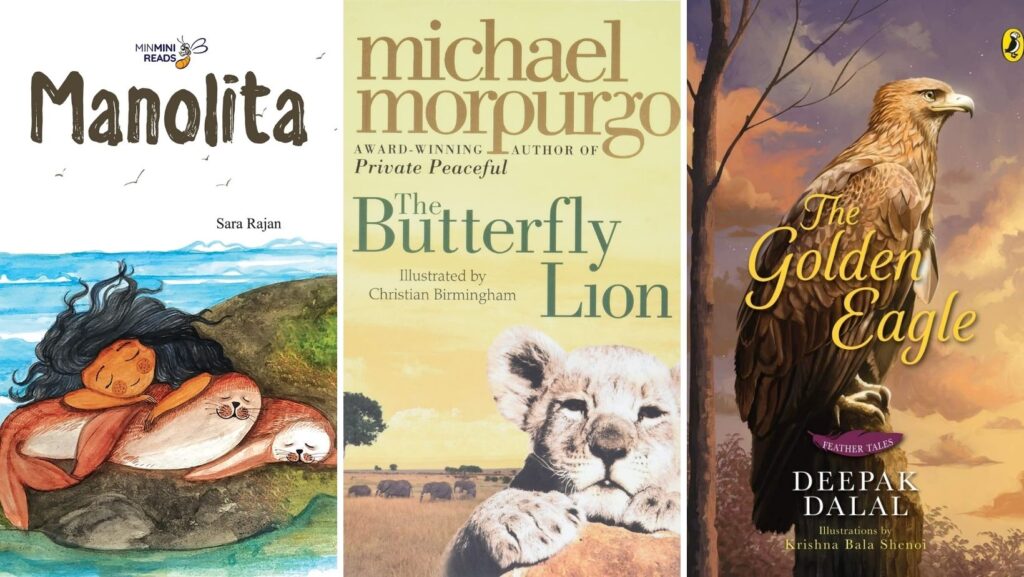
The Golden Eagle. With its gorgeous pictures and gripping storyline, it drew us in. “I think I’m going to like this even more than The Butterfly Lion,” said one child. Just by chance, all three books we read during this edition of my book club featured animals. Manolita has seals; the title The Butterfly Lion says it all – butterflies and lions; The Golden Eagle has a profusion of birds. Many of the children have never seen storks, ospreys, harriers, green pigeons and thrushes, and the book brought these alive to us. It was time for a follow-up activity, one that we threw our hearts into. What birds would you like to talk to us about? That was the only question I asked the children at my book club.

“I hope to go to Zimbabwe someday and see the African Fish Eagle,” said Amritayu. Eagles fascinate him, and even more so because of the book we read on the golden eagle.
“The yellow-footed green pigeon is the state bird of Maharashtra,” said Sohum. I suggested this to them last week – each of them could talk about their state bird since they join from four different states. Sohum, signing in from Mumbai, did just that.
“The emerald dove is the state bird of Tamil Nadu,” Siddharth told us. Even though he now lives in Karnataka, he was in Madurai until 2021, and the emerald dove, rather than the Indian Roller, was the one he chose to share with us. “I’ve never seen one, but I would love to!”
Sangam told us about the peacock, our national bird. “From my grandparents’ place in Sivakasi, I see so many peacocks, and they’re beautiful. We even have a game we play about peacocks as we watch them fly away.”
Escaping to the jungle and going birdwatching in Bhigwan drew me to learning about birds and starting to identify them, but books like The Golden Eagle make me think – perhaps literature can help us take the first steps too!

January 23, 2022
On social media, I’ve been seeing posts about book club facilitators introducing green reads to children. “What a lovely idea,” I found myself thinking. I’ve always loved stories about the environment. I read post after post, and then I stopped.
Wait a minute! I’m reading green reads with my book clubbers too – A Very Naughty Dragon with two bunches of seven and eight-year-olds, and The Golden Eagle with the slightly older ones! So, I reached out to Archana, who runs AA’s Book Nerds, asking if she’d like me to jump on the bandwagon. I had no idea how structured her Green Reads mission was, but …
We’re trying to draw attention to our role as book club hosts and indies and our contributions in the kidlit space.
Archana Atri, AA’s Book Nerds
Perfect! And so, here’s where one of our explorations of A Very Naughty Dragon led us.
As planned, we started reading this book with the last few pages. Komodo dragons are classified as a vulnerable species, we learned, because there are only a few thousand of them left in the wild. They’re fascinating creatures with stinky breath. They can throw up at will to reduce their body weight when they’re in danger and have to run! So, I asked the children, “What other wonderful creatures do you know about?” And in the next class, here’s what they came up with.

“I want to talk about the Pink Fairy Armadillo,” said Zayn. “And the first thing I want to say is that they’re very much a real thing.”
“Zebras are my favourite animal,” said Driti. She told us about how zebra stripes are like fingerprints – no two zebras have the same stripes. Coincidentally, she was wearing a zebra-striped T-shirt in class!
“I have soooo much to say about red pandas!” said Ira, but she managed to keep it short and interesting, telling us about red pandas in the wild and in captivity.
“Do you know about Vaquita porpoises?” asked Aarya. She held up a jar, which she’d showed us a few classes ago. “I’m collecting money to save the Vaquita porpoise because there are only TEN OF THEM LEFT! I’ve collected 934 rupees so far.”
“Hyenas are from the cat family,” Aarav told us. “Some people think they look like dogs, but they’re more related to cats.”
Vania shared her screen with us as she spoke about the quokka – the happiest animal on earth because it looks like it is perpetually smiling.
“I want to tell you about manatees,” said Aashvi, holding up a toy manatee. “They’re the cows of the sea.”
And once again, as I heard the children talk about their favourite animals, endangered creatures and the fascinating world around us, I found myself thinking that young people will save the world. They just need a little help from the not-so-young.

January 22, 2022
A career in writing – what does that mean?
As part of UGC’s STRIDE (Scheme for for Trans-Disciplinary Research for India’s Developing Economy), the English department of Fergusson College invited me to talk about making a career in creative writing. What I loved was that I didn’t speak just to students of the English department; it really was trans-disciplinary!

What would a talk on a career in creative writing involve? For me, first, it would involve demystifying the publishing process. Secondly, to use a word that the organiser used, it would need to deglamorize the life of a writer. If you’re talking about a career and not a hobby, writing is not about penning down your thoughts and expressing your feelings. No. It’s not the random poem here, or the the snippet of deep, philosophical thought there.
Okay, so you write poetry. When did you last buy a book of poems? Does your answer help you understand whether writing poetry is sustainable as a career?
How do you go about the querying process? What kind of timelines are you looking at? If a publisher pays me an advance of ₹15,000 for a book that is three years in the making, you can do the math and see whether it adds up to a career.

It’s lovely when you can feel new ideas dawning on listeners as you speak. To a great extent, that’s how I felt.
“I read barely any contemporary Indian writers, and I think that should change,” said one.
“I understand that beginning a letter with Respected Sir/Madam is not inclusive, so I won’t do it.”
Do you see what I mean?
January 19, 2022
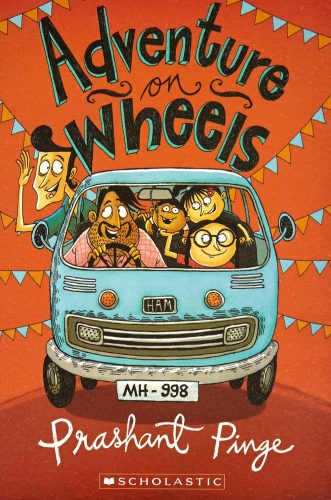
Adventure on Wheels is such a rollicking read! The book opens with two thieves stealing a van that belongs to an orphanage. The theft itself is simple enough, but when they discover three children hiding in the van, they’re up against more than they’d bargained for. At once heart-warming and hilarious, Adventure on Wheels is a fun book that I can’t wait to share with my book club!
When we think about the main character in a story, what kind of character do we usually have in mind? Subbu and Golu are thieves! Can they be the heroes of the story? Or is there another story that helps us understand why these two are off to rob a toy store?
At my book club, to begin an exploration of the idea of a back story, I will ask the children to come up with characters that seem negative, and then work on what makes them the way they are.
Often, when we read together at my book club, the children skip pages and look at the pictures ahead. They call out, “I just turned to page so-and-so, and look at this!”
Why not make use of that? I will ask the children to flip through the pages and find an illustration that catches their eye. What do you think the story behind the picture could be?
Adventure on Wheels takes place in the days leading up to Diwali, a festival that’s hugely different for different people. What makes a festival special for you? If you don’t get gifts, delicious food, and family time, would a festival still be as precious? I’d love for the children to talk about their favourite festivals. Once more, a grand advantage of my book club being online – children from Ernakulam, Goa, Pune, Mumbai and Chennai have signed up. I’m waiting to listen to a range of stories!
REGISTRATIONS ARE NOW CLOSED FOR MY FEBRUARY 2022 READING PROGRAMMES. New batches begin every alternate month. If you would like to receive email notifications about my programmes, please fill this form. Alternatively, follow me on social media – Facebook, Instagram and Twitter – for regular updates.
January 15, 2022
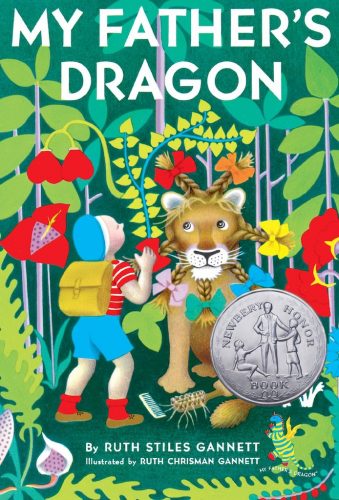
I rarely choose to read classics at my book club, and My Father’s Dragon by Ruth Stiles Gannett is, without doubt, a classic. I’m waiting for those wide-eyed comments about it having been published in NINETEEN FORTY-EIGHT!
But this is one of those classics that I’m convinced will be good fun to read with my book club. It’s quirky, imaginative, and full of unexpected twists and turns from the very first page. A talking cat, tigers that love chewing gum, a rhinoceros that wants a white horn … each chapter is full of marvels! Best of all is that the story is not about rescuing someone from a dragon; it is about rescuing the dragon itself. I love it!
Here’s what we will do with the book at my reading programme.
Like all lovely works of fantasy, My Father’s Dragon begins with a map. The map of Wild Island says ‘my father doesn’t know what’s on this side of the island’, which is perfect for us to imagine anything we like! What do you think we’ll find on the island? What adventures do you think we could have there?
The talking cat advises Elmer Elevator to carry rubber bands, a comb, a brush, chewing gum, toothpaste and a toothbrush, lollipops … all rather unlikely things to take on a mission to rescue a dragon, wouldn’t you think? When we reach the first section where Elmer puts one of these to use, I’d love for the children to imagine different uses for a few for some of the other unusual things Elmer takes with him on his adventure.
If you could meet a talking animal, what would you like to meet? Beginning with the simple question of what animal you’d choose to talk to, we will do a basic character exploration of what kind of creature this animal would be and how someone like Elmer could outwit them.
REGISTRATIONS ARE NOW CLOSED FOR MY FEBRUARY 2022 READING PROGRAMMES. New batches begin every alternate month. If you would like to receive email notifications about my programmes, please fill this form. Alternatively, follow me on social media – Facebook, Instagram and Twitter – for regular updates.
January 14, 2022
The year 2021 was such an affirming year for me in terms of work! Since 2014, I’ve been freelancing. I’ve done workshops for children with the British Council, teacher training for Ratna Sagar, and I’ve been invited by schools and organisations to do workshops here and there. After nearly a year of the pandemic, these dried up. It isn’t as if I didn’t do workshops for other organisations; I did. But as I look back, only one paid workshop comes to mind – a session on my book, The Best Idea of All, for an online lit fest, Vishwarang.
Everything else was an independent venture, and looking back fills me with joy and pride. I launched my reading and writing programmes for children in October 2020, and they’ve grown in leaps and bounds!

I just counted. In the year 2021, I read 21 books with 29 seven- and eight-year-olds from different parts of the world! The most interesting thing for me? I haven’t met even one of these children in person! Word of mouth, kind people on social media who had faith in my workshops and parents who spread the word made this possible for me. Plus, of course, all the bookstores I work with, who always ensure that my books arrive in time – Kahani Tree, Funky Rainbow, Storyteller, Eureka, Koolskool …
I started with just one batch – on weekdays – and then launched a second – a weekend one – in May 2021. As the months went by, I also wrote about several little things that make interacting with children special – whispering in class, talking about what frightens us, discovering suspicious monsters lurking on the pages of The Monster Hunters, important questions, thought-provoking conversations …
Part of the fun of my reading programmes also lies in scrambling for books to read together. Here are a few of the best books I chose.
My creative writing programmes are intensive courses, requiring a 12-week commitment from children (and therefore, parents). Even when I launched the programme, I had parents writing to me and asking for something a little less intense. I mulled over it for quite a while before launching, in April, my book club for ages nine and ten. Unlike the reading programme for the younger ones, this one has a significant creative writing component. In a sense, it’s a creative writing programme through books, based on the idea that if we don’t read, we cannot write.
This programme has seen its highs and lows because of the differing interests of children. While some devour books, others are reluctant readers, often making each batch a mix of enthusiastic writers and others who struggle to keep up. Even so, the activities are always fun – and the children agree! Whether we do vocabulary activities or rhymes, we have fun, and we also have our own set of anecdotes!

Here are my favourite reads from this programme so far. Though Moin and the Monster, The Hodgeheg and a Fantastic Mr Fox would also feature on the list, I’ve inserted images only of those books that I read for the first time in 2021.
My creative writing programme for ages nine to eleven is, in some ways, the most rewarding and the most gruelling programme I conduct. Four of the six children who joined the April edition of my programme joined again in October because they loved it so much. What more do I need in terms of validation? The best part of this programme is that most of the children who join do so because they love writing and want to write. Writing isn’t a chore. They log on to the forum day after day, week after week. They write, edit, rewrite, read one another’s work … I love it!
But yes, of course it’s a lot of work. The length of all the writing reports compiling the work the children shared on my forum during the October edition, for instance, was nearly 300 pages!
I had so many favourite pieces – a couple of monologues about seeing Santa, a wonderful set of diary entries written from the point of view of a queen, Shajar Al-Durr, and of course, the reflections the children wrote after each module.
I also invited guests to speak to the participants, and each guest workshop was brilliant!
The twelve to fourteen age-group is a challenging one, but so full of wonderful new ideas! During the April module, we worked on poetry; I introduced drama for the first time; we created new characters, working with the idea of writing what we know. In the October edition, I was delighted to welcome three children I’d already worked with, and, for the first time, a participant from the USA! I loved how motivated she was, getting up at 5:30 in the morning to attend each session!
So many pieces stood out to me – a sonnet on exponents, an interview with an ecopreneur, and snarky one-scene plays about a pair of childhood rivals getting stuck in a lift together.

Working with young people keeps me inspired. I love the range of ideas I encounter, and I’m continually amazed at how much teens and preteens can write without suffering from any sort of writer’s block. May 2022 be as full of wonderful new workshops!
January 13, 2022
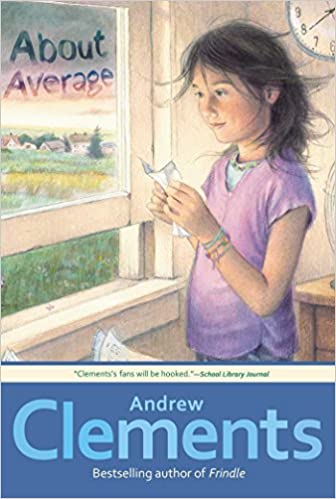
I read Frindle some time ago and loved it. I considered using it for my online reading programme, but it’s so well known that I figured that many children would have read it, or at least heard of it, already. How about something by the same author, but less known? And that’s how I stumbled upon About Average by Andrew Clements.
Jordan is about average in every way, or so it seems to her. She isn’t short or tall. She isn’t pretty or ugly. Her grades are average too. Soon, she will graduate from elementary school, but she still hasn’t discovered what she is good at. It seems, somehow, that she isn’t good at anything! She’s average, and that’s all there is to that.
But then, with her orderliness, her niceness and her simple attention to detail, she discovers during a crisis that maybe, just maybe, she isn’t about average. In fact, simply because of her ordinary, melt-into-the-background-and-take-care-of-things nature, she might just be the most remarkable girl of all.
About Average is, in so many ways, the perfect book for a reading programme that introduces creative writing! Here’s what I will do with it next month!

Jordan wins a tiny haiku competition in school, and for some time, she thinks in haikus. She counts syllables and plays with words. What better premise for an introduction to creative writing?
Many children write poetry, but few pay attention to rhythm. I think one of the joys of a haiku is that it is so short that it seems accessible. I’ve worked with haikus before; let’s see what the children come up with this time!
Word choice is important. What does the word ‘average’ mean to you? How does it make you feel?
Through this word, we will explore how the same word means different things to different people. While we won’t get into the terminology of denotation and connotation, that’s what the discussion is going to be about.
Like I said when I reflected on everything we did with The Hodgeheg, study notes in books make matters so easy for book club facilitators like me! The last few pages of About Average have detailed questions to use in reading groups, and that is what gave me the idea for this.
Popular Marlea Harkins mortifies Jordan; we know that through the book. How about looking at things from Marlea’s point of view? Why did she do what she did?

January 11, 2022
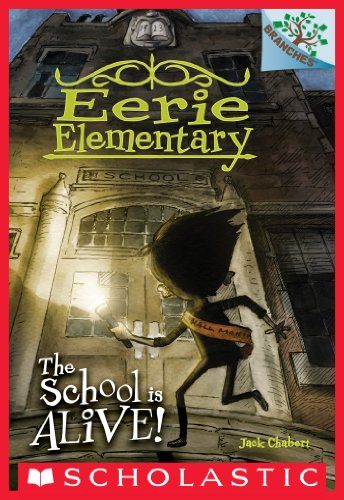
This is the first time I will be reading a spooky book with my book club for ages seven and eight! One of the British Council reading challenge themes was Creepy House, so I’ve worked extensively with slightly scary stories for all age-groups, but because it was never one of my go-to genres as a child, I took a while to bring myself around to the idea of introducing a scary book to the children I meet.
Yet, The School is Alive is the perfect mixture of thrilling and comforting. When Sam Graves becomes the hall monitor at Eerie Elementary, he has no idea that the school is hungry to eat its students! Sam finds an unlikely ally in the caretaker Mr Nekobi, and together with his other friends, he’s more than a match for his school!
Here’s what we’ll do with the book at my reading programme.

This is an activity I never tire of repeating. How many words can we think of that fit in with the theme of spooky stories? Can we think of at least one word with each letter of the alphabet?
In October last year, I moved to Zoom, and we’ve loved using the breakout rooms ever since. One child at my writing programme said that getting into a breakout room was his favourite part of each session! Let’s see how children can brainstorm together and develop word lists.
I used this activity long, long ago at a British Library workshop, and I’ve been itching to use it again. While I understand the challenges – one child may create a character that’s too scary for the others, for instance – I know that this is a good foundational activity for children to begin their creative writing journeys.
Linking reading and listening once more, I will share a set of spooky sounds with the children. Although this activity starts off being scary, as the sounds change, it often leads to much hilarity, and don’t we all love to laugh?
REGISTRATIONS ARE NOW CLOSED FOR MY FEBRUARY 2022 READING PROGRAMMES. New batches begin every alternate month. If you would like to receive email notifications about my programmes, please fill this form. Alternatively, follow me on social media – Facebook, Instagram and Twitter – for regular updates.
January 7, 2022
Peanut is such a lovely character!
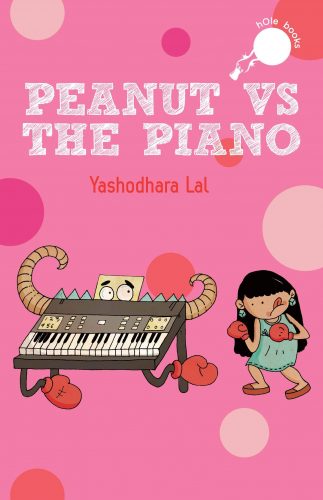
Peanut thought she enjoyed playing the piano. But with piano exams around the corner, piano practice is just one more thing added to an endless list of things she has to do when she would rather play outdoors. Soon, she begins to think of the piano as a big, brown monster. Even worse is that she simply cannot understand what her piano teacher means when he tells her to play with feeling. How is she supposed to play with feeling when the only thing she’s feeling is hungry?
Humour and excitement come together in this lovely little hOle book. Here’s what we’ll do with Peanut Vs the Piano at my reading programmes!
As this is the first book we will be reading at the February edition of my reading programme, talking about what we like and dislike is a fun way to begin. I often find that talking about what we like stays formal and informative. It’s when children talk about what they dislike that they begin to open up. While some children say they dislike milk, others say they dislike Maths, writing, waking up, brushing their teeth …
Looking at the book cover, what guesses can they make about how Peanut feels towards the piano? And does the piano look like it likes Peanut?
I love doing activities that link reading with the world around us. In a book that’s all about music, I look forward to exploring songs and instruments together. I’ll give each child a couple of minutes to play a song, if they know how to play an instrument, or sing something for us. I’m sure it’ll be fun!
When we read Mira the Detective, we enjoyed exploring sounds together. This time, I intend to do something different. Instead of identifying sounds, we’ll take the activity in another direction. What do we feel when we listen to something? Can music make us feel something? At a writing workshop I organised recently, the guest speaker Veda Aggarwal conducted an activity along similar lines. I know it works beautifully with older children, but I wonder how it will be with ages seven and eight. I’m waiting to find out!
REGISTRATIONS ARE NOW CLOSED FOR MY FEBRUARY 2022 READING PROGRAMMES. New batches begin every alternate month. If you would like to receive email notifications about my programmes, please fill this form. Alternatively, follow me on social media – Facebook, Instagram and Twitter – for regular updates.
December 19, 2021
Yes. Each time I invite a guest to speak to my creative writing programme, I realise that the session is as much for me as it is for the children. As a writer, I am often caught in a capitalist circle, writing with a clear goal in sight. What is the purpose of a piece? What do I want my audience to feel?
Yet, sometimes, writing is just writing. The arts are interconnected and once in a while, we need to be reminded of that.

When we were children and teens, Veda and I spent hours talking about art, music and literature. We read Shakespeare and made notes (which I probably still have somewhere). We discussed Giotto and Matisse, Van Gogh and Gaugin. Veda painted and drew; I didn’t. When Veda was ten (I think), she started playing the guitar and we began to listen to classical music together. We talked about Vivaldi and Mozart, Schubert and Beethoven. We thought about and spoke about music appreciation.
And all this came together in the creative writing workshop she conducted for us yesterday. She played snippets of various pieces for us, and in a beautiful, organic way, the children travelled from emotions to scenes and stories. We listened to Vivaldi, Schoenberg, Mussorgsky and Telemann. Veda led us to a little written exploration as we listened to the last of these.
What person or people come to mind as we listen? Can we find the beginnings of a story in music? It made me think. Just like in some kinds of stories, when the music comes to an end, we feel like we’re back in the same place, just slightly changed in some way.
Some people, like Kandinsky, could see colour as they listened to sounds. On the other hand, people like Mussorgsky wrote music when they looked at paintings. Veda shared seven paintings with us and we explored all kinds of ideas and thoughts.
Finally, Veda guided us through a series of movements leading to what is called Tadasana, or the mountain pose. Feeling our feet firmly on the floor and our hands reaching for the sky, she asked us three questions. What makes you feel stable? What does grounded mean to you? What are you reaching for?
For me, above all, this workshop was about writing for the sake of writing itself, not for any other purpose. Writing is exploration. It connects us to the world around us. It need not tell a story! It could just make us aware of ourselves, our emotions, and our feelings.
December 14, 2021
White Socks Only is a stunning piece of literature and art, a charming book about a curious child eager to find out whether something she’s heard is true. I revisited this book purely for the purpose of teaching it, and there’s just so much to explore! Of course, the obvious choices would be to visit the themes of racism and segregation. But as a creative writing trainer, there’s much more.
The book opens with the young narrator wanting a story, and not just any story, her favourite story. And she knows just how to get her grandma to tell that story – by asking if she may go to town alone. She knows what the response will be – she may not go until she can do some good there. But she also knows that this will lead to the story of the time her grandmother sneaked out, went to town–and unwittingly did some good there.
Without revealing why her grandmother went to town and what happened there, I can only say that it’s a beautiful story that always makes me smile. Whether I’m teaching diction, word choice, figures of speech or grammar, it’s the perfect story to read. With adults or children, with young writers or a book club … yes, I’ll say it again. It’s perfect. Here’s what we explored during my writing programme this time.
White Socks Only is a story within a story, and both stories are first person narratives. It is ideal to teach the advantages of using the first person narrator. Importantly, I like to teach the idea of making a conscious choice while choosing whose voice to use to tell a story. What would a shift in perspective involve?
I often also tell children about how I wrote Sisters at New Dawn in third person before realising that telling the story from Kannagi’s perspective would work much better. Yes, it’s a middle-grade book, over 30,000 words long. Even so, rewriting it was well worth it because it fit so much better with what I wanted to do with the story.
During this edition of my creative writing programme, I introduced the idea of dramatic irony. Once more, I realised that an activity that works brilliantly with one group of children can fail miserably with another–that’s what happened with my dramatic irony activity! The good part, however, was that I found a video to help me explain the idea better. Then, during the story writing module, we read White Socks Only. And the children were able to identify dramatic irony perfectly in the story, even commenting on how the narrative voice makes dramatic irony possible!
When we introduce concepts like ‘show, don’t tell’, we need to keep coming back to each word we write. In White Socks Only, we have words like ‘hobbled’ and ‘slinking’. What do these synonyms for the word ‘walk’ tell us about the character and context?
White Socks Only is just one of many resources on the wonderful Storyline Online, which is what makes it particularly easy to use in class!
| Title | White Socks Only |
| Author | Evelyn Coleman |
| Tags | Picture Book, Teaching Resources |
| Rating (out of 5) | 5 |
| Age-group | 9+ |
November 23, 2021
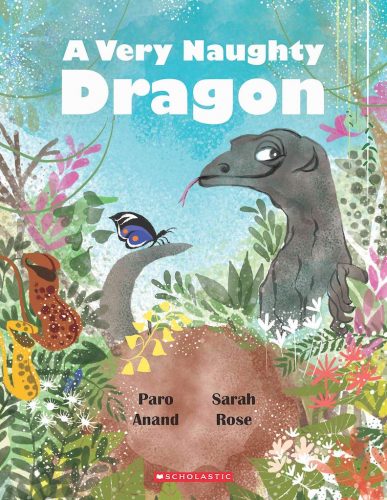
I love Paro Anand’s books, and when I learned that she had collaborated with a nine-year-old girl to write a book, I was intrigued. As a teacher and creative writing trainer, I’ve read many stories that children have written. Some are excellent, others not so much. A Very Naughty Dragon? I had to read it to find out.
I did, and I loved it. It starts slowly, with a lot of repetition that I associate with books for much younger children, but as I read on, I enjoyed it more and more. I love the place where it sits in terms of a story – between picture books and chapter books, full of colourful illustrations, but with enough text to make the story more than a book for very young readers.
Draco is a Komodo dragon, determined to show his father that he can hunt. Surely he can catch a Timor deer! No, it’s too fast.
A civet cat? No again.
A butterfly? Nope.
But Draco doesn’t give up. He tries again and again – only to find himself a laughing stock for the monkeys! The squirrels join in too, but Draco is not one to give in. He knows there’s only one way to stop all the teasing and bullying – he must show them how powerful he really is!
A story about friendship and forgiveness, kindness and courage, A Very Naughty Dragon is a lovely tale, full of possibility!
For once, I think I’ll begin my book with the last few pages. Komodo dragons are fascinating creatures. Through this book, I learned, for instance, that their breath is so stinky that you could faint or even die!
At my book club, I’ll ask the children to find out about other fascinating creatures. Timor deer, macaques, civet cats, or anything else that catches their fancy!
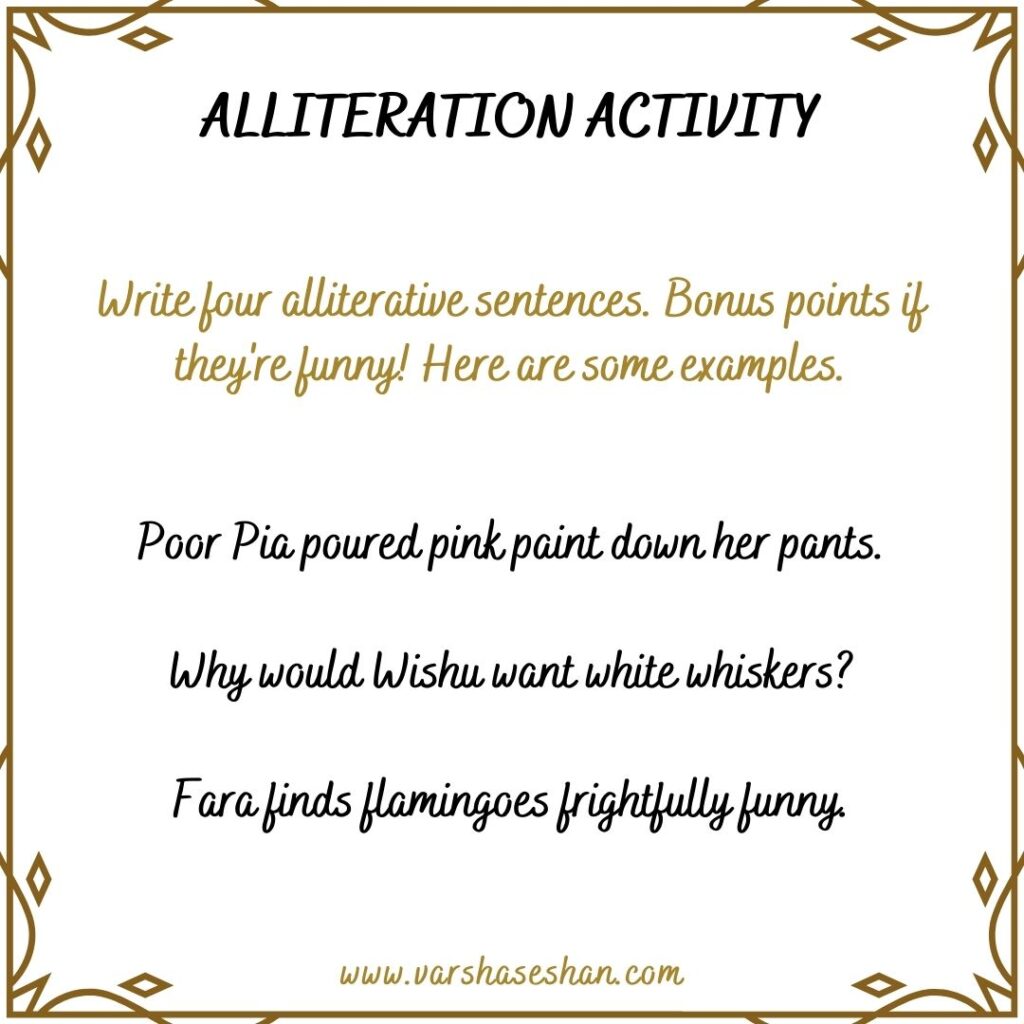
We’ve worked with alliteration and similes many times. It’s time for onomatopoeia! A Very Naughty Dragon is full of sound words. What other words can we think of that are onomatopoeic?
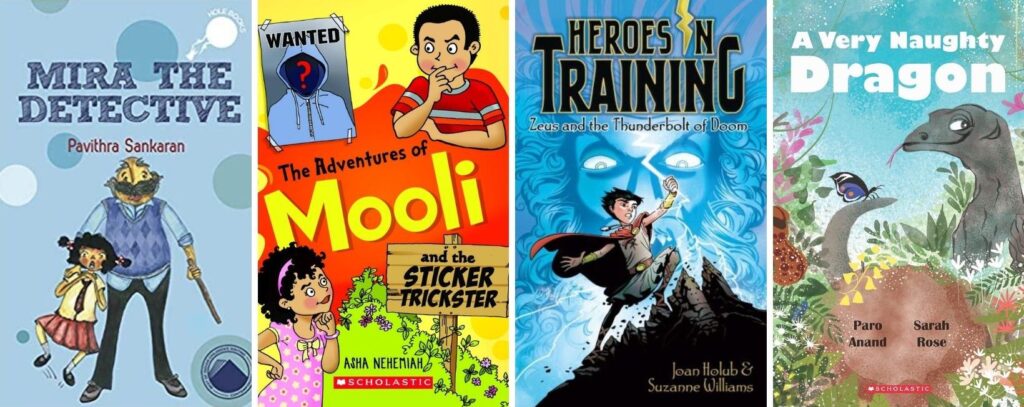
At the back of A Very Naughty Dragon, we have these three words. The Adventures of Mooli and the Sticker Trickster has the words ‘friendship’, ‘adventure’ and ‘mystery’. As this is the last book we will be reading at the December edition of my reading programme, we’ll look at the other books – Mira the Detective and Zeus and the Thunderbolt of Doom – and brainstorm a list of words that we think suit the story.
November 15, 2021
What an enriching scriptwriting session we had with Lav Kanoi on Saturday! Ah, there’s nothing like a guest session to bring a fresh spurt of energy to our creative writing programme.
“What is a story?” That’s the question Lav began with.
I like the question. What is a story, really? As we talked about it, we came to the realisation that a story can be anything. Can’t it? But that leads to the question, is there anything that a story cannot be?

The discussion that followed led to the idea of form, which brought us to the idea that various forms – a song, a play, a story, a film script – are different because they serve different purposes.
One thing led to another, and through all the excited exchanges, one conversation stands out.
“A play wants to be performed,” Lav said. “Sure, you can read it. But reading a play is incomplete. It wants more. It’s like a tape. It wants to be put in a tape recorder–wait, do you know what a tape recorder is?”
No one said ‘yes’, no one said ‘no’.
“Ah. A CD! Do you know what a CD is?”
“Yes! A computer disk!”
“And what does the disk do?” asked Lav.
“You insert it!” one child said.
“Where?” asked Lav.
“Into a CD player!”
“And what’s on the CD?” asked Lav.
“Um … a movie? Or a song? Something.”
So much for the simile. CDs aren’t sitting around wanting to be played. Tapes aren’t sitting around at all.
Despite it all, the point was conveyed. Lav ended with a fun activity (during which he also pretended to be the Cheshire cat) on Alice in Wonderland, inviting the children to convert an excerpt into a script. We’ve broadened the activity now, taking suggestions from a couple of participants. I’ve asked them to do anything they wish to with the excerpt, playing with a form of their choice. They can write a dialogue or a monologue, a song or a poem. If they want, they can create a video, do voices, record an audio script, anything! I’m waiting to see what they come up with!
November 6, 2021
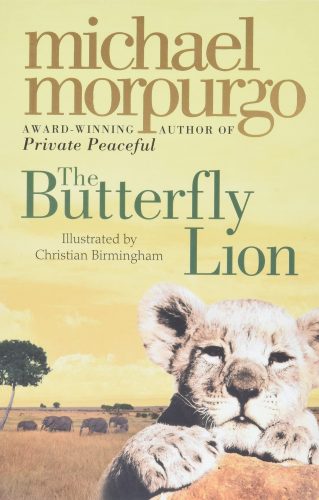
I love Michael Morpurgo. And The Butterfly Lion? I’ve had it on my shelf for ever so long, hoping to share it with more readers someday. That day is nearly here!
The Butterfly Lion is a classic. In Michael Morpurgo’s signature style, he tells a heartfelt, almost mystical story in the simplest and most magical of ways. It’s the story of love and kindness, friendship and loyalty.
Bertie is heartbroken when his beloved white lion is sent away to the circus. He knows there is no choice, but that does not make it better. He promises the lion that he will find him, somehow, someday. But Bertie’s story is a story within a story, told to a runaway boy Michael by an old lady who isn’t everything she seems to be. As we learn about the butterfly lion, we explore the joy of memory and the ways in which we remember the ones we love.
Like so many other older books, there are so many resources available online that it’s difficult to decide on just a few things to do during the creative writing component at my reading programme!
A butterfly and a lion seem like such contradictory creatures.
Before we start reading the book, we will do a quick activity examining the title, writing short pieces exploring what all a butterfly lion could be. With a simple description, we can explore setting and literary devices like oxymorons, paradoxes and antitheses, moving beyond alliteration, similes and metaphors, which we’ve addressed so many times!


This is a ground rule of creative writing, one that writers work on all the time. Using an excerpt from The Butterfly Lion, we’ll discuss what this rule means and how we put the rule into practice. We’ll do a couple of activities around the rule too, trying to understand what difference ‘showing’ language makes.
We read this book as a story within a story. I’d love to have the children write a diary entry from Bertie’s point of view at different points in the story – when he first sees the lion and her cub, when he is allowed to keep the cub, when he is told that he will be going to England … Diary entries and letters are a lovely way to explore perspective!

November 4, 2021
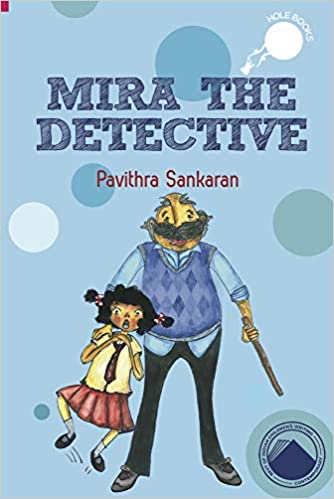
Another reading programme, another hOle book! Mira the Detective by Pavithra Sankaran is perfect for my book club in so many ways. We love detective stories, and what better than a book featuring a child detective?
When an antique watch is stolen, Mira has very few clues, but they have got to be enough! She must get to the bottom of the mystery.
The theft of the antique watch is just the first of three mysteries that Mira the detective solves. What makes the stories even more fun is that we, as readers, are equipped with the same clues as Mira and we can solve the mysteries with her!

Working with our senses is something that never gets stale. In the first story, Mira hears a tic-tic-tic sound. What could it be? In the last story, an aroma is the biggest clue. I’ve worked with several activities to do with the senses before, and they make us both more observant and more creative. I’ll play a set of sounds for the children. What could these sounds be? What words can they use to describe these sounds?
Being conscious of smells around them creates a moment’s pause too. Once more, the children have the space to get creative as they describe what’s in the air.

Mayamix is delicious, but dangerous. If you had to create your own food fantasy, what would it be?
Recently, I came across something utterly delightful called the Edible Exhibition. That’s going to be the starting point of our conversation, and I simply cannot predict where it will take us!
Every so often, I like to play with idioms in class. We’re going to be dealing with more complex idioms at my book club for older children too, but we’ll look at a few simple ones at this book club too. Mira the Detective was first published as Something Fishy. The blurb says that Mira will ‘get to the bottom of it’. What do these mean?
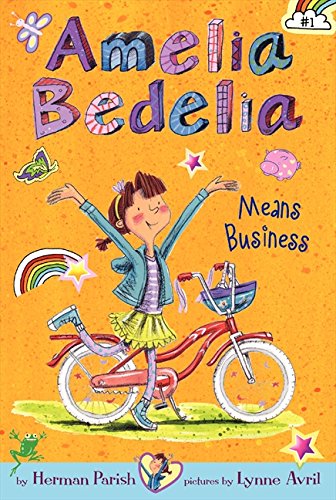
We had fun with idioms when we read Amelia Bedelia; it’s time to revisit a few and learn a few more!
November 2, 2021
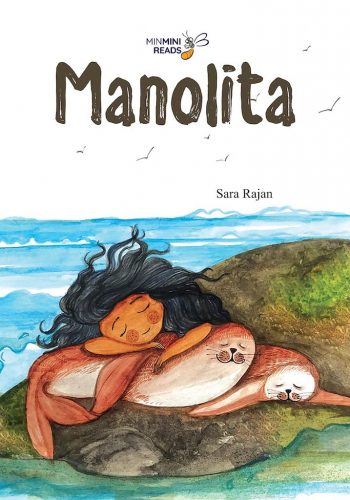
In many ways, Manolita is a simple, old-fashioned tale. For a generation that’s immersed in mythology – from the retelling of Indian myths to all the popular books that have their foundation in Greek mythology – I think a story about a selkie set in the modern world is perfect!
Jaya makes friends easily, so it comes as no surprise that she befriends a stranger in Oregon. Of course, her new friend Manolita has to be perfectly human … right? Even if she doesn’t quite understand the phrase ‘exchanging numbers’, and she likes to eat her fish raw …?
The entire series of books that Karadi Tales has released under the Minmini Reads imprint is remarkable in many ways. Often, books of this length are for younger children, but a chapter book like this for slightly older readers works so well! It’s a quick read, wholly satisfying and perfect as a conversation starter. Here’s what we’ll do with Manolita at my book club in December.
I enjoy working with myths. In fact, the theme ‘Mythical Maze‘ was the one I enjoyed the most when I conducted workshops for the British Library’s reading challenge.
After discussing the ways in which writers like Rick Riordan, Lari Don and others have reinterpreted mythological stories, we will read a few myths together and do a quick quiz about them – quizzes are always fun! If we have enough participants, we can enact a couple of myths too, which will be even more enjoyable.

Achilles’ heel.
Midas touch.
Cupid’s arrow.
Or even the food of the gods.
Mythology has contributed so much to language the way we know it! What better way to explore idioms than by reading a book based on a myth and taking it from there?

And of course, that leads us to a deeper exploration of mythology. What myths do we know? Working with a jamboard, we will share a range of mythical creatures that we have heard of. Linking this to a writing session we did recently that was all about research, we’ll read up a little about a few myths and imagine what would happen if two characters from two different myths met. The reading programme for ages nine and ten has a strong creative writing component, so this is something we can explore quite a bit!
October 24, 2021
What an enjoyable writing workshop we had yesterday with Dr Shayani Bhattacharya! Every guest session is fun, and I keep realising that when a teacher plans a session, it is meticulous, detailed, excellent!

We discussed what we research, how we research and why we research, but then we went on to something that’s important to all of us as writers – how we share research findings. Sure, you’re fascinated by time travel and wormholes. You read everything you can about them. How can you get your readers to be interested in the same things? When Shayani stressed the idea of finding our unique voice, my heart gave a little leap. It’s so useful when a guest speaker brings up something I’ve addressed time and time again during my writing programmes!
I also loved that Shayani explored the relevance of research in the context of both fiction and nonfiction. Bringing the workshop to travel writing, we spoke of travel literature of all kinds – from travelling through the forest in Little Red Riding Hood to more obvious choices like Around the World in 80 Days and Journey to the Centre of the Earth.
What the participants loved about the workshop was that every aspect of it was interactive. For instance, here’s just one of the four jamboards we created together.

Travelogues, maps, advertisements, travel tourism, travel blogs, journalistic articles … there’s so much we can write if we just research. Shayani left the participants with a writing assignment, and I’m waiting to read what they write! Like one of the participants said in the chatbox after we’d figuratively explored the earth, the solar system and the galaxies beyond ours through travel writing, ‘Thanks a whole universe! It was so cool!’
October 7, 2021
So many tiny things happen during workshops! Here’s a quick roundup of things that make me smile.

During one of my sessions, a child raised his hand. I quickly summed up what I wanted to say so that I would not lose my chain of thought, and then asked him to speak.
‘Actually, I want to talk to A,’ he said.
Amused, I nodded to him to go ahead.
What he wanted to say to A was utterly and completely unrelated to what we were doing.
And that’s what made me realise – at online classes, whispering has to happen with the teacher’s permission!
The protagonist of The Vampire Boy is Kris, a vampire who hates blood. With that in mind, I asked the children to come up with sentences about themselves, telling us two things: one, something they like that their friends also like, and two, something they like but their friends don’t. My favourites?
My friends like troubling my parents, and I do too!
My friends like jumping on the sofa, and I do too!
And the surprising ones:
My friends like ice-cream and chocolate, but I don’t.
My friends like drawing, but I don’t.
I also love the spontaneity of workshops! In The Vampire Boy again, Kris’s friend Bo cannot spin on one leg without falling on her face. We read that and instantly, the children got to their feet to try it out.
I can hop in a circle on one leg. Does that count?
Anyone can stand on one leg!
I can spin on one leg!
We read of Kris carrying a bottle of A- blood to school, and the moment I explained what that was, three of the children disappeared. They had to ask their parents – immediately, of course – what their blood group was!
And then, of course, was this lovely thing I shared on Instagram, but not on my blog.
When we read The Chocolate Touch, I asked children to design their own chocolates, name the company that manufactures it, and add any other details they like.
Here’s what followed!